
How to Get Rid of Greenfly Without Spray
How to get rid of greenfly without spray: physical removal, recruiting ladybirds, companion planting, homemade deterrents and lasting prevention. Naturally.
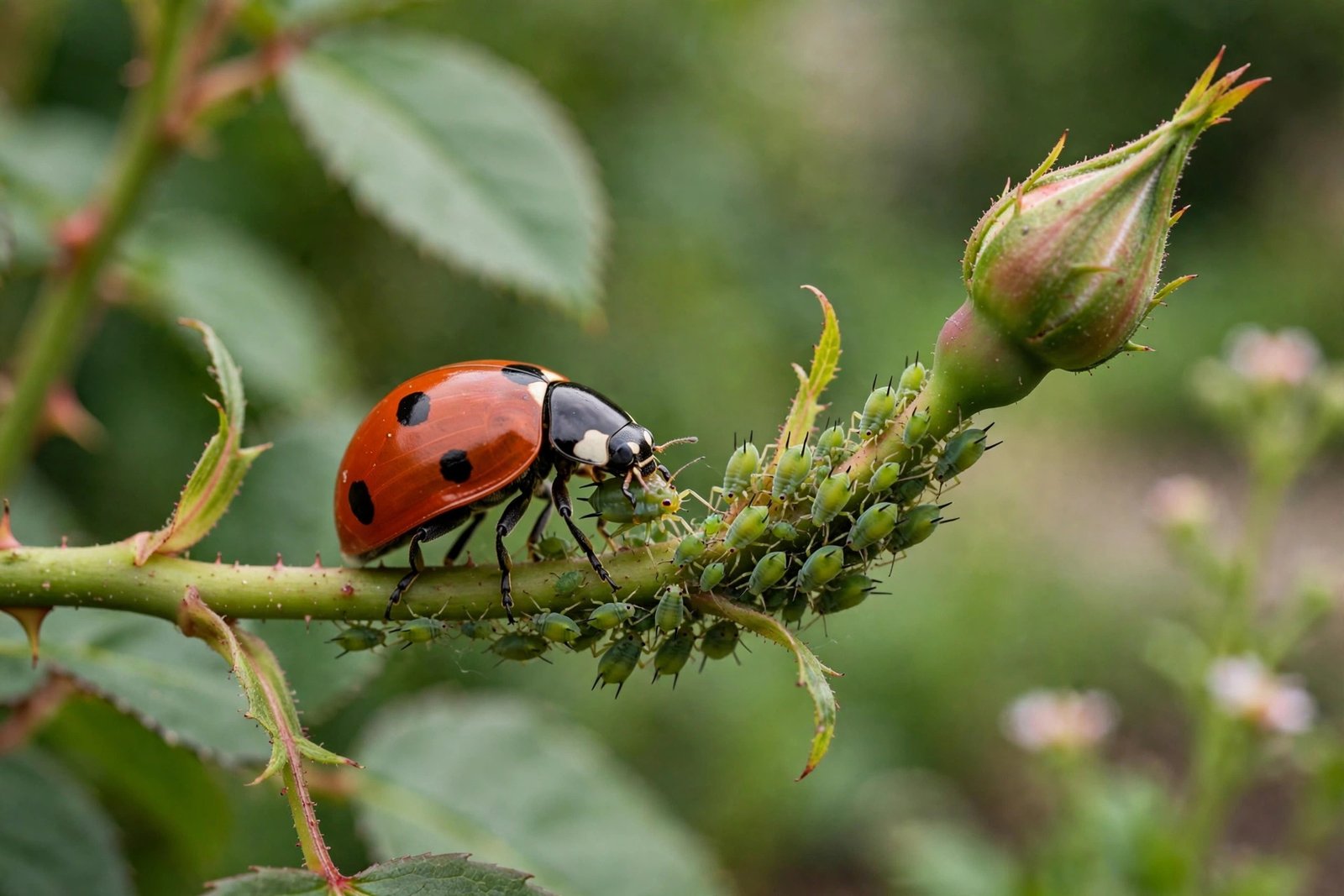
Greenfly — aphids — are the uninvited guests of every garden: clusters of tiny soft-bodied insects sucking the life from rose buds, vegetable shoots and houseplants, leaving sticky honeydew and curled, stunted growth behind. The instinct is to reach for the spray, but insecticides kill the predators that would solve the problem for you, and many gardeners would rather not douse food plants in chemicals anyway.
Getting rid of greenfly without spray is entirely possible, often more effective long-term than spraying, and better for the garden’s ecology. Here are the methods that actually work, from instant knockdown to permanent prevention.
Know your enemy: what greenfly do
Aphids reproduce with terrifying speed — a single female can birth dozens of live young without mating, and populations explode in warm weather. They feed by piercing plant tissue and sucking sap, weakening growth and transmitting plant viruses. The sticky honeydew they excrete coats leaves and invites sooty mould; ants “farm” aphids for this honeydew and will defend them from predators.
The key insight: aphids are soft, slow and defenceless against everything except chemicals having wiped out their enemies. Your garden already contains the solution — ladybirds, lacewings, hoverfly larvae and parasitic wasps all devour aphids voraciously. Spray-free control works with these allies, not against them.
Instant action: physical removal
For light infestations, the fastest spray-free fix is your hands. Wearing gloves, simply squash aphid clusters between finger and thumb or wipe them off with a damp cloth — crude but immediately effective on houseplants and prized roses. A strong jet of water from a hose knocks aphids off outdoor plants; most cannot climb back, and the survivors are picked off by predators.
Prune out heavily infested shoot tips and bin them (do not compost — some aphids survive). For houseplants, a shower in the sink or bath dislodges colonies effectively. These mechanical methods cost nothing, work instantly, and harm nothing else in the garden.
Recruit the predators
This is the long-term win. A single ladybird larva eats up to 5,000 aphids in its lifetime; lacewing larvae are even more voracious. To attract them, plant what they need: adult hoverflies and lacewings feed on nectar from open, accessible flowers — alyssum, marigolds, fennel, dill and yarrow are magnets. Leave some areas slightly wild; overwintering habitat like log piles and undisturbed borders sustains predator populations year-round.
You can buy live ladybird and lacewing larvae online for heavy infestations — release them in the evening onto affected plants and watch the aphid population collapse within days. It feels like magic, but it is just ecology working. Avoid ant colonies near prized plants where practical, since ants protect aphids; a sticky barrier band around the base of affected trees and roses stops ants climbing.
Companion planting and garden design
Certain plantings genuinely reduce aphid pressure. Strongly scented companions — garlic, chives, onions and mint — confuse aphids searching for host plants; interplant them among roses and vegetables. Nasturtiums work as a “trap crop”: aphids prefer them to almost everything, so plant nasturtiums nearby and let them take the hit while your crops grow clean.
Diversity is the deeper principle. Monoculture rows of one vegetable are aphid buffets; mixed, flower-rich plantings confuse pests and house predators. If you are setting up growing space, building a raised garden bed cheaply with mixed planting in mind bakes pest resilience in from the start. And healthy plants resist better — feeding correctly applies to ornamentals too: stressed, over-fertilised soft growth is aphid candy, while steady, balanced nutrition grows tougher tissue.
Homemade deterrents that help
While not as decisive as predators, several homemade treatments reduce aphid numbers. A mild washing-up-liquid solution (a few drops in water, sprayed on) disrupts aphids’ waxy coating — use sparingly and rinse later, as detergents can damage leaves. Garlic or chilli sprays deter feeding. Neem oil, while technically a “spray”, is a natural plant extract that disrupts aphid reproduction rather than poisoning outright, and is the gentlest option if you must spray something.
Whatever you use, apply in the evening when pollinators are inactive, target only affected areas, and always test on a few leaves first. The goal is suppression while predators establish, not eradication — a few aphids sustain the ladybirds that protect you all season.
Prevention: the garden that rarely gets greenfly
The gardens least troubled by aphids share traits: diverse planting with year-round flowers for beneficial insects, no broad-spectrum insecticide use (which kills predators first — they recover slower than aphids), moderate feeding that avoids sappy soft growth, and regular monitoring so small colonies are squashed before they explode. Check shoot tips weekly from April to September; five minutes with a watering can prevents most outbreaks.
New plants should be inspected before planting — nursery stock is a common aphid vector. And accept a little imperfection: a garden with zero insects is a dead garden. A few aphids feeding a thriving ladybird population is the sign of a healthy system, not a failing one. Design choices matter too — making a small garden look bigger often involves the layered, diverse planting that also confuses pests.
The RHS maintains excellent pest-specific guidance confirming that biological and cultural controls outperform routine spraying for domestic aphid problems. Garden Organic likewise advocates wildlife-friendly pest control for home gardeners.
Conclusion
Getting rid of greenfly without spray is not wishful thinking — it is better gardening. Squash and jet-wash for instant results, recruit ladybirds and lacewings for lasting control, plant companions and trap crops, and design diversity into the garden. Within a season, you will have fewer aphids than the neighbours who spray, plus the pollinators and birds that a living garden attracts. Put the spray bottle down; the ladybirds have this. A garden managed for predators rather than against pests becomes more resilient every year — fewer outbreaks, more wildlife, and the quiet satisfaction of working with nature instead of against it.
Frequently Asked Questions
Do greenfly bite humans?
No — aphids feed on plant sap and cannot bite people or pets. They are a plant problem only, though heavy honeydew can make garden furniture and cars sticky underneath infested trees.
Can I just leave greenfly alone?
Small numbers on vigorous plants, yes — predators usually find them within days. Intervene when colonies are large, growing fast, distorting new growth, or covering plants in honeydew. The threshold is plant health, not insect presence.
What kills greenfly instantly without chemicals?
Squashing by hand, wiping with a damp cloth, or blasting with a strong jet of water. All are immediate, free and harmless to beneficial insects.
Do ladybirds really control greenfly?
Yes — dramatically. A single ladybird larva eats thousands of aphids, and established predator populations keep aphids at negligible levels all season without any intervention.
Will washing-up liquid harm my plants?
Used dilute and rinsed off, it is generally safe, but strong solutions can scorch leaves. Test on a small area first and never use it in hot sun.
Why do ants protect greenfly?
Ants harvest the sweet honeydew aphids excrete, so they defend “their” aphids from predators. Sticky barrier bands on stems break the partnership.
Are greenfly harmful to vegetables?
Heavy infestations weaken plants, distort growth and can transmit viruses. Light numbers on vigorous plants are harmless — and they feed the predators that protect your garden.