
Can You Grow Chillies in Pots in the UK? Yes
Can you grow chillies in pots in the UK? Yes — best varieties for Britain, early sowing, pot routine, ripening tricks and overwintering for year two. Full guide.
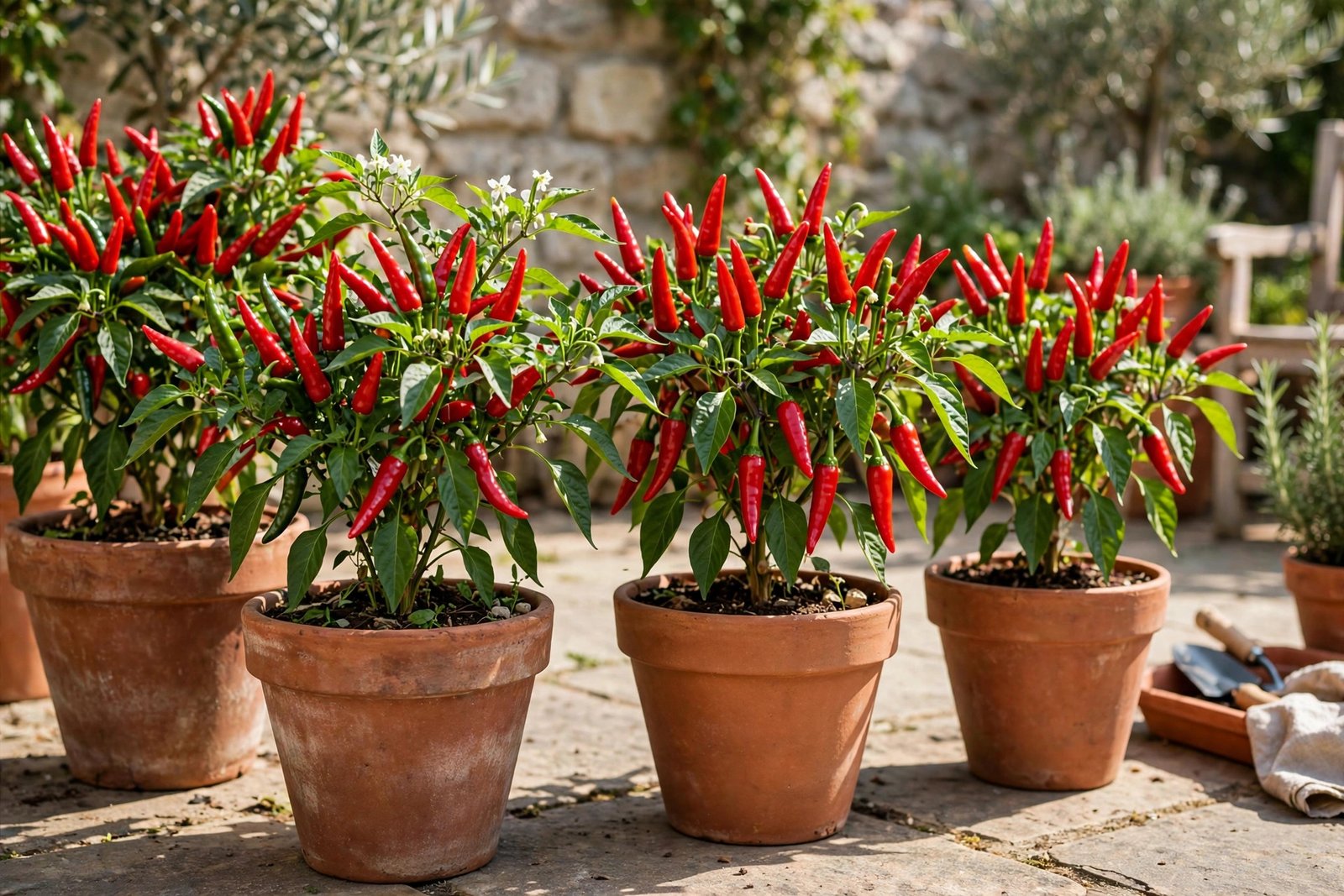
Yes — and the UK is better for chillies than its reputation suggests. Chillies are among the most satisfying crops for British container growers: compact plants, spectacular fruits, and a warmth requirement that a sunny windowsill, greenhouse or sheltered patio meets easily. You will not match a Thai farm’s output, but a few well-chosen plants in pots will keep a keen cook in chillies from August to October and beyond.
This guide covers variety selection for the UK climate, sowing and growing in pots step by step, overwintering plants for bigger second-year harvests, and turning your crop into year-round flavour.
Choose varieties that suit Britain
Variety choice is the single biggest factor in UK chilli success. The super-hots (Carolina Reaper, Trinidad Scorpion) need long, hot seasons Britain rarely delivers outdoors — grow them only with a heated greenhouse or very sunny windowsill and an early start. Instead, choose reliable performers: ‘Apache’ and ‘Demon Red’ are compact, prolific and bred for pots; ‘Jalapeño’ is dependable and versatile; ‘Cayenne’ dries beautifully; ‘Padron’ gives you the tapas-bar lottery of mild-to-wild peppers.
Match heat to your cooking: ornamental value aside, grow what you will eat. A plant producing 50 chillies you actually use beats a super-hot novelty whose fruits moulder on the stem. For pots, favour compact or dwarf varieties — they fruit earlier and need less space, which matters on a windowsill or balcony.
Sowing: start early, start warm
Chillies need a long season, so sow early — January to March indoors. This is the step most beginners get wrong: sowing in May leaves insufficient time for fruits to ripen before autumn. Sow seeds 5mm deep in seed compost, water gently, and provide bottom heat (a propagator or warm windowsill above a radiator, around 20–25°C). Germination takes 1–4 weeks; super-hots can take longer, so patience.
Once seedlings have two true leaves, pot them on into 9cm pots. Grow them on brightly — a south-facing windowsill is ideal — turning pots regularly for even growth. Do not rush them outside: chillies hate cold, and a single chilly night (below 10°C) can check their growth for weeks. Harden off gradually from mid-May, moving out permanently only when night temperatures reliably exceed 12°C, typically early June in the south.
Growing on in pots: the routine
Pot size matters: final pots of 5–10 litres suit most varieties, with larger for big plants. Use peat-free multipurpose compost with added slow-release fertiliser, and mulch the surface to retain moisture. Position in the sunniest, most sheltered spot available — against a south-facing wall is ideal, as radiated heat boosts ripening.
Water consistently: chillies dislike drying out completely, but waterlogged roots rot. Water when the top 2cm of compost is dry, always in the morning. Feed weekly with high-potash tomato fertiliser once flowers appear — this is the fuel for fruit production. Support taller varieties with a cane; pinch out the growing tip of young plants to encourage bushy, productive growth.
Pollination is rarely an issue outdoors (bees do the work), but indoor plants may need a gentle daily shake of flowering stems to release pollen. Watch for aphids — the classic chilli pest — and deal with them early; stressed plants drop flowers, and a heavy aphid attack at flowering time can cost you the crop.
Harvest and the ripening race
Pick chillies at whatever stage you prefer: green for fresh sharp heat, fully coloured for sweeter, hotter, more complex flavour. Regular picking encourages more fruit — leave everything on the plant and production stalls. Use scissors or secateurs rather than pulling, which can damage stems.
The great UK challenge is ripening before autumn. Maximise your chances: choose early varieties, start early, site for maximum sun and warmth, and feed well. In September, bring pots indoors to a bright windowsill to finish ripening — or pick green and ripen in a paper bag with a banana (the ethylene trick genuinely works). Even green chillies are delicious: pickled, in curries, or blitzed into green hot sauce.
Overwintering: the expert’s secret
Chillies are perennials grown as annuals in the UK — but you can keep them. Before the first frost, prune plants back hard, pot into fresh compost, and keep in a bright, frost-free spot (a cool windowsill, 10–15°C) with minimal watering. The plant looks dead; it is not. In spring, it bursts back into growth weeks ahead of seedlings, producing earlier and heavier crops in year two.
Overwintered plants are the closest UK growers get to tropical productivity: bigger root systems, earlier fruiting, heavier yields. It is the single best trick for serious chilli growers, and it costs nothing.
Using and preserving your harvest
A productive plant or two quickly outstrips fresh use — which is a wonderful problem. Dry chillies whole in a warm airing cupboard or low oven, then store airtight; freeze them whole (they grate frozen beautifully); ferment into hot sauce; or infuse into oils and vinegars for gifts. Learn how to store fresh herbs so they last longer — the drying and freezing principles transfer directly to chillies.
Cook with your crop constantly: homegrown chillies elevate everyday cooking, and there is no fresher flavour than a chilli picked minutes before the pan. For inspiration, making restaurant-style curry at home is the perfect showcase. And for the produce you cannot grow, wonky veg boxes keep the kitchen stocked affordably. The RHS offers detailed chilli-growing guidance for UK conditions, and Garden Organic covers organic feeding regimes that suit container chillies.
Conclusion
Growing chillies in pots in the UK is not just possible — it is one of the most rewarding container crops for the British climate. Start early indoors, choose compact reliable varieties, give them sun, warmth and consistent care, and overwinter your best plants for explosive second years. From a January seed to October harvests and homemade hot sauce, the chilli journey is pure gardening joy in a 7-litre pot.
Frequently Asked Questions
How many chillies does one plant produce?
A healthy compact variety like ‘Apache’ yields 40–80 chillies per plant in a good UK summer; larger varieties produce fewer but bigger fruits. Overwintered second-year plants often double their first-year output.
Do chillies need a greenhouse in the UK?
Not necessarily — a sunny windowsill, conservatory or sheltered patio works for most varieties. A greenhouse extends the season and suits super-hots, but ‘Apache’ and ‘Jalapeño’ crop reliably without one given an early indoor start.
When should I sow chilli seeds in the UK?
January to March indoors, with bottom heat around 20–25°C. Early sowing is essential — chillies need a long season to ripen fruits before autumn.
What is the easiest chilli to grow in the UK?
‘Apache’ — compact, prolific, bred for pots, and reliably productive in British summers. ‘Demon Red’ and ‘Jalapeño’ are similarly forgiving.
Can chillies survive winter in the UK?
Outdoors, no. But potted plants brought into a bright, frost-free spot (10–15°C) overwinter readily and crop earlier and heavier in their second year.
Why are my chilli flowers dropping off?
Usually temperature stress (too cold or too hot), inconsistent watering, or aphid attack. Stable warmth, regular watering and pest control solve most flower drop.
How hot are homegrown chillies compared to shop-bought?
Often hotter — stress (slight underwatering, warmth) increases capsaicin. Taste cautiously the first time with any new variety.