
How to Keep Houseplants Alive Through a London Winter
How to keep houseplants alive through a London winter: light fixes, watering rules, humidity vs central heating, and the mistakes that kill plants. Thriving plants.
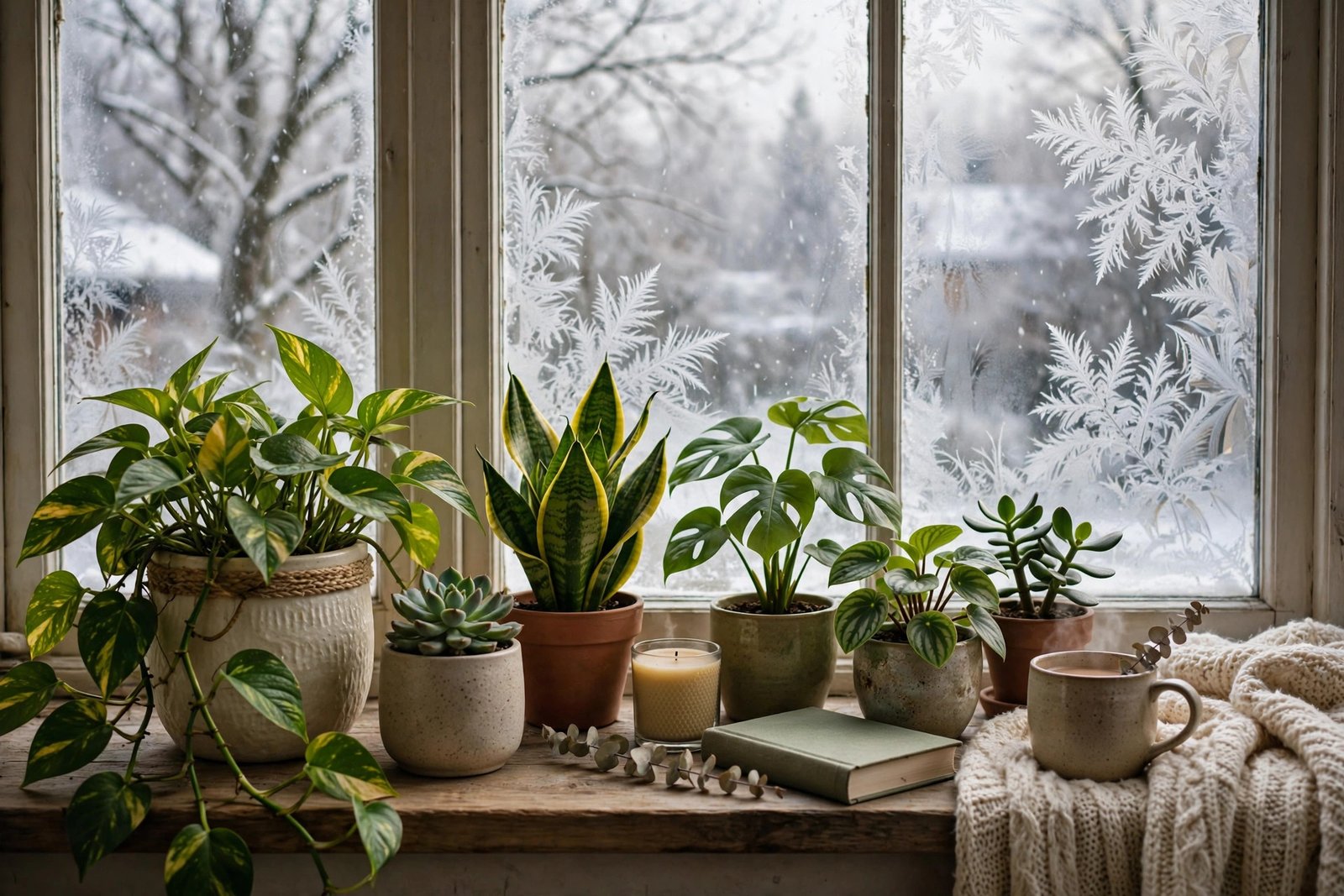
Every autumn, London’s houseplants face the same grim quartet: plummeting light, drying central heating, cold draughts and well-meaning owners who water them to death. Winter is when most houseplants die — not from neglect, but from kindness applied at the wrong time. The good news: keeping houseplants alive through a London winter requires less effort than summer care, just different effort.
This guide explains what winter actually does to indoor plants, the adjustments that matter, the mistakes that kill, and how to bring your collection through to spring in better shape than it entered autumn.
What winter does to your plants
Three environmental shifts hit simultaneously. Light collapses: London gets around 8 hours of dim daylight in December, much of it behind cloud, and light intensity through a window can be a tenth of summer levels. Growth slows or stops entirely as plants enter dormancy — this is normal, not illness. Central heating then desiccates the air to desert-like humidity while keeping rooms deceptively warm, and cold draughts from windows and doors shock tropical plants that never evolved to cope with them.
Understanding dormancy is the master key: most houseplants are not trying to grow in winter, so they need less of everything — less water, no feed, less fuss. Winter plant care is mostly about avoiding harm, not promoting growth.
Light: the limiting factor
Move plants closer to windows for winter — even light-lovers that scorched in a south-facing summer spot will welcome it now. Clean your windows inside and out; grime can cut light transmission significantly. Rotate pots weekly so all sides get their share of the weak sun.
Consider a grow light for prized plants or very dark flats. Modern LED grow lights are cheap to run and remarkably effective — a simple white-spectrum bulb on a timer for 8–10 hours transforms a gloomy corner. They are also the answer for the light-hunger that affects humans too; if you feel the winter gloom, check the signs of vitamin D deficiency, because you and your plants are suffering the same shortage.
Water: less is more (much less)
Overwatering kills more winter houseplants than all other causes combined. With growth stalled and evaporation slow, compost stays wet far longer — roots sitting in cold, soggy compost rot quickly. The rule: water only when the top 3–5cm of compost is dry, and always check with a finger rather than a schedule.
Empty saucers and cache pots after watering; never let plants sit in water. Use room-temperature water — cold water shocks roots. Reduce watering frequency by roughly half compared with summer, and for cacti and succulents, barely water at all from November to March. When in doubt, underwater: most houseplants recover from drought far more easily than from rot.
Humidity, heating and draughts
Central heating is the silent killer: relative humidity in heated London flats can drop below 30%, while most tropical houseplants want 50–60%. Group plants together to create a humid microclimate, stand pots on trays of damp pebbles, or run a humidifier nearby. Misting helps briefly but evaporates fast — it is a supplement, not a solution.
Keep plants away from radiators (hot, dry blasts scorch leaves) and away from draughty windows and doors (cold shocks). The ideal winter spot is bright but not draughty, cool but not cold — many plants actually prefer a cooler room (15–18°C) in winter, which also saves on heating. If your heating system is due attention, servicing your boiler before winter keeps temperatures stable for plants and humans alike. And watch for condensation — stopping condensation on windows protects both your walls and the plants sitting on the sills.
Feeding, repotting and pruning: just don’t
Stop feeding from around October to March. Fertilisers push soft growth that the weak winter light cannot sustain, producing leggy, weak plants prone to pests. Similarly, avoid repotting in winter unless the plant is in genuine distress — root disturbance during dormancy sets plants back badly. Wait for spring’s growth surge.
Do remove dead or yellowing leaves promptly (they harbour pests and mould), and wipe dust from leaves monthly — dust blocks already-scarce light. Prune only to remove the dead; save shaping for spring. Winter is for maintenance, not makeovers.
Watch for winter pests
Stressed winter plants attract spider mites (which love dry, heated air), mealybugs and scale. Inspect leaf undersides and joints monthly — early detection means a wipe with a damp cloth solves it; late detection means a battle. Isolate new plants for a fortnight before introducing them to the collection, since winter-bought plants often carry hitchhikers from the garden centre.
Resist the urge to “rescue” a struggling plant with more water or a new position every week. Plants need stability; constant changes stress them further. Diagnose calmly: check roots for rot (mushy, brown) versus underwatering (dry, crispy), adjust once, and give it time.
Spring wake-up
As light returns in March, gradually resume normal care: increase watering as growth restarts, begin feeding at half strength, and repot anything root-bound. Prune leggy winter growth to encourage bushy spring shoots. Most plants that looked miserable in February will amaze you by May — dormancy is rest, not death.
The RHS offers month-by-month houseplant guidance that takes the guesswork out of seasonal transitions. Garden Organic also publishes peat-free growing advice that applies to houseplant compost choices.
Conclusion
Keeping houseplants alive through a London winter comes down to respecting dormancy: maximise light, halve the watering, boost humidity, stop feeding, and leave well alone. Do less, but do it thoughtfully. Your plants are not dying — they are resting. Give them a quiet winter and they will repay you with explosive spring growth. Come March, when the light returns and the first new leaves unfurl, you will be glad you held back.
Frequently Asked Questions
Should I mist my houseplants in winter?
Lightly and occasionally — misting raises humidity for minutes, not hours. Grouping plants, pebble trays and humidifiers are far more effective against dry heated air. Avoid misting hairy-leaved plants like African violets.
Why do houseplants die in winter?
Overwatering is the top killer, followed by low light and dry heated air. Winter care means less water, more light, no feeding, and stable conditions — most losses come from kindness applied at the wrong time.
How often should I water houseplants in winter?
Roughly half as often as summer — only when the top 3–5cm of compost is dry. For most plants this means every 2–3 weeks; cacti and succulents need barely any water from November to March.
Should I feed houseplants in winter?
No. Stop feeding from October to March — dormant plants cannot use fertiliser, and it encourages weak, leggy growth. Resume at half strength when spring growth starts.
Why are my plant’s leaves turning yellow in winter?
Most commonly overwatering, but some yellowing of older leaves is normal winter shedding. Check the compost moisture first; if soggy, let it dry and reduce watering.
Do houseplants need grow lights in a London winter?
Not all, but light-hungry plants in dark flats benefit enormously. A simple LED grow light on a timer for 8–10 hours daily prevents leggy, pale winter growth.
Can cold windows kill houseplants?
Leaves touching freezing glass can suffer cold damage, and icy draughts shock tropical species. Keep plants a few centimetres back from windows and away from draughty doors.