
How to Check Soil pH Without a Kit: 3 Methods
How to check soil pH without a kit: the vinegar fizz test, red cabbage indicator, reading your weeds — plus how accurate DIY methods really are. Try it today.
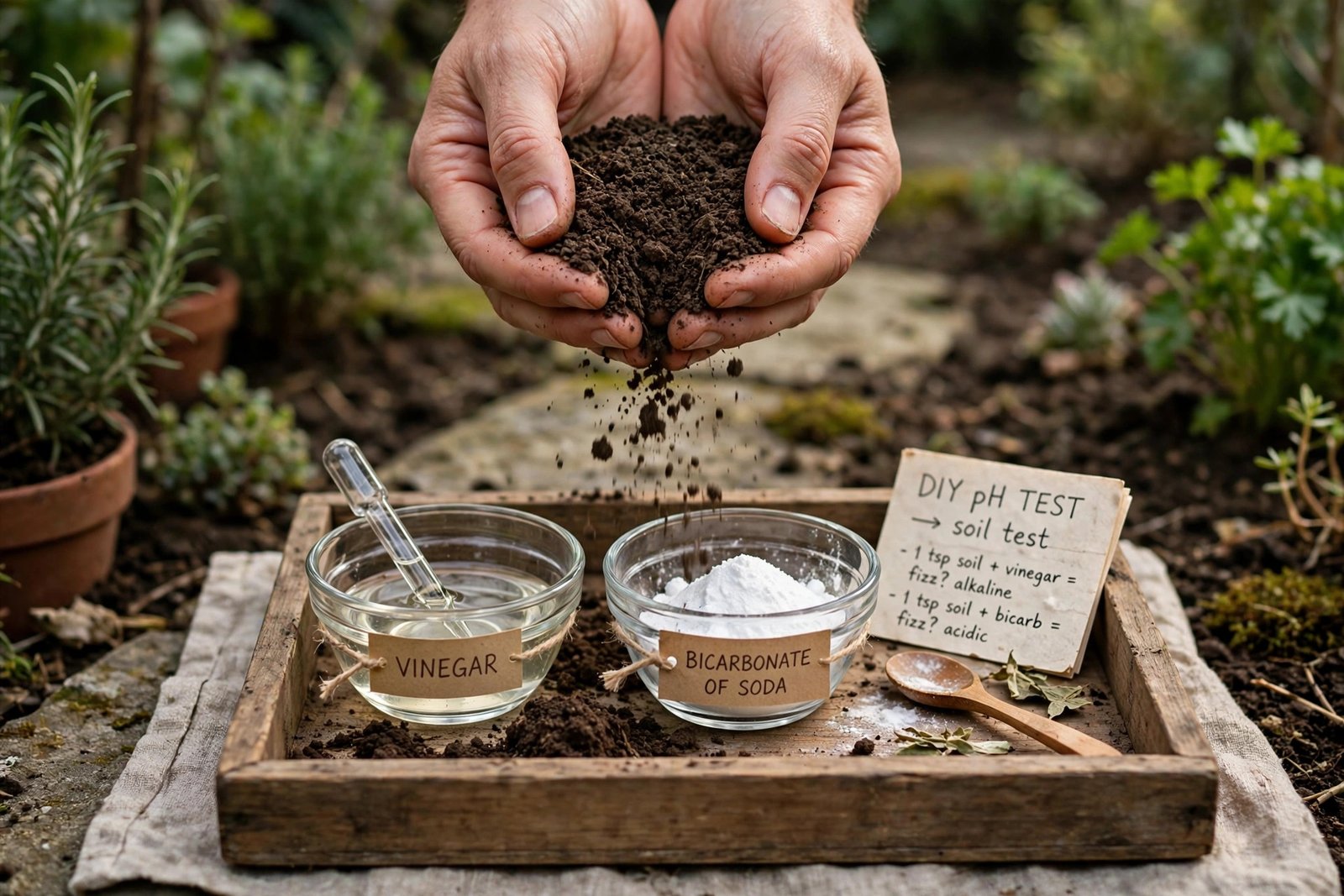
Soil pH — how acidic or alkaline your soil is — quietly controls which nutrients your plants can absorb. Blueberries sulk in alkaline soil, lavender sulks in acidic soil, and most vegetables sulk in anything extreme. Test kits are cheap, but if you want an answer right now with what’s in your kitchen, several surprisingly reliable DIY methods exist.
This guide covers the classic vinegar-and-bicarbonate test, the red cabbage indicator method, what your weeds and plants are already telling you, and how to act on whatever you discover.
Why pH matters (the 60-second version)
The pH scale runs 0–14: below 7 is acidic, above 7 alkaline, 7 neutral. Most garden plants prefer 6.0–7.0, slightly acidic to neutral. Outside that range, nutrients get “locked up” — present in the soil but chemically unavailable to roots. Iron deficiency in alkaline soil (yellow leaves with green veins) is the classic symptom.
The UK’s soils vary enormously: chalk downs produce alkaline soil, while moorland and pine areas trend acidic. Urban London soils are often alkaline from building rubble and concrete leachate. Knowing your starting point prevents years of mysterious plant failures.
Method 1: the vinegar and bicarbonate fizz test
The quickest kitchen test distinguishes acidic from alkaline soil in minutes. Take two small samples of dry soil from 10cm down (surface soil is misleading) and place each in a separate clean container.
To the first sample, add half a cup of white vinegar. Fizzing or bubbling indicates alkaline soil — the acid reacting with carbonates. To the second sample, add distilled water to make mud, then half a cup of bicarbonate of soda. Fizzing here indicates acidic soil. No reaction in either suggests roughly neutral soil.
This test is qualitative, not precise — it tells you the direction, not the number. But direction is often enough: it tells the blueberry grower their soil needs acidifying and the clematis grower theirs is fine. For a free, instant answer, it is remarkably useful.
Method 2: the red cabbage indicator
For a more refined answer, red cabbage contains anthocyanin pigments that change colour with pH — the same chemistry as litmus paper. Chop a quarter cabbage, boil in distilled water for 10 minutes, strain the purple liquid, and let it cool. Add a spoonful of soil to a small amount of the liquid, shake, and let it settle.
The colour tells the story: pink-red means acidic (around pH 4–5), purple means neutral (around 7), blue-green means alkaline (8+), yellow-green means strongly alkaline. Compare against a control of plain cabbage water. It will not give you pH 6.3 precisely, but it distinguishes meaningfully between acidic, neutral and alkaline — enough to guide planting and amendment choices.
Method 3: read your weeds and plants
Your garden is already running a pH survey. Indicator weeds are remarkably reliable: sorrel, bracken, rhododendrons and heather thriving suggest acidic soil; poppies, clematis and lilac thriving suggest alkaline. Moss in lawns often (though not always) indicates acidity combined with poor drainage.
Hydrangeas are the famous living pH meters: the same variety blooms blue in acidic soil and pink in alkaline. If your neighbour’s hydrangeas are vivid blue and yours are pink, you have learned something about both gardens. This method is free, continuous and oddly satisfying — though it tells you about established conditions, not precise numbers.
How accurate are DIY methods?
Honestly: directionally reliable, numerically approximate. The fizz test and cabbage indicator reliably distinguish acidic/neutral/alkaline, which covers most gardening decisions. They will not distinguish pH 6.2 from 6.8 — but few garden plants care about that distinction either.
If you are planning acid-lovers like blueberries or azaleas as a serious investment, a £10 probe or lab test is worth it for precision. For general planting, composting and lawn care, the kitchen methods are plenty. Whatever you discover, the response is usually organic matter: compost buffers pH toward neutral over time, improving both acidic and alkaline soils. If you are building growing space, building a raised bed cheaply lets you fill with compost of known character — sidestepping native soil pH entirely.
Adjusting pH: what actually works
To raise pH (make acidic soil more alkaline): garden lime, applied in autumn at the rate on the packet, is the standard fix. Wood ash also raises pH gently. To lower pH (for blueberries, heathers): sulphur chips or ericaceous compost, applied well before planting. Changes take months — pH adjustment is slow chemistry, not instant.
But the wisest approach is often to work with what you have: choose plants suited to your soil rather than fighting it perpetually. Alkaline soil? Lavender, clematis and brassicas will thrive. Acidic? Rhododendrons, heathers and blueberries. Right plant, right place beats chemistry sets. Feeding correctly matters too — choosing the right lawn feed includes considering your soil’s pH, since nutrient availability follows it.
Permanent structures deserve pH thought as well: if you are planning a garden shed, the surrounding beds’ pH will shape what you plant around it for years.
The RHS provides authoritative guidance on soil pH testing and amendment for UK gardeners who want to go deeper. Garden Organic explains how organic matter naturally buffers soil pH over time.
Conclusion
Checking soil pH without a kit is easy: the vinegar-and-bicarbonate fizz test for instant direction, red cabbage indicator for finer reading, and your weeds as a free continuous survey. These kitchen methods answer the question that matters — acidic, neutral or alkaline — well enough to guide planting, feeding and amendment. Test this weekend, plant accordingly, and watch the mysterious failures stop. Ten minutes with vinegar and bicarbonate can save you seasons of guessing — the cheapest soil test is the one already sitting in your kitchen cupboard.
Frequently Asked Questions
What pH is London soil usually?
Often neutral to alkaline (7.0–8.0) because of chalk geology in places and alkaline rubble, mortar and concrete in urban soils. Always test your own patch — variation street to street is common.
Can I test soil pH with strips from a pharmacy?
Yes — universal indicator strips work fine. Mix soil with distilled water (not tap water, which has its own pH), let it settle, dip the strip in the liquid and compare to the chart. It is the cheapest proper kit at a few pounds.
What is the ideal soil pH for most plants?
Between 6.0 and 7.0 (slightly acidic to neutral) suits the majority of garden plants, vegetables and lawns. Ericaceous plants like blueberries and azaleas want 4.5–5.5.
How reliable is the vinegar and baking soda test?
Reliably indicates acidic vs alkaline vs neutral, but not precise numbers. It is a good free screening test; use a proper kit for precision planting decisions.
Can I use litmus paper from a school science set?
Yes — it works on the same principle as the cabbage test. Mix soil with distilled water, dip the paper, and compare the colour to the chart.
How do I make soil more acidic for blueberries?
Use sulphur chips or ericaceous compost dug in well before planting, or grow blueberries in pots of ericaceous compost — far easier than altering garden soil permanently.
Does compost change soil pH?
Yes, beneficially: regular compost applications buffer pH toward neutral over time, improving both acidic and alkaline soils while adding nutrients and structure.