
How to Get Your Landlord to Fix Draughty Windows: A Tenant’s Playbook
How to get your landlord to fix draughty windows: document the problem, ask in writing, know your legal rights, escalate to the council, plus DIY fixes.
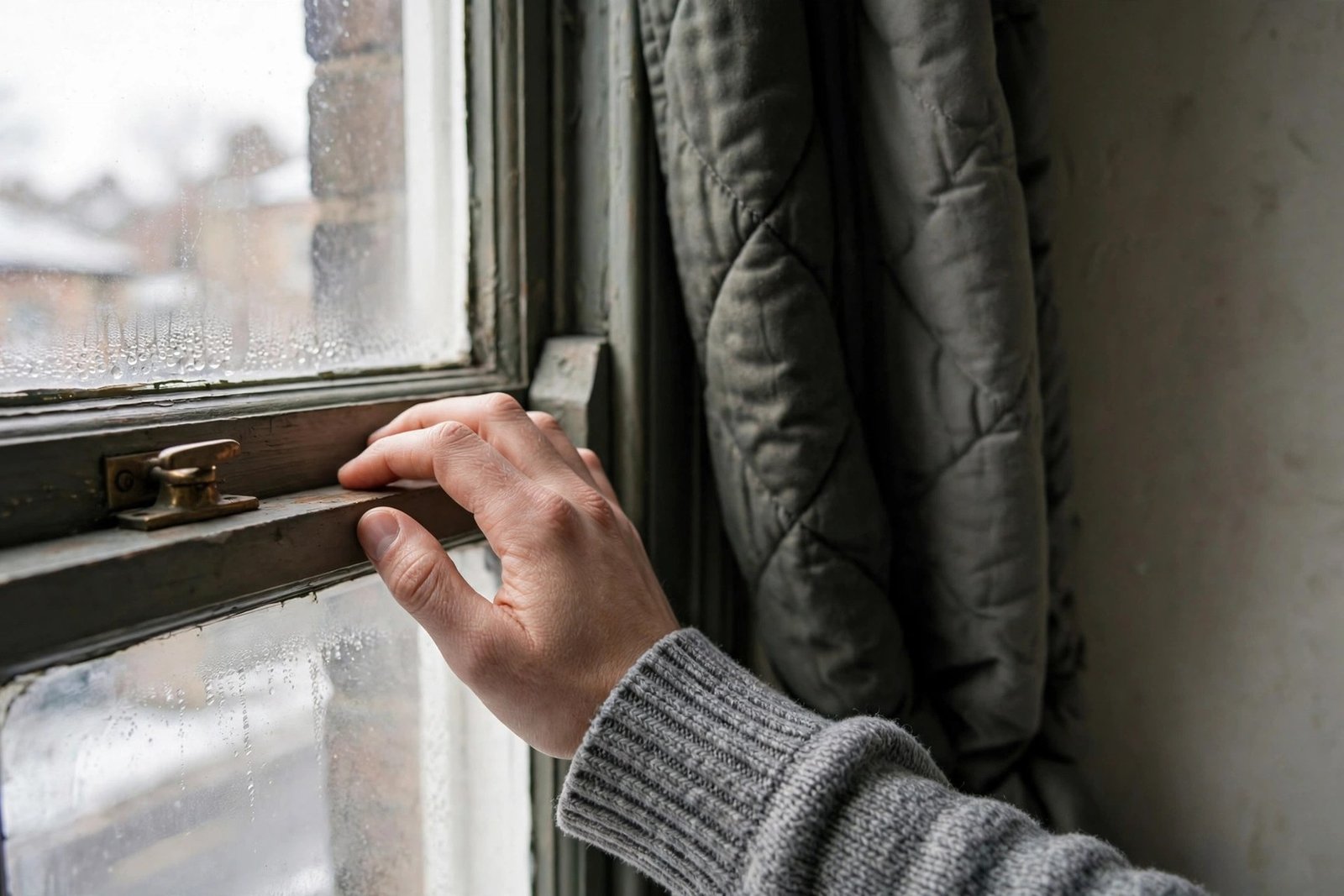
It is the third week of November. There is a draught coming through the bedroom window with enough force to move the curtains, your heating bill is climbing, and your landlord’s response to your polite text was a thumbs-up emoji. Sound familiar? Draughty windows are one of the most common complaints in London rentals — the city is full of Victorian and Edwardian flats with original sash windows that rattle in their frames — and landlords are notoriously slow to fix them. But you have more leverage than you think, if you approach it the right way.
This is a practical playbook: what to say, what to put in writing, what the law actually requires, and the renter-friendly fixes you can do yourself while you wait. No legalese, no fantasy — just the steps that get windows fixed.
Step One: Document the Problem Properly
Before you contact anyone, build your evidence file. Film the curtains moving when the window is shut. Hold a lit incense stick or a strip of tissue near the frame and record it fluttering. Take a photo of any condensation, mould or peeling paint around the window — damp is your strongest card, because it turns a comfort complaint into a health and habitability issue. Note the dates you first noticed it and any impact: higher heating bills, a bedroom too cold to sleep in, mould on the sill.
This is not about being difficult; it is about being taken seriously. Letting agents deal with dozens of vague complaints a week (“flat feels cold”) and prioritise the ones with evidence and a paper trail. A dated set of photos and a clear written description immediately puts your request in a different category.
Step Two: Ask Nicely, But in Writing
Start friendly and written — email, not a phone call, so everything is timestamped. Describe the problem specifically: which windows, what happens, when it started. Explain the consequences: the room is unusable in cold weather, heating costs have risen, condensation is forming. Then propose the fix you want: draught-proofing strips, resealing, repairing the sash cords, or replacing failed seals on double glazing.
Give a reasonable deadline — 14 to 21 days is standard for non-emergency repairs. Keep the tone cooperative: most landlords respond better to “this will protect your property from damp” than to threats. Framing repairs as protecting their asset is surprisingly effective, because it is true — persistent condensation rots timber frames and breeds the mould that leads to expensive deposit disputes. Knowing your rights as a tenant in the UK before you write gives your email quiet confidence without making it adversarial.
Step Three: Know What the Law Requires
Here is where many tenants underestimate themselves. Under Section 11 of the Landlord and Tenant Act 1985, landlords must keep the structure and exterior of the property in repair — and that explicitly includes window frames. If the frames are rotten, the seals have failed, or the windows do not close properly, repair is the landlord’s legal obligation, not a favour.
On top of that, the Homes (Fitness for Human Habitation) Act 2018 requires rented homes to be fit for human habitation, which includes freedom from serious damp and adequate heating. A bedroom that cannot be kept warm because the windows pour in cold air, with condensation feeding mould growth, can cross that line. And if the flat’s EPC rating is F or G, the landlord may already be in breach of minimum energy efficiency standards. You are not begging — you are asking for the legal minimum. The government’s guide to repairs in private rentals sets out exactly which responsibilities sit with the landlord.
Step Four: Escalate Calmly If They Stall
If the deadline passes with no action, escalate in stages. First, a firmer follow-up referencing your original email and the landlord’s repair obligations. Second, contact your council’s environmental health or private-sector housing team — they can inspect and serve enforcement notices on landlords who ignore serious disrepair, and they do it routinely. Third, if you are in a letting agent managed property, complain to the agent’s redress scheme (all agents must belong to one by law).
Two things to know: you generally cannot withhold rent over disrepair without a court order, so do not stop paying — it weakens your position. And you are protected against retaliatory eviction: if you have complained in writing about conditions and the council gets involved, a Section 21 eviction served in response can be invalid. Shelter’s guidance on repairs in rented housing walks through each escalation step with template letters.
What You Can Fix Yourself Right Now
While the emails fly back and forth, do not freeze. Self-adhesive draught strips cost a few pounds and fit most window frames without damage. Secondary glazing film — the clear heat-shrink kind — adds an insulating layer over single glazing and peels off when you leave. Heavy thermal curtains make a dramatic difference overnight. None of these need permission, all are removable, and they make the flat livable this winter rather than next.
Just be careful about one thing: do not seal a flat so tightly that moisture cannot escape. Condensation needs ventilation — trickle vents open, extractor fans on, and the odd window cracked after showers. Getting the balance right protects both your lungs and your deposit, which is why it is worth reading how to get your rental deposit back in full before you start sticking things to frames — most deposit deductions are avoidable with a little care.
Conclusion
Getting a landlord to fix draughty windows is a process, not a single conversation: document the problem, ask in writing with a deadline, know that window frames are the landlord’s legal responsibility, and escalate to the council if they stall. Most landlords fix things once they realise the tenant is organised, persistent and aware of the law — it is cheaper than an enforcement notice. And while you wait, draught strips, glazing film and thermal curtains will keep you warm. The thumbs-up emoji is not an answer. A fixed window is.
Frequently Asked Questions
Are landlords legally required to fix draughty windows?
Yes — window frames are part of the structure the landlord must keep in repair under Section 11 of the Landlord and Tenant Act 1985. If windows do not close properly or seals have failed, the landlord must fix them.
Can I withhold rent until my landlord fixes the windows?
Not without a court order. Withholding rent puts you in breach and weakens your position. Keep paying, keep complaining in writing, and use the council’s enforcement powers instead.
What if my landlord tries to evict me for complaining?
Retaliatory eviction protections apply: if you complained in writing about conditions and the local council served an improvement notice, a subsequent Section 21 notice can be invalid for six months.
Can I get draught-proofing done myself and bill the landlord?
You should not carry out repairs and deduct the cost without agreement or a court order — it is legally risky. Stick to removable DIY measures and pursue the formal repair route for the permanent fix.
How long should I give my landlord to fix windows?
For non-urgent repairs like draught-proofing, 14–21 days from your written request is considered reasonable. If there is serious damp or a window will not lock, push for faster action as a security and health issue.