
How to Cut Plastic Out of Your Kitchen: 5 Swaps That Actually Work
How to cut plastic out of your kitchen with five high-impact swaps: loose produce, glass-bottled milk, ditching cling film, refill stations and tap water.
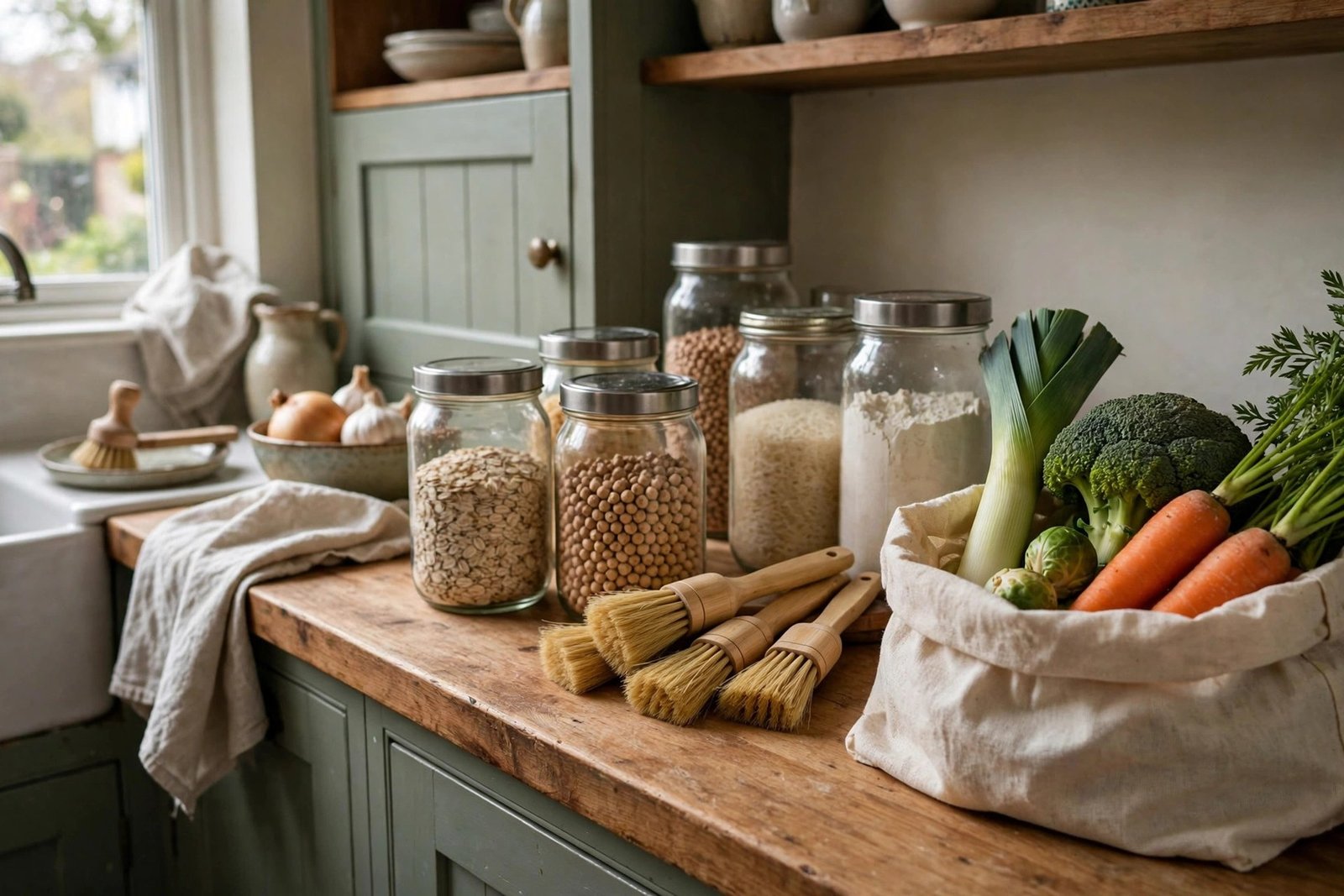
Stand in your kitchen for a moment and count the plastic. The bread bag, the milk bottle, the cling film over last night’s leftovers, the salad leaves in a crinkly sleeve, the little pots of yoghurt stacked like toy bricks in the fridge. It is everywhere, and most of it will be rubbish within the week. The average UK household throws away around 66 items of plastic packaging a week, and the kitchen is where the vast majority of it starts life. But here is the good news: the kitchen is also the easiest room in the house to de-plastic, and you do not need to become a zero-waste influencer to do it.
This guide walks you through the practical swaps that genuinely work in a normal British kitchen — the ones that save money as well as plastic, and that survive contact with a busy family, a small flat, or a landlord’s ancient cupboards. No shaming, no perfectionism. Just a room-by-room method that cuts your plastic footprint fast.
Start With an Honest Kitchen Plastic Audit
Before you buy a single beeswax wrap, do a one-week audit. Keep a bag by the bin and drop every piece of plastic packaging you would normally throw away into it. At the end of the week, tip it out and sort it. Most people discover the same pattern: food packaging dominates, with a supporting cast of cleaning-product bottles and the odd bit of film and foil.
This matters because the 80/20 rule applies hard to plastic. A handful of categories — bread, milk, fruit and veg, cleaning sprays, and food wrap — usually account for most of the volume. Target those five and you will cut more plastic than someone who buys every bamboo gadget on the market but keeps buying bagged salad. The audit also stops you spending money on swaps you do not need. If you never use sandwich bags, do not buy reusable ones.
The Big Five Swaps That Cut the Most Plastic
1. Bread, milk and the weekly shop basics
The single biggest plastic stream in most kitchens is the weekly shop itself. Milk in plastic bottles, bread in polythene sleeves, vegetables in net bags. The fixes are gloriously old-fashioned: a bakery loaf in a paper bag or your own cotton bread bag, milk from a milkman in glass bottles (yes, they still exist — and they collect the empties), and loose fruit and veg weighed at the till or dropped into reusable produce bags. Many Londoners are surprised to learn that market stalls and greengrocers are often cheaper than the supermarket for the basics, especially at the end of the day.
2. Ditch cling film for good
Cling film is the cockroach of kitchen plastic: single-use, unrecyclable in most UK council collections, and almost always replaceable. Beeswax or vegan wax wraps handle sandwiches and half-onions brilliantly, silicone lids stretch over bowls and cut fruit, and a simple plate over a bowl does the job in the fridge. For freezer storage, washable silicone bags or old takeaway tubs work just as well. Once you find your system, you will not miss the cling film tangled around the drawer.
3. Refill your cleaning products
Under-sink cupboards are plastic graveyards. Refill stations have quietly multiplied across the UK — many independent shops, some farmers’ markets, and even a growing number of supermarkets now let you refill washing-up liquid, laundry detergent and surface sprays into your own bottles. You can also buy concentrated refills online that turn one small pouch into a full bottle of cleaner. Fewer bottles bought, less plastic, and usually a lower cost per litre. Cutting the food waste piling up in your kitchen at the same time doubles the environmental win, since wasted food has a bigger carbon footprint than the packaging it came in.
4. Rethink the fruit and veg aisle
Pre-packed produce is a plastic hotspot, but it is also the easiest win. Choose loose peppers, tomatoes and mushrooms, buy a cotton or mesh produce bag once, and you are done. Wonky veg boxes and market surplus schemes are worth a look too — they rescue edible produce that supermarkets reject for cosmetic reasons, and learning where to find wonky veg boxes in the UK can slash both your plastic and your grocery bill in one move.
5. Stop buying water in bottles
If you are still buying bottled water in London, stop. Thames Water’s tap supply is safe, strictly regulated, and a fraction of the cost. A decent filter jug or a reusable bottle handles any taste concerns. The average Brit buying a daily bottle spends well over £300 a year on water they could get from the tap — the reusable bottle pays for itself in a fortnight.
What About the Plastic You Cannot Avoid?
Some plastic is unavoidable right now: the film around a block of cheese, the inner bags in cereal boxes, the lids on jars. For this residue, recycling properly is what matters. Check what your council actually accepts — rules vary wildly across London boroughs, and “wish-cycling” (tossing in things that cannot be processed) contaminates whole batches. Soft plastics like bread bags and crisp packets can now be dropped off at collection points in most large supermarkets, thanks to the Flexible Plastic Fund’s expanding network, though kerbside collection is still patchy.
For honest guidance on which packaging claims to trust, the Recycle Now campaign run by WRAP is the UK’s most reliable source, and Defra publishes the official picture on packaging policy and the plastic packaging tax. Both are worth bookmarking before you reorganise your bins.
The Kitchen Habits That Keep Plastic Out Long-Term
Swaps fail when they add friction, so design your kitchen for the laziest version of yourself. Keep reusable bags by the front door, not in a drawer. Put the wax wraps where the cling film used to live. Decant refills the day you buy them so the empty bottle does not sit around. Small systems beat big intentions every time.
And be honest about what “sustainable” means on a label. Terms like “eco”, “green” and “plant-based packaging” are not tightly regulated, and some so-called compostable plastics only break down in industrial facilities most of us cannot access. Learning Which?‘s plain-English guides to green claims will save you from paying a premium for packaging that is barely better than the conventional stuff.
Conclusion
Cutting plastic out of your kitchen is not about a dramatic purge or an expensive shopping spree at a zero-waste shop. It is about five big swaps — loose produce, glass-bottled milk, ditching cling film, refilling cleaners, and drinking tap water — supported by small systems that make the plastic-free choice the easy choice. Do the week-long audit, attack your biggest plastic streams first, and recycle the rest properly. Within a month, your bin will be lighter, your cupboards calmer, and your wallet quietly better off. The planet will notice too.
Frequently Asked Questions
How much plastic does the average UK kitchen produce?
UK households throw away roughly 66 pieces of plastic packaging per week on average, according to WRAP research, and the kitchen accounts for the overwhelming majority of it — mostly food and drink packaging.
Are beeswax wraps actually hygienic?
Yes, with normal care. Rinse them in cool water with mild soap, air dry, and avoid raw meat. They last around a year with regular use, after which they can be composted.
Can I recycle soft plastics like bread bags at home?
Most London councils still do not take soft plastics in kerbside recycling, but most large supermarkets now have front-of-store collection points for bread bags, crisp packets and similar films.
Is buying loose fruit and veg more expensive?
Usually the opposite. Loose produce lets you buy exactly what you need, which cuts waste, and market stalls and greengrocers are frequently cheaper than supermarket pre-packs for basics like onions, peppers and apples.
Do refill shops actually save money?
Often, yes. Refill stations typically charge by weight or volume with no packaging premium, and concentrated cleaning refills bought online can halve the cost per litre compared with branded bottles.