
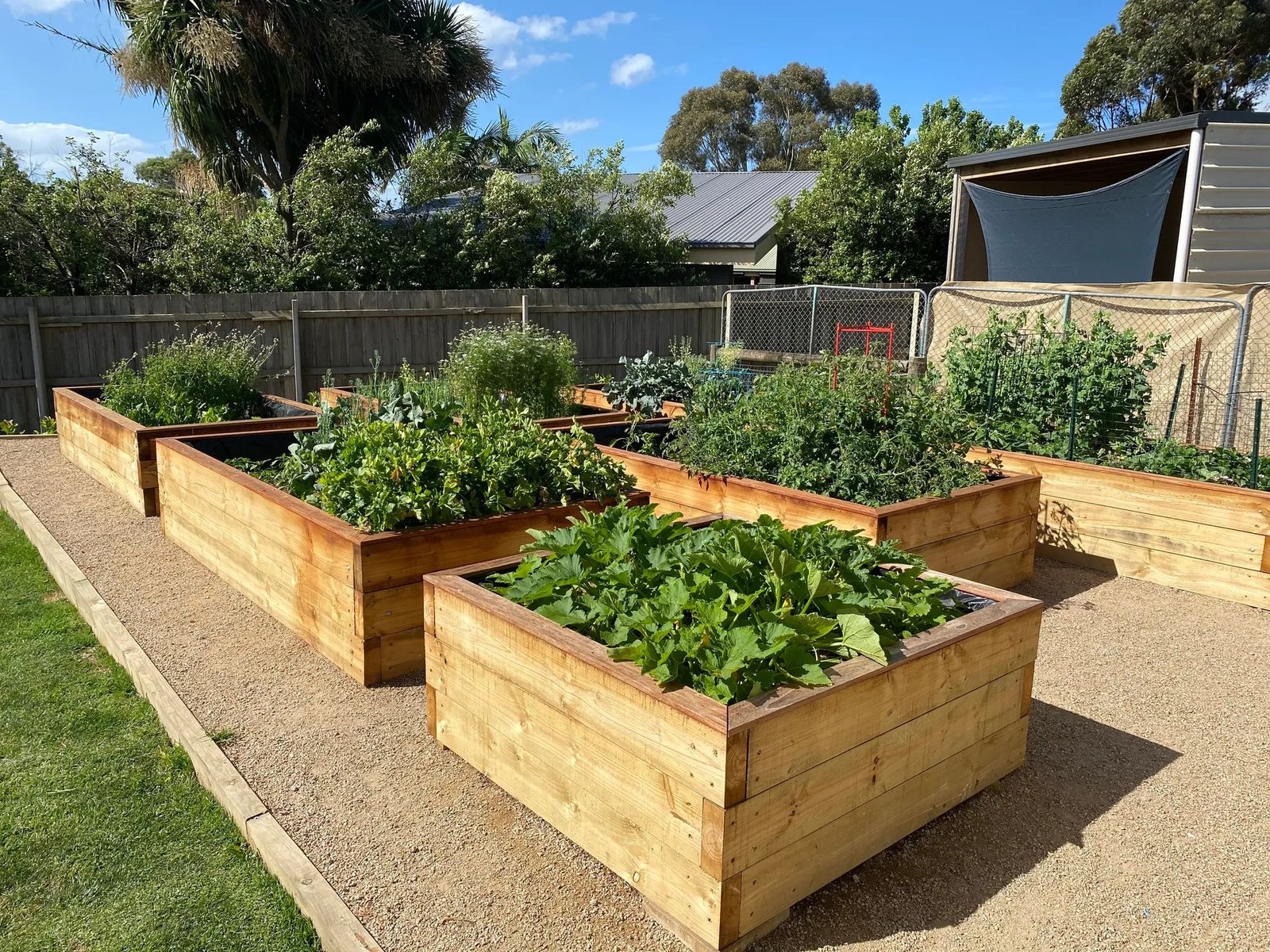
How to Build a Raised Garden Bed Cheaply (Under £50)
How to Build a Raised Garden Bed Cheaply (Under £50)
Raised beds are brilliant — better drainage, fewer weeds, no digging, and you garden without kneeling in mud. Shop-bought kits cost £80–£200, but here’s how to build a raised garden bed cheaply for under £50 with basic tools.
The cheapest materials
- Scaffold boards — the classic: £8–£15 each secondhand (check Gumtree, Facebook Marketplace). Two boards high = perfect depth. Avoid old chemically-treated boards for veg beds.
- Decking offcuts / reclaimed timber — free if you ask around building sites or check Freecycle.
- Pallets — free, but check they’re heat-treated (HT stamp), not chemically treated (MB stamp = methyl bromide, avoid for veg).
- Sleepers — look great but heavy and £20–£30 each; overkill for a first bed.
What to avoid: old railway sleepers (creosote), treated timber of unknown origin for vegetable beds, and MDF/chipboard (disintegrates in one season).
What you’ll need (total: £30–£50)
- Timber: 4 boards (e.g. 2.4m scaffold boards cut to size) — £20–£40
- Corner posts: 4 short lengths of 3×3 timber (£8–£12) — or screw directly with brackets
- Exterior screws 75–100mm (£5)
- Weed membrane for the base (£5 for a small roll) — optional but recommended
- Tools: drill/driver, saw, spirit level, tape measure
Step-by-step build
- Choose the spot: 6+ hours of sun for veg; level ground. Mark out roughly 2.4m x 1.2m — the ideal size (you can reach the middle from both sides without stepping in).
- Cut boards: two long sides (2.4m), two short ends (1.2m minus board thickness… or just butt-joint and don’t fuss — rustic is fine).
- Level the ground: roughly level is enough; use a spirit level and scrape high spots.
- Assemble: screw long boards to corner posts, then short boards. Two screws per joint. Pre-drill to avoid splitting.
- Position and level: set the frame down, check level both ways, pack soil under low corners.
- Line the base: lay weed membrane (or cardboard — free, rots down, suppresses weeds brilliantly).
- Optional: line the inside walls with plastic sheeting to protect timber from damp soil — extends bed life by years.
Filling it cheaply (the expensive part!)
Soil is where the money goes — a 2.4×1.2×0.3m bed needs ~850 litres. Cheap filling strategy:
- Bottom half: logs, branches, leaves, grass sods (upside down), cardboard — the “hügelkultur” lasagne method. Free, and it rots into rich soil.
- Top half: a mix of topsoil and compost. Bulk bags (750L) of screened topsoil: £60–£90 delivered — or council compost (many councils sell it cheap, £3–£5 a bag).
- Never fill entirely with bagged compost — it’s too rich, too expensive, and slumps. Mix with topsoil.
What to grow first
For instant gratification: salad leaves, radishes, spring onions, courgettes, potatoes — all easy, all productive in a first-year bed. Herbs (parsley, chives, mint in a pot — mint takes over otherwise) round it out. Avoid: carrots in stony soil, brassicas without netting (pigeons).
Making it last
- Treat the timber with a plant-safe preserver (linseed oil, or a veg-safe wood treatment) — reapply yearly.
- Keep soil 5cm below the rim to prevent boards rotting from constant wet contact.
- Top up with compost each spring — soil level drops as organic matter breaks down.
- Expect 5–8 years from scaffold boards; longer with lined walls.
The bottom line
Secondhand scaffold boards + corner posts + screws = a proper raised bed for £30–£50 and a Saturday morning. Fill the bottom with free woody waste, top with a topsoil-compost mix, and plant salad and courgettes. It’s the cheapest way into serious vegetable growing — and once you’ve tasted a homegrown tomato, there’s no going back. For making the whole garden work harder, see making a small garden look bigger.
Raised beds for different situations
The basic timber bed suits most people, but variations help. On concrete/paving: line the base with landscape fabric (not plastic — drainage is essential) and go deeper (40cm+) since roots can’t reach soil below. On weedy ground: the cardboard lasagne method — lay cardboard directly on the weeds, build the bed on top, fill — the cardboard smothers weeds and rots down. No digging, no weed membrane needed.
For bad backs: build waist-high beds (60–80cm) — more timber (£80–£120), but gardening without bending is transformative for accessibility. For kids: a 1m x 1m square bed each — small enough to manage, big enough for radishes, carrots and sunflowers. On a slope: terrace with multiple beds, each levelled individually — more work, but the only way that functions. Against a house wall: leave a 5cm gap and line the wall side — damp soil against brickwork causes problems.
Raised bed FAQs
How deep should a raised bed be? 25–30cm minimum for salads and herbs; 40–50cm for root veg (carrots, parsnips) and potatoes. Deeper is always better for soil health — but costs more to fill. The hügelkultur fill method (logs and branches in the base) gives depth without the soil bill.
Do I need to line the timber? Recommended — a plastic liner on the inside walls only (not the base — drainage!) extends timber life from 4–5 years to 8–10 by keeping damp soil off the wood. Use permeable landscape fabric or heavy-duty polythene with drainage holes at the base. Don’t wrap the whole bed like a present — trapped water rots timber faster.
What soil mix should I use? 60% topsoil + 30% compost + 10% sharp sand/grit is the classic loam-based mix — better than pure compost (which slumps and is too rich) or pure topsoil (which compacts). For a no-dig bed, fill with compost only and top up yearly — it works brilliantly but costs more upfront.
Can I use treated timber for veg beds? Modern pressure-treated timber (AC500/Tanalith E — the greenish stuff) is considered safe for veg growing by UK regulators — the old arsenic-based CCA treatment was banned in 2006. If you’re cautious, line the inside walls (which you should anyway) and the soil never touches the timber. Avoid old/unknown treated timber and creosote — genuinely toxic, still found on old railway sleepers.
How do I stop slugs in raised beds? Copper tape around the outside (£8 a roll — the electric shock deterrent actually works), beer traps, evening patrols with a torch (grim but effective), and encourage frogs (a small wildlife pond nearby = free slug patrol). Slug pellets: use ferric phosphate types (wildlife-safe) — metaldehyde pellets are now banned in the UK.
Related reading
Complete the garden with small-garden design tricks and the RHS raised-bed growing guides.