
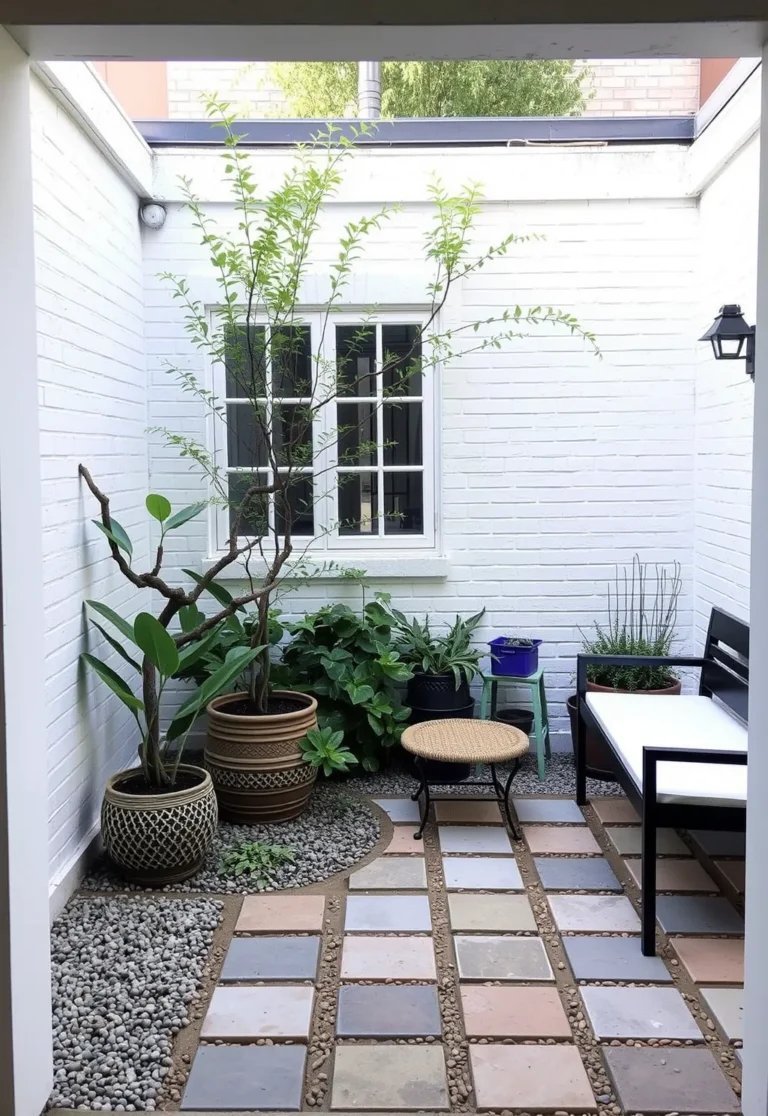
How to Make a Small Garden Look Bigger: 15 Designer Tricks
How to Make a Small Garden Look Bigger: 15 Designer Tricks
Small gardens are the reality for most UK homes — but small doesn’t have to feel cramped. Garden designers use the same optical tricks again and again. Here’s how to make a small garden look bigger, from free tweaks to weekend projects.
1. Hide the boundaries
The #1 trick: disguise where the garden ends. Paint fences a dark colour (Cuprinol Ducksback in dark oak, or black) — dark boundaries recede visually while pale fences advance. Cover fences with climbers (jasmine, clematis, climbing roses) so the eye reads “planting” not “fence”. A garden whose edges disappear feels twice the size.
2. Curve the lawn (or lose it)
A rectangular lawn in a rectangular garden emphasises the box. A curved or oval lawn breaks the geometry and creates hidden areas. Or ditch the lawn entirely — in tiny gardens, full planting or quality paving often works better than a postage-stamp of struggling grass.
3. Create zones
Divide the garden into two or three “rooms” — dining terrace, lawn, seating nook — using planting, trellis or a change of surface. Counter-intuitively, subdividing makes a garden feel larger because you can’t see it all at once. Mystery = perceived space.
4. Use diagonal lines
Lay paving, decking or paths on the diagonal rather than parallel to the house. The longest sightline in a rectangular garden is the diagonal — emphasise it and the garden reads bigger. This single trick adds apparent metres.
5. Go vertical
Small footprint? Grow up: wall planters, trellis with climbers, espalier fruit trees against fences, hanging baskets, a green wall. Vertical planting adds lushness without using floor space — and lush reads as generous.
6. Mirrors (used carefully)
An outdoor mirror on a shaded wall creates genuine illusion of depth. Use acrylic (not glass) for safety, angle it to reflect planting (not the neighbour’s bathroom), and frame it like a window. One well-placed mirror; not a hall of mirrors.
7. Light it well
Garden lighting (£50–£150 for solar/battery sets) transforms small gardens after dark — uplight a tree, wash a wall with light, string festoon lights overhead. A lit garden feels like an extra room in the evening. Solar has improved enormously; no wiring needed.
8. One statement, not many small bits
Lots of tiny pots and ornaments make a small garden feel cluttered. Fewer, larger elements — one big planter, one specimen tree (a multi-stem amelanchier is perfect), one water feature — read as confident and spacious. Scale up, not down.
9. Colour strategy
- Cool colours (blues, purples, whites) recede — plant them at the far end to push the boundary back
- Hot colours (reds, oranges) advance — keep them near the house
- Limit the palette to 2–3 colours for cohesion; rainbow planting feels chaotic in small spaces
10. Borrow the view
If there’s anything attractive beyond the garden — trees, a church spire, hills — frame it, don’t block it. Lower the fence section or use open trellis where the view is. Borrowed landscape is free square footage.
11. Keep it tidy (the free win)
Clutter shrinks gardens faster than anything. Store tools out of sight, hide bins behind screening, and keep surfaces clear. A tidy 5x5m garden feels bigger than a chaotic 10x10m one. If you need a shed, check shed planning rules first.
12. Furniture that fits
Oversized furniture swallows small gardens. Choose folding or stackable pieces, a bistro set instead of a 6-seater, built-in bench seating (doubles as storage). Glass-topped tables disappear visually; bulky wooden ones dominate.
Weekend project: the £200 transformation
- Dark fence paint (£40) — instant depth
- Three large planters (£60) with architectural plants (phormium, fatsia, grasses)
- Solar festoon lights (£25)
- A curved bark-chip path (£40) replacing a straight concrete one
- One outdoor mirror (£35)
The bottom line
Dark boundaries, diagonal lines, zones, vertical planting, and ruthless tidiness — those five do 80% of the work. Small gardens done well are better than big gardens done badly: every plant earns its place, everything’s within reach, and maintenance takes an hour not a day. Stop apologising for the size and start exploiting it.
Planting design for small gardens (the professional approach)
Planting makes or breaks small gardens. Professional principles: repeat, don’t diversify — 5 of one plant beats 1 of five plants. Repetition creates rhythm and calm; botanical stamp-collecting creates chaos. Layer heights: tall at the back (or in corners), medium in the middle, low at the front — the classic theatre staging that gives depth. Evergreen structure: 30–40% evergreen (yew, pittosporum, fatsia, grasses) so the garden has bones in winter — deciduous-only small gardens look bleak November–March.
Star plants for small gardens: multi-stem amelanchier (spring blossom, autumn colour, never too big), Japanese maple (sculptural, slow-growing), ornamental grasses (miscanthus, stipa — movement and winter structure), climbers (clematis, jasmine, climbing roses — vertical interest without footprint), herbs (productive, fragrant, pretty). Avoid: anything that wants to be 10m tall (leylandii, eucalyptus — the small-garden vandals), and thugs that spread uncontrollably (bamboo without root barrier, mint without a pot).
Small garden FAQs
Should I have a lawn in a small garden? Probably not — a 3x3m lawn is more maintenance than pleasure (mowing, edging, feeding for a postage stamp). Alternatives: full planting (lower maintenance than you’d think once established), quality paving with planted pockets, or artificial grass (£30–£60/sqm fitted — the honest solution for play areas and rental gardens). If you keep the lawn, make it curved/organic shaped, not a rectangle.
How do I add privacy without high fences? Layered planting: pleached trees (flat-trained, 2m+ screening above fence height), tall grasses, bamboo in containers (contained!), pergola with climbers. Trellis toppers on fences (usually permitted where solid fencing isn’t). Strategic evergreen in the overlooked corner, not everywhere — targeted screening beats fortress gardening.
What’s the cheapest way to transform a small garden? £200 transformation: dark fence paint (£40), bark-chip mulch on all beds (£40 — instant tidy), three large planters with architectural plants (£60), solar festoon lights (£25), one outdoor mirror (£35). Free: ruthless decluttering, pruning everything hard, jet-washing the patio, and mowing stripes on the lawn. Tidiness is free and transformative.
Can I fit a shed, seating AND planting in a tiny garden? Yes, with zoning: shed in the shadiest corner (it doesn’t need sun), seating where the sun actually falls (observe for a week first), planting everywhere else — especially vertical. Built-in storage bench doubles as seating and tool storage. The mistake is giving each element a full “zone” — in small gardens, elements must multitask.
North-facing small garden — is it hopeless? No — shade gardens can be gorgeous: ferns, hostas, astilbe, foxgloves, hydrangeas all thrive. Paint walls/fences light colours (bounce the light), use white and pale flowers (glow in shade), add lighting (shade gardens need it most), and put the seating in the sunniest spot (even if that’s by the back door, not the end). Work with the shade, not against it.
Related reading
Add growing space with a cheap raised bed — plus RHS small-garden design ideas.