
Repair or Replace Old Windows? How to Decide (UK Guide)
Repair or Replace Old Windows? How to Decide (UK Guide)
Draughty, rattling, misted-up windows — every older home gets there eventually. But is it cheaper to repair or replace old windows? The answer isn’t always “replace”, and the window industry would very much like you to think it is. Here’s how to decide honestly.
When repair wins
Repair is usually cheaper — often dramatically so — when:
- Misted double-glazed units: the sealed unit has failed but the frame is sound. Replacing just the glass unit costs £80–£200 versus £400–£600 for a whole new window.
- Draughty timber sashes: professional draught-proofing and overhaul (£200–£400 per window) transforms rattling sashes — and keeps the original character. In conservation areas, this may be your only option anyway.
- Sticking or broken hardware: new hinges, handles and locks (£20–£80 in parts) fix most operational problems.
- Rot in timber frames: localised rot can be cut out and spliced with new timber (£100–£300 per window) — far cheaper than replacement, and proper joiners do this routinely.
- Failed seals and gaskets on uPVC: replacement gaskets are cheap; a handyman can do several windows in an hour.
When replacement wins
Replace when:
- Frames are extensively rotten (poke with a screwdriver — if it sinks in across large areas, it’s done)
- uPVC frames are warped, discoloured or cracked beyond cosmetic help
- Single glazing throughout and you want the comfort/noise benefits of modern units
- Multiple failures per window (frame + glass + hardware) — the repair bill approaches replacement cost
- You’re renovating anyway — new windows during a refurb cost less per unit in disruption terms
For current prices, see our guide to double glazing cost per window.
The cost comparison
- Typical repair: £80–£400 per window
- Typical replacement (uPVC): £350–£600 per window
- Whole house (10 windows): repairs £800–£3,000 vs replacement £3,500–£7,000
So repair is usually 50–75% cheaper — the question is whether the repaired window gives you what you need (warmth, quiet, security, looks).
The energy question
Be realistic: repairing a draughty sash with proper draught-proofing gets you most of the comfort benefit of replacement at a fraction of the cost. Full replacement with A-rated glass is better — but the payback on energy savings alone is 20+ years. If your motivation is lower bills, spend the money on loft insulation first and repair the windows.
Period properties: special considerations
- Listed buildings: you’ll likely need listed building consent for replacement — like-for-like timber repairs are usually preferred by conservation officers.
- Conservation areas: Article 4 directions may remove permitted development rights — check before ordering uPVC.
- Original timber sashes in good condition are a selling point — estate agents will tell you buyers pay a premium for them. Don’t rip out character to save a few hundred pounds.
- Secondary glazing (£300–£500/window) gives near-double-glazing performance while preserving originals — the heritage-friendly upgrade.
Getting honest advice
Here’s the problem: window salespeople sell replacements; that’s their job. For an unbiased assessment:
- Ask a local joiner or handyman what they’d do — they repair for a living and have no replacement quota.
- Get a repair quote and a replacement quote, then compare properly.
- Check Checkatrade for sash restoration specialists in your area.
- If replacing, use a FENSA-registered installer (verify at fensa.org.uk).
The bottom line
Repair first, replace when truly necessary. Misted units, draughts, stuck sashes and localised rot are all fixable for £80–£400 a window — a fraction of replacement cost. Replace when frames are structurally shot, when you’re still on single glazing and want modern comfort, or when repair costs approach replacement anyway. And whatever you choose, get the repair quote before the salesperson tells you it’s impossible — it rarely is.
The sash window restoration option (in detail)
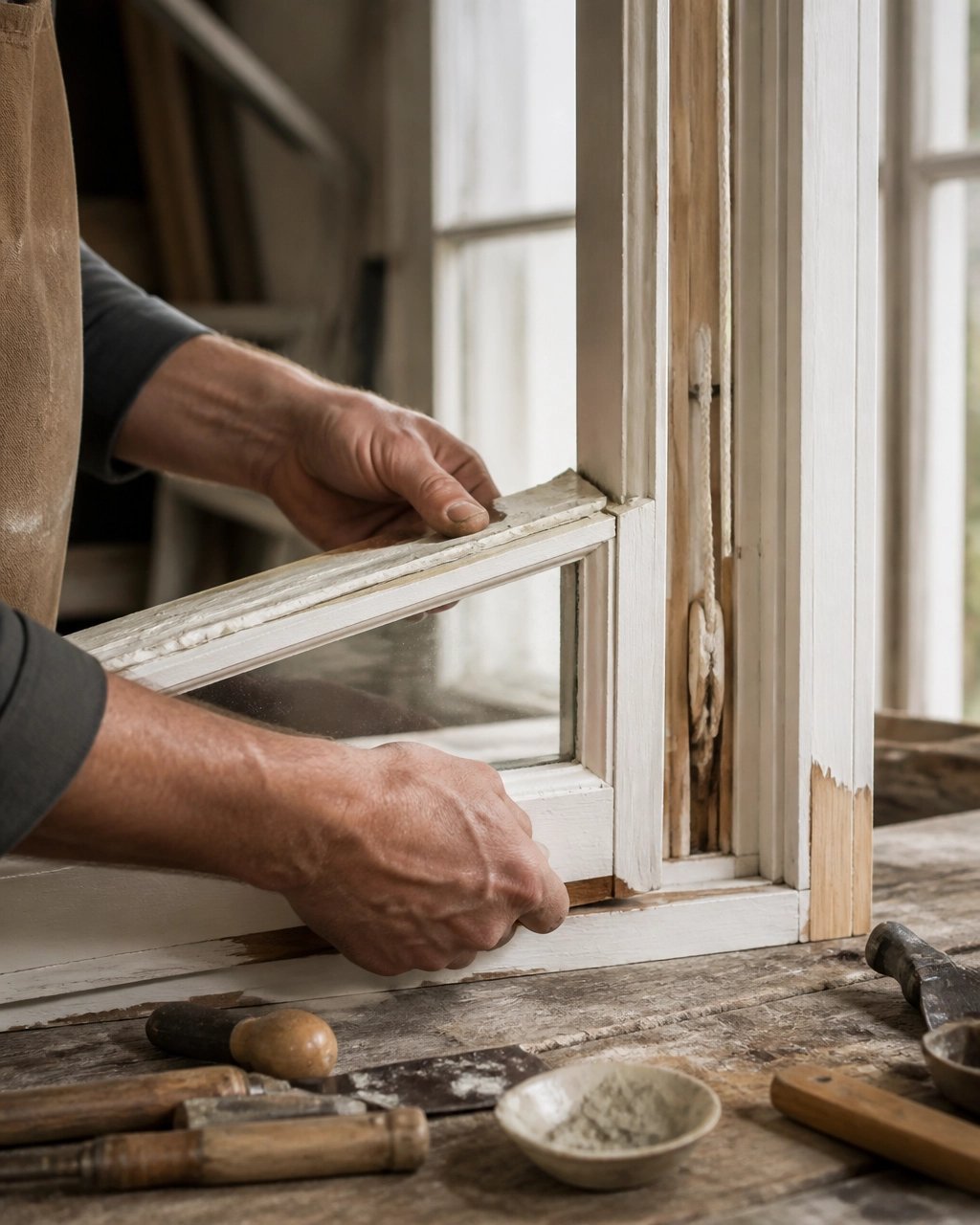
Original timber sashes deserve special mention — they’re often better made than anything you’ll buy today (old-growth timber, proper joinery), and restoration is a well-established trade. A full professional sash restoration (£300–£600 per window) typically includes: draught-proofing (brush seals routed into the frame — the single biggest comfort upgrade), re-cording (new sash cords and weights balanced), timber repairs (spliced sections where rotted), re-puttying and repainting.
The result: windows that look original, operate smoothly, and perform close to modern double glazing for draughts (though not for thermal insulation — single glass is single glass). For listed buildings and conservation areas, this is usually the only permitted route — and honestly, it’s often the best route anyway. Slim-profile double-glazed sashes exist (£900–£1,500/window) for where regulations allow, combining original looks with modern performance.
Repair vs replace FAQs
How do I know if timber frames are beyond repair? The screwdriver test: poke the timber — if it sinks in easily across large areas (not just surface softness), the rot is structural. Localised rot (sills, bottom rails) is repairable; pervasive rot through stiles and joints means replacement. A joiner gives you the honest verdict in minutes.
Is secondary glazing as good as double glazing? For noise: often better (the wider air gap is excellent acoustically). For thermal: close to double glazing if well-fitted with seals. For convenience: worse (two windows to open/clean). It’s the best option where replacement isn’t allowed, and a legitimate choice anywhere.
Will new windows add value to my house? They protect value more than add it — buyers expect working windows; rotten ones trigger price reductions. Estate agents estimate that visibly new windows add 5–10% to perceived value, but the real return is in saleability (faster sale, fewer survey objections).
Can I replace windows in winter? Yes — installers work year-round. Each window is typically open for 30–60 minutes; a good fitter does one at a time and sheets the opening. It’s colder and darker, but winter bookings often come with better prices.
What about the glass — is all double glazing the same? No — check the energy rating (A+ to E; insist on A-rated minimum), argon fill (standard on decent units), low-E coating (reflects heat back in), and warm-edge spacer bars (reduce condensation at edges). A cheap C-rated unit in a premium frame is lipstick on a pig.