
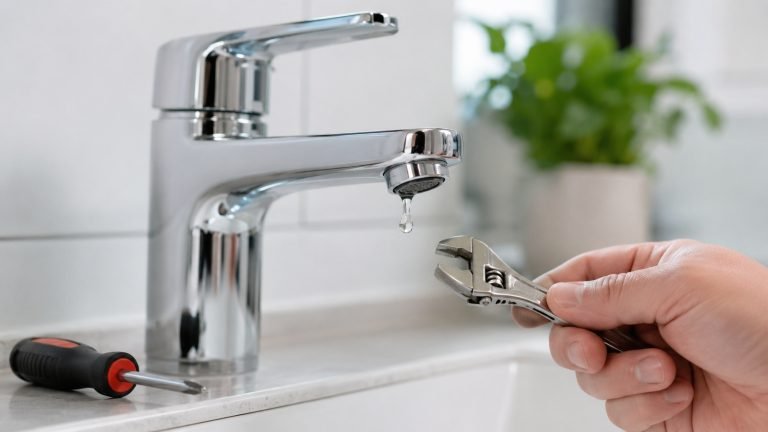
How to Fix a Dripping Tap Without a Plumber (Step-by-Step)
How to Fix a Dripping Tap Without a Plumber (Step-by-Step)
Drip. Drip. Drip. A dripping tap wastes around 5,000 litres of water a year — and slowly drives you mad. The good news: fixing a dripping tap without a plumber is one of the easiest DIY jobs there is. Twenty minutes, about £5 in parts, no plumbing experience needed.
What you’ll need
- An adjustable spanner or set of spanners
- A screwdriver (flathead and Phillips)
- Replacement washers or cartridge — take the old one to the DIY shop to match (£2–£5)
- PTFE tape (£1–£2) — optional but handy
- An old towel and a bowl
Step 1: Turn off the water
Find the isolation valve — usually a small screw or lever on the pipe under the sink. Turn it 90 degrees (a quarter-turn). No isolation valve? Turn off the mains at the stopcock (usually under the kitchen sink or by the front door). Open the tap to drain remaining water and confirm it’s off.
Step 2: Identify your tap type
- Traditional taps (separate hot/cold, turn multiple times): the drip is almost always a worn rubber washer. Cheapest fix.
- Quarter-turn / lever taps (modern, 90-degree turn): the drip means a worn ceramic disc cartridge. Slightly pricier part (£8–£20) but still an easy swap.
- Mixer taps: same as above — cartridge replacement.
Step 3: Dismantle the tap
- Plug the plughole (screws love to escape down it).
- Pry off the decorative cap on top of the tap handle (flathead screwdriver under the edge).
- Undo the screw underneath and lift off the handle.
- Use the spanner to unscrew the valve/cartridge body (turn anti-clockwise). It should come out as one unit.
Step 4: Replace the washer or cartridge
- Washer type: at the bottom of the valve you’ll see a small rubber washer held by a nut or screw. Remove it, fit the new one (smear a little silicone grease or even washing-up liquid to seat it), reassemble.
- Cartridge type: the whole cartridge unscrews/lifts out. Take it to the shop to match exactly — cartridges are model-specific. Slot the new one in.
Wrap a couple of turns of PTFE tape around threaded joints for a belt-and-braces seal.
Step 5: Reassemble and test
Reverse the dismantling, turn the water back on slowly, and check for leaks around the base. Run the tap for 30 seconds to flush any debris. Done — silence.
If it still drips
- Check the valve seat — the metal surface the washer presses against. If it’s pitted or rough, the new washer can’t seal. A seat reseating tool (£10) grinds it smooth — or this is the point to call a plumber.
- Wrong washer size — even 1mm off causes drips. Take the old washer to the shop rather than guessing.
- Cartridge not seated properly — remove and refit, checking alignment.
- High water pressure can cause persistent drips — if multiple taps drip, ask a plumber about a pressure-reducing valve.
When to call a plumber instead
- Water leaking from the base of the tap or under the sink (could be supply pipes, not the tap)
- Seized valves that won’t budge (forcing them can snap pipes)
- No isolation valve and you can’t find the stopcock
- It’s a complex thermostatic mixer or sensor tap
A plumber charges £60–£100 for a tap repair visit in most of the UK (more in London — see plumber hourly rates). Worth it if DIY goes sideways, but try the washer first — you’ll be amazed how often that’s all it is.
The bottom line
Nine times out of ten, a dripping tap is a £3 washer and 20 minutes of your time. Turn off the water, swap the washer or cartridge, turn it back on. The silence afterwards is deeply satisfying — and you’ll have saved 5,000 litres of water a year and a £80 call-out fee. For tougher blockages elsewhere, see how to unblock a sink without chemicals.
Understanding your tap: washer vs ceramic disc
Knowing which type you have saves a wasted trip to the DIY shop. Washer taps (traditional): the handle turns multiple full rotations; inside is a rubber washer compressed onto a valve seat. Washers cost £2–£5 and wear out every few years — they’re designed to be consumable. Ceramic disc taps (modern quarter-turn): the handle turns 90 degrees; inside are two ceramic discs that slide across each other. They last 10–15 years but the cartridges cost £8–£25 and are model-specific.
Which is better? Ceramic disc taps drip less often and feel nicer, but when they fail you’re hunting for a specific cartridge (take the old one to a specialist like Tap Magician if the DIY shop doesn’t stock it). Washer taps drip more often but the fix is universal and costs pennies. For rental properties and utility sinks, washer taps remain the pragmatic choice — any handyman can fix them in minutes.
Dripping tap FAQs
How much water does a dripping tap waste? A tap dripping once per second wastes roughly 5,000–10,000 litres a year — enough to fill a small swimming pool. On a water meter, that’s £15–£40/year literally down the drain, plus the energy if it’s the hot tap.
The tap drips from the handle, not the spout — what now? That’s the gland nut / O-ring, not the washer — water is escaping around the spindle. Tighten the gland nut slightly (the nut just below the handle); if it persists, replace the O-ring (£2). Different fix, same 10-minute job.
Can I use the tap while waiting for parts? Yes — just isolate it via the isolation valve underneath and use the other tap. Don’t leave a dripping hot tap running for days; the energy waste adds up fast.
My mixer tap drips — is it harder? Slightly — mixer cartridges are brand and model specific (£15–£40). Identify the brand (often stamped under the tap or on the original paperwork), order the exact cartridge, and the swap itself is the same 20-minute job. If you can’t identify it, a photo emailed to a tap specialist usually does the trick.
When is a dripping tap actually an emergency? If water is spraying or flowing continuously (not dripping) and you can’t isolate it — turn off the mains stopcock and call a plumber. A drip is an annoyance; a flow is a flood in progress.