
Which Electric Car Gives the Best Range for £30,000?
Range remains the electric car question that matters most — the difference between relaxed motoring and charger anxiety. At £30,000, you sit at the market's most competitive intersection: new mainstream EVs with solid real-world range, and nearly-new premium models whose first owners absorbed the depreciation. The headline WLTP figures lie a little for everyone; the real-world numbers tell the truth.
Here is which electric car gives the best range for £30,000 — the genuine contenders, their honest real-world range, and how to choose between new and nearly-new.
How to Read Range Figures Honestly
WLTP (Worldwide Harmonised Light Vehicle Test Procedure) figures are lab-derived and optimistic — expect real-world range around 75-85% of WLTP in mixed driving, less in winter (cold batteries and cabin heating can cut 20-30%) and at sustained motorway speeds. A car rated 300 miles WLTP delivers roughly 230-250 real miles in temperate mixed use, maybe 200 in a cold motorway winter. Always mentally discount before comparing.
Also distinguish battery size from efficiency: a big battery with poor efficiency (large SUVs) can lose to a smaller battery with excellent efficiency. Check miles-per-kWh figures — 4+ mi/kWh is excellent, 3-3.5 typical. And consider your actual use: the 250-mile car charged at home nightly serves a 40-mile commute identically to the 350-mile car. Range matters most for the regular long journeys; buy for those, not for fantasies.
The New-Car Contenders
At £30,000 new, the range leaders cluster around 250-320 miles WLTP. The Tesla Model 3 (base versions near this price when discounted) offers exceptional efficiency — real-world 250+ miles and access to the Supercharger network, the charging advantage that still matters. The MG4 Long Range brings around 280 miles WLTP at well under £30,000 — the value disruptor, with real-world 220+ miles. Hyundai Kona Electric and Kia Niro EV offer 280-300 miles WLTP with excellent efficiency and strong warranties.
The trade-offs: base trims at this price mean modest equipment; MG's dealer network and residuals trail the Koreans'; Tesla's minimalism divides opinion. But on pure range-per-pound new, the MG4 Long Range and discounted Model 3 lead. Always check current pricing — EV list prices move with incentives and the used market constantly reprices the new decision.
Further reading: the RAC.
The Nearly-New Sweet Spot
Depreciation: your discount
£30,000 nearly-new (1-2 years old, under 20,000 miles) unlocks cars that cost £40,000+ new — and EVs depreciate hard, which is your gain. The Tesla Model 3 Long Range (real-world 280-300 miles) and Model Y, Hyundai Ioniq 5, Kia EV6 (real-world 260-300 miles, ultra-rapid charging), and Polestar 2 all appear at this money. These bring bigger batteries, faster charging (the EV6/Ioniq 5's 800V architecture charges 10-80% in under 20 minutes), and premium feel.
EV-specific checks before buying
Nearly-new checks specific to EVs: battery health report (degradation should be minimal at this age — under 5%), service history, tyre condition (EVs eat tyres), and remaining battery warranty (typically 8 years/100,000 miles, transferable). Buy from reputable dealers with EV expertise; have an independent inspection for private sales. On range alone, a nearly-new EV6 or Model 3 Long Range beats every new £30,000 car — the question is whether you value new-car warranty simplicity over maximum capability.
Charging: The Range Multiplier
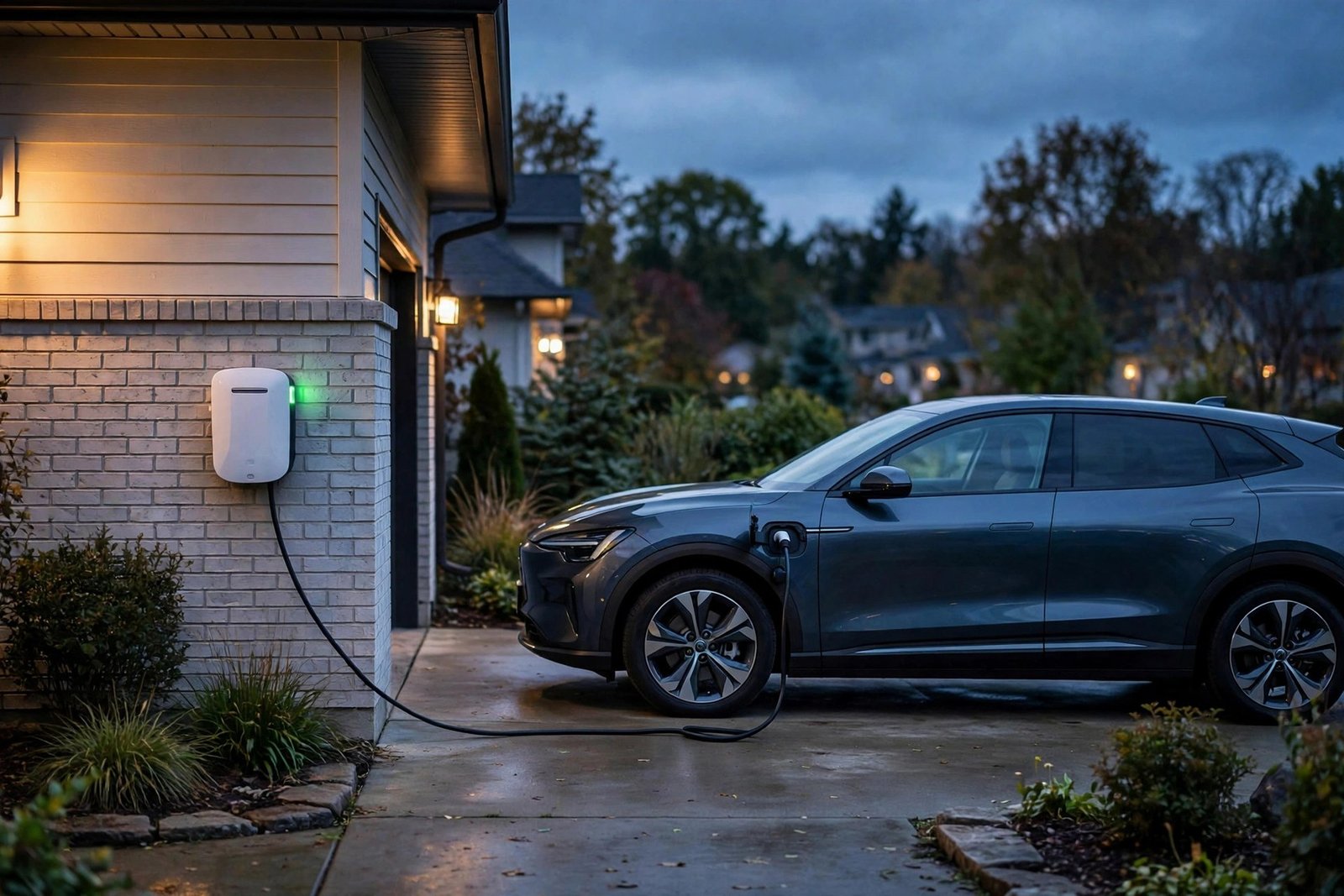
Range figures assume you can replenish conveniently — charging access multiplies effective range. Home charging (a 7kW wallbox, roughly £800-1,000 installed, often with grants for renters) transforms EV life: every morning starts 'full', and the 250-mile car becomes effortless. Without home charging, you depend on public networks — factor your local rapid chargers and their reliability, not just the car's range.
Charging speed matters as much as range for long journeys: a 250-mile car charging at 150kW+ can add 150 miles in 15 minutes, while a 300-mile car limited to 50kW charging is slower on road trips despite the bigger battery. Check the charging curve (peak rate sustained, not just claimed) for your contenders. In London specifically, on-street charging provision varies wildly by borough — check your actual streets before committing to EV life without a driveway.
Battery Health: The Long-Term Picture
Battery degradation — the fear behind every used-EV purchase — is milder than feared. Real-world data across millions of EVs shows typical degradation of 1-2% yearly, slowing after the first couple of years; most EVs retain 85-90%+ capacity at 8-10 years. The 8-year/100,000-mile battery warranties (covering excessive degradation, usually below 70%) mean the risk window is largely insured.
Preserve health with habits: charge to 80-100% as your use dictates (daily 80% for longevity, 100% before long trips — modern battery management handles this gracefully), avoid leaving the car at 100% or 0% for days, and prefer AC home charging over constant rapid charging (rapids are fine for trips, just not as the sole diet). Heat is the enemy — park in shade in heatwaves where possible. Check any used EV's battery health report before buying; at 1-2 years old, anything under 95% warrants questions. The battery will likely outlast your ownership — treat it sensibly and stop worrying.
Learn more from Which?.
The Verdict
Best real-world range for £30,000 new: Tesla Model 3 (discounted) or MG4 Long Range — 220-250+ honest miles. Best range overall at £30,000: nearly-new Kia EV6, Hyundai Ioniq 5 or Tesla Model 3 Long Range — 260-300 real miles plus faster charging. The nearly-new route wins on capability per pound; the new route wins on simplicity and full warranty.
Choose by your charging: home charger plus 230 real miles covers almost all UK driving patterns comfortably. Only buy maximum range if your regular journeys demand it — the extra battery costs money, weight and efficiency every day for trips you take twice a year. Test drive the finalists, check insurance quotes (EVs vary), and remember: the best range is the range you can reliably replenish. At £30,000 in 2026, range anxiety is a solved problem for anyone with home charging.
Want to go deeper? Our article on what is the best way to see the lake district without a car and how do i connect my phone to my car bluetooth is worth a look next.
For £30,000, the best new-car range comes from the Tesla Model 3 (discounted) or MG4 Long Range at 220-250+ real-world miles; the best overall comes nearly-new — Kia EV6, Hyundai Ioniq 5 or Model 3 Long Range delivering 260-300 honest miles with faster charging. Discount WLTP figures by 15-25% for reality, weigh charging speed alongside range, and ensure home or reliable local charging before buying. Match range to your actual regular journeys, not imagined ones.
Frequently Asked Questions
What is the real-world range of electric cars vs WLTP?
Expect 75-85% of the WLTP figure in mixed driving — less in winter (20-30% reduction possible) and at sustained motorway speeds. A 300-mile WLTP car delivers roughly 230-250 real miles.
Is it better to buy a new or used electric car?
Nearly-new (1-2 years) offers the best value — EVs depreciate steeply, so £30,000 buys £40,000+ cars with minimal battery degradation. New buys simplicity, full warranty and the latest tech.
How important is charging speed vs range?
Very — for long journeys, a shorter-range car with 150kW+ charging can be faster overall than a longer-range car limited to 50kW. Check the charging curve, not just the peak claim.
Can I own an EV in London without a driveway?
Yes, but check your borough's on-street charging provision first — it varies enormously. Without home charging you depend on public networks, so local rapid charger reliability matters as much as the car's range.