
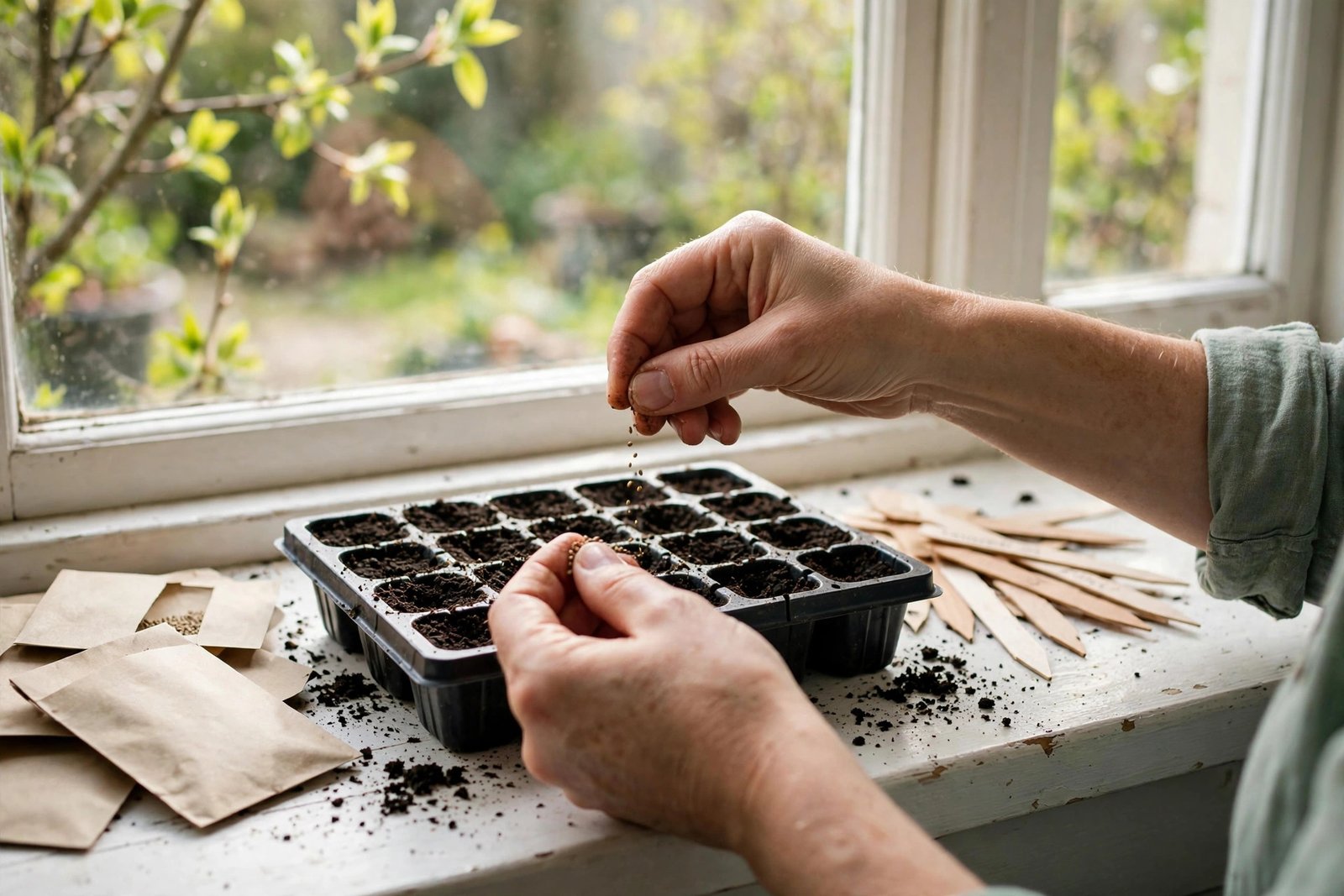
When Should Londoners Sow Seeds Indoors? Month-by-Month Guide
Every February, London’s gardeners get itchy fingers. The seed packets are bought, the windowsills are cleared, and the temptation to sow everything now is overwhelming. But sow too early and you get leggy, light-starved seedlings that stall for weeks; sow too late and you lose a month of the growing season. Timing indoor sowing is one of the highest-leverage decisions in a gardening year. Here is when Londoners should sow seeds indoors, month by month, and the science behind the calendar.
The core principle: indoor sowing buys you a head start, but only if the seedling has somewhere to go. A tomato sown in January becomes a large, light-hungry plant by March with nowhere to go until May — it suffers more than a March-sown seedling that grows fast in improving light. The RHS advises that most tender and half-hardy flowers and vegetables are sown indoors in spring for planting out in late spring once frost risk passes. London’s advantage: the city’s heat island means last frosts come earlier here than in most of Britain — typically late March to mid-April, versus May elsewhere.
The London sowing calendar
January–February: only the long-game crops
Resist the urge except for: chillies and sweet peppers (need a very long season; sow late January in a heated propagator), onions from seed (slow; February), and sweet peas (hardy; can go in a cold frame or cool windowsill from January). Everything else waits. Light levels are too low for strong growth, and seedlings sown now will be leggy by March. If you must sow, a grow light is non-negotiable — see the RHS guide to sowing seeds indoors for the full technique.
March: the main event begins
March is when London indoor sowing properly starts: tomatoes, aubergines, cucumbers, courgettes, basil, cosmos, zinnias, marigolds. Daylight is strengthening, and seedlings sown now hit their stride as light improves. Use a heated propagator or warm windowsill (most seeds germinate best around 18–21°C), then grow on in the brightest spot you have. March sowings catch up with — and usually overtake — anything sown in January, because they grow in better light from day one.
April: fill the gaps
April is for second sowings (succession: more lettuce, radish, beetroot), pumpkins and squashes (sow mid-to-late April; they grow fast and hate being held back), sunflowers, nasturtiums, and tender herbs. By late April, hardy annuals can go straight outside, freeing windowsill space. This is also the month to start hardening off March seedlings — more below.
May–June: direct sowing takes over
After the last frost (London: usually by early May, though keep fleece handy), most things go straight outside. Indoor sowing now is for successional salads, late courgettes, and winter brassicas (kale, winter cabbage sown in May–June for autumn planting). Harrod Horticultural’s sowing and planting-out guide is excellent on the hardening-off process that bridges indoor and outdoor life.
July–September: the second season
London’s long autumn is an asset: sow winter salads (mizuna, winter lettuce, corn salad) indoors in August for planting out under cover, spring cabbage in July, and broad beans (Aquadulce Claudia) in October–November for overwintering. Autumn-sown sweet peas give earlier flowers next year.
The last-frost rule (London edition)
Everything hinges on the last frost date — tender plants planted out before it die. London’s urban heat island typically delivers last frosts in late March to mid-April in central areas, a full month earlier than rural Home Counties. But “typically” is not “guaranteed”: keep horticultural fleece ready into May, watch forecasts, and use the two-week hardening-off process (days outside, nights inside, gradually increasing exposure) rather than a sudden move. Seedlings raised in cosy indoor conditions need acclimatisation like athletes need warm-ups.
Avoiding leggy seedlings (the classic failure)
Leggy seedlings — pale, stretched, floppy — are the number one indoor-sowing failure, caused by too little light and too much warmth. Prevention:
- Maximum light: the brightest windowsill you have, preferably south-facing. Turn trays daily so seedlings do not lean.
- Cooler after germination: seeds like warmth to germinate (~18–21°C) but seedlings grow sturdier slightly cooler (15–18°C). A warm propagator then a cool bright sill is the ideal sequence.
- Do not sow too early: the single biggest cause of legginess. A March seedling in good light outperforms a January seedling every time.
- Supplemental light: a basic LED grow light 10cm above the tray for 14–16 hours daily produces stocky, professional-quality seedlings.
- Air movement: a gentle fan nearby (not blasting) strengthens stems — the indoor equivalent of wind.
If seedlings do go leggy, all is not lost: transplant tomatoes deeper (they root from the stem), prick out others promptly into individual pots, and give them light. But prevention beats rescue.
Kit list: what you actually need
Seed trays or modules, peat-free seed compost (low-nutrient, fine-textured), a spray bottle or fine-rose watering can, labels (you will forget what is what), and either a heated propagator (£25–£40, worth it for chillies and peppers) or a warm windowsill. That is it. Fancy equipment does not compensate for bad timing — which is why this article exists.
Once seedlings are growing strongly, they need somewhere to go: building a raised garden bed cheaply gives them a home, and if the lawn is part of the picture, the best lawn feed for UK grass keeps the rest of the garden in shape while you focus on the seedlings.
Don’t skip hardening off
The most heartbreaking seedling mistake isn’t sowing at the wrong time — it’s moving cosseted indoor seedlings straight outside. Plants raised on a warm windowsill have soft growth and no tolerance for wind, direct sun or cold nights; planted out unprepared, they sulk or simply die. Harden them off over 7–10 days: put them outside in a sheltered spot for a couple of hours daily, gradually increasing the time until they’re out all day and finally overnight. Bring them in if frost threatens. It feels fussy, but this single step is the difference between seedlings that transplant seamlessly and ones that stall for weeks. Your future self, harvesting the results, will thank you.
The bottom line
Londoners should sow seeds indoors from March for most crops (January–February only for chillies, peppers, onions, and sweet peas), use the city’s early last frost (late March to mid-April) as the planting-out anchor, and harden off for two weeks before anything goes outside. Sow with the light, not against it — patience in February is worth more than any propagator.
Frequently Asked Questions
When is it too early to sow seeds indoors in London?
Before March for most crops — light levels are too low and seedlings go leggy. Exceptions: chillies, sweet peppers (late January, heated), onions from seed and sweet peas (February). March sowings overtake January ones in better light.
When is the last frost in London?
Typically late March to mid-April in central London thanks to the urban heat island — earlier than most of Britain. Keep fleece handy into May and always harden off seedlings for two weeks before planting out.
Why are my seedlings leggy?
Too little light combined with too much warmth — the classic sign of sowing too early. Give maximum light, cooler growing-on temperatures (15–18°C), and consider a grow light 10cm above the tray.
Do I need a heated propagator?
Helpful but not essential. Most seeds germinate on a warm windowsill; a propagator (£25–£40) is worth it mainly for heat-lovers like chillies and peppers sown in January–February.
What can I sow indoors in autumn?
Winter salads (mizuna, winter lettuce, corn salad) in August, spring cabbage in July, broad beans in October–November for overwintering, and autumn-sown sweet peas for earlier flowers next year.