
Is a Smart Thermostat Worth It in a UK Home? Honest Review
Is a Smart Thermostat Worth It in a UK Home? Honest Review
Smart thermostats promise lower bills and a warmer house, controlled from your phone. But at £150–£250 fitted, is it worth getting a smart thermostat in a UK home? I’ve lived with one for three winters now — here’s the no-hype verdict.
What a smart thermostat actually does
Beyond the app control, the useful features are:
- Learning schedules: devices like Google Nest learn your routine and adjust automatically
- Geofencing: the heating turns down when the last person leaves and warms up as you head home (Hive and Tado do this well)
- Room-by-room control: with smart radiator valves (£40–£60 each), you heat only the rooms you use
- Usage reports: see exactly when and how much you’re heating — genuinely eye-opening
- Weather compensation: some models adjust for outdoor temperature automatically
The main players in the UK
- Google Nest Learning Thermostat (~£200): the learning pioneer; gorgeous hardware; works with most UK systems
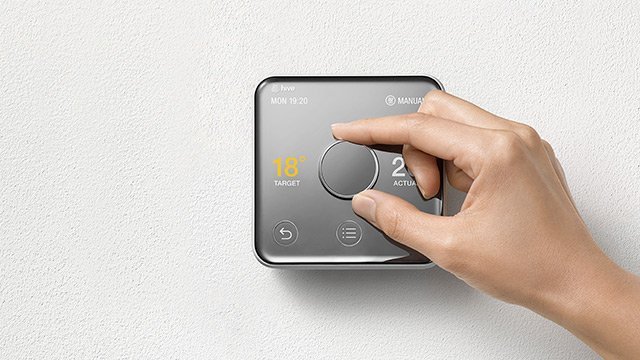
- Hive Active Heating (~£180): British Gas’s offering; simple app; huge UK user base and installer network
- Tado Smart Thermostat (~£170): the efficiency nerd’s choice; excellent geofencing and open-window detection
- Honeywell Evohome: the multi-room zoning king — pricier, but the best for large houses
All work with the combi boilers most UK homes have. Check compatibility with your specific boiler on the manufacturer’s site before buying — Y-plan and S-plan systems sometimes need a pro install.
Do they actually save money?
The honest answer: it depends how wasteful you are now. Independent studies and energy suppliers suggest typical savings of 8–16% on heating bills — but that range hides a lot:
- Big savers: households that currently heat empty houses all day, or run the heating on a crude timer. Geofencing alone can cut 10–15%.
- Modest savers: if you already use your programmer sensibly, expect 3–8% — mostly from smarter scheduling and the usage insights.
- Minimal savers: tiny well-insulated flats where heating is already minimal.
For the detailed numbers, see our guide to how much you can save with a smart thermostat each year.
The non-money benefits (underrated)
- Coming home to a warm house without heating it all day — the geofencing trick never gets old
- Turning the heating off from bed when you realise you left it on
- Holiday mode — frost protection while you’re away, warm house on return
- Spotting problems: usage spikes can reveal a boiler fault before your bill does
The downsides nobody mentions
- They can’t fix a bad system. A smart thermostat on an ancient inefficient boiler with no insulation is lipstick on a pig. Sort loft insulation first — it’s cheaper and saves more.
- Subscription creep: some features (advanced reports, extended warranty) sit behind subscriptions on certain brands.
- Wi-Fi dependency: if your router dies, most revert to a basic schedule — fine, but the smarts vanish.
- Over-enthusiastic learning: Nest’s auto-schedule drove me mad for the first fortnight before it settled. You can turn learning off and just program it manually.
Installation: DIY or pro?
Many are designed for DIY — Hive and Nest both offer straightforward installs if you’re replacing a standard wired thermostat (30–45 minutes, basic tools). But if your wiring is old, unusual, or you’re not confident, pay the £80–£120 for professional installation. Mains voltage plus water plus gas boiler is not the place for guesswork. Most retailers offer installation at checkout.
The bottom line
Yes, worth it for most UK homes — with caveats. If you heat an empty house for hours daily, a smart thermostat pays for itself in 1–2 winters and the convenience is genuinely lovely. If your heating habits are already disciplined, the payback stretches to 3–4 years and it’s more of a comfort upgrade. Either way, fix your insulation first — no thermostat out-saves a draughty loft. And pair it with an annual boiler service to keep the whole system running efficiently.
Smart thermostat vs smart TRVs: which first?
A common question: should you get the smart thermostat, or smart radiator valves (TRVs), or both? The thermostat first, always. The wall thermostat controls the boiler — it’s the brain. Smart TRVs (£40–£60 per radiator) are the refinement: they let you set different temperatures per room, so the spare bedroom stays at 15°C while the living room is 20°C.
TRVs make the biggest difference in larger homes with unused rooms — a 4-bed house heating 3 empty bedrooms all evening is pure waste. In a 2-bed flat where you use every room, TRVs add little. Budget reality: thermostat (£170–£220) + 6 smart TRVs (£240–£360) = £400–£580 all-in. That’s a serious investment — but in a draughty 3-bed semi, the combined saving can reach 15–20% of heating bills, paying back in 2–3 winters. Start with the thermostat, add TRVs to the rooms you actually leave empty.
Smart thermostat FAQs
Will it work with my boiler? Most UK combi and system boilers (Worcester Bosch, Vaillant, Ideal, Baxi) are compatible with Nest, Hive and Tado. Very old boilers (20+ years) or unusual wiring (some Y-plan/S-plan setups) may need professional installation — check the compatibility checker on the manufacturer’s website with your exact boiler model.
Do I need a C-wire? UK systems usually power the thermostat from the boiler’s wiring — most UK installs don’t need the American “C-wire”. Nest and Hive both ship with UK-specific wiring guides. If your current thermostat is battery-powered with only 2 wires, you may need a pro to run power.
What happens if the Wi-Fi goes down? The thermostat keeps running its last schedule locally — you won’t freeze, you just lose app control and learning until Wi-Fi returns. Manual override on the device always works.
Are they hard to use for elderly relatives? This is a genuine concern — some smart thermostats baffle non-technical users. Hive has the simplest interface of the big three; all of them can be set to a basic manual schedule that works like a traditional programmer. Set it up for them, lock the schedule, and leave the app alone.
Can it detect an open window? Tado has open-window detection (pauses heating when it senses a sudden temperature drop); others approximate it. It’s a nice touch but not a buying reason — just close the window.
Related reading
See the Energy Saving Trust’s heating controls advice for independent guidance, alongside our smart thermostat savings breakdown.
One thought on “Is a Smart Thermostat Worth It in a UK Home? Honest Review”