
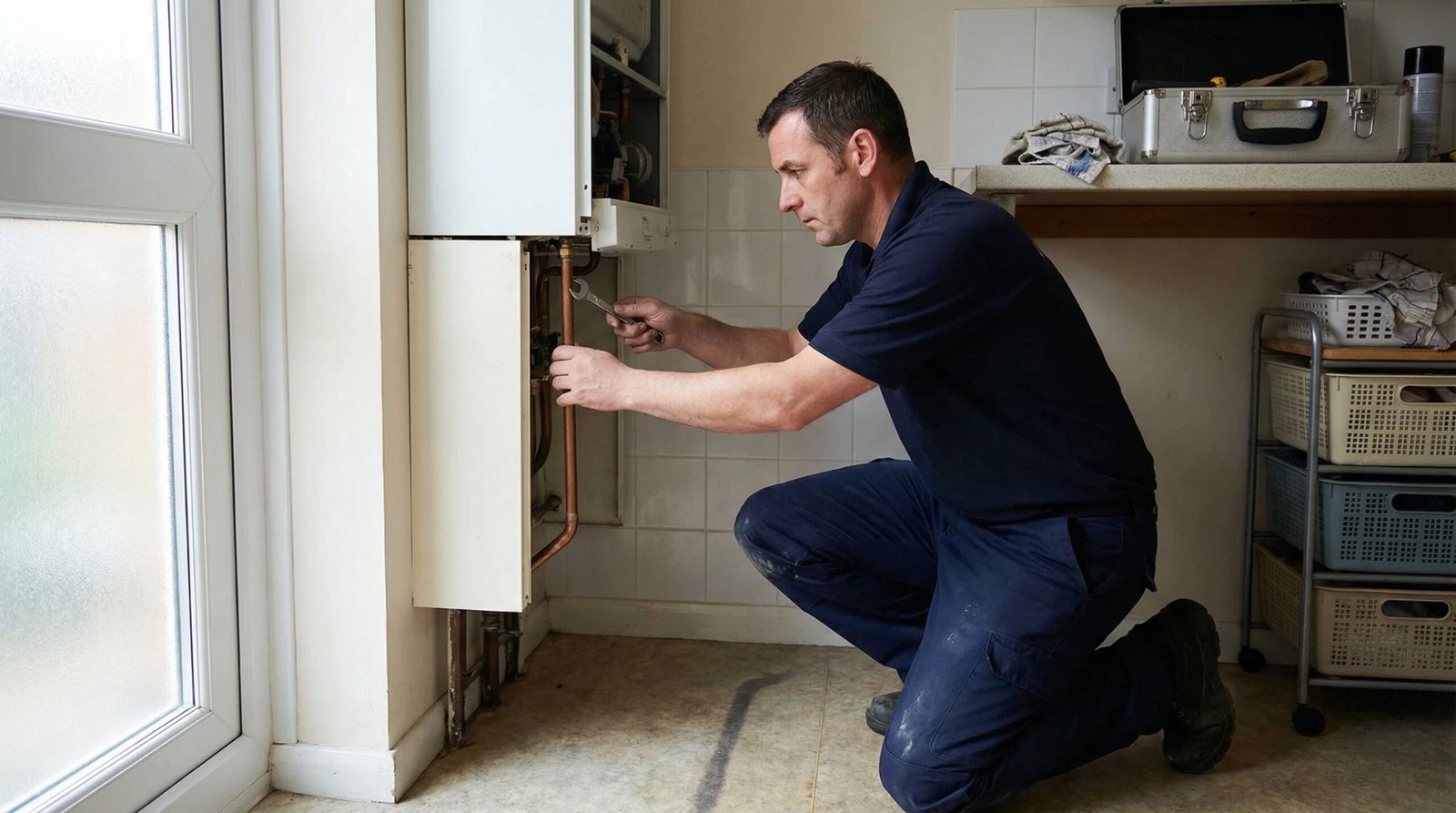
How Much Does a Boiler Service Cost in the UK? (2026 Prices)
How Much Does a Boiler Service Cost in the UK? (2026 Prices)
Your boiler works harder than any other appliance in your home — and like a car, it needs an annual check-up. So how much does a boiler service cost in the UK? Typically £80–£120, but the price swings with where you live, what boiler you have, and who does it. Here’s the full picture.
Typical boiler service prices
- Independent Gas Safe engineer: £70–£100 — usually the best value
- Local heating company: £80–£120 — often includes a service plan option
- British Gas / national firms: £100–£150 for a one-off service; cheaper within a Homecare plan
- London & South East: add £20–£40 to all of the above — London engineers charge London prices
These are 2026 ballparks. Always get the price confirmed upfront — a proper engineer quotes before starting.
What’s included in a proper service
A full boiler service (to manufacturer and Gas Safe standards) should include:
- Visual inspection of the boiler and flue
- Checking gas pressure and flow
- Flue gas analysis with a calibrated analyser
- Cleaning key components (burner, heat exchanger, condensate trap)
- Checking seals, electrodes and safety devices
- A gas tightness test
- A written service report
It should take 30–60 minutes. Anyone “servicing” your boiler in 15 minutes isn’t servicing it — they’re glancing at it. Ask what the service covers before booking; a reputable engineer will happily list it.
One-off service vs service plan
Service plans (British Gas Homecare, Homeserve, local equivalents) bundle the annual service with breakdown cover:
- Basic plans: from around £15–£20/month (£180–£240/year)
- They include the annual service plus call-outs and parts (with limits and excesses)
- Worth it if: your boiler is 8+ years old and out of warranty
- Skip it if: your boiler is new and under manufacturer warranty (which usually requires an annual service — but any Gas Safe engineer can do it, not just the plan provider)
Do the maths: a £200/year plan versus a £90 service + self-insuring the breakdown risk. For newer boilers, the one-off service almost always wins. For ageing ones, a plan buys peace of mind.
Why you shouldn’t skip it
- Warranty: most manufacturers void the warranty without annual servicing — that’s a £2,000+ risk for a £90 service.
- Safety: faulty boilers can produce carbon monoxide. A service checks for it. (You have a CO alarm by the boiler, right? £20 from any DIY shop.)
- Efficiency: a serviced boiler runs cleaner and cheaper — see our guide to how often you should service your boiler.
- Landlords: you’re legally required to have gas appliances checked annually (CP12 certificate) — non-negotiable.
Finding a good engineer
- Check the Gas Safe Register at gassaferegister.co.uk — it’s illegal for anyone unregistered to work on gas. Ask to see the engineer’s ID card on arrival.
- Get 2–3 quotes for the service; prices vary more than you’d think.
- Ask neighbours or check Checkatrade / Trustpilot reviews.
- Be wary of cold callers offering “cheap” services — a proper service has a proper price.
When to book
Summer. Engineers are quietest June–August, prices are keenest, and if the service reveals a problem you’ve got months to fix it before winter. Booking a service in December means joining a queue of breakdowns — and paying for the privilege. For more on keeping heating bills down, read whether a smart thermostat is worth it.
The bottom line
Expect to pay £80–£120 for a proper annual boiler service (£100–£150 in London), booked with a Gas Safe registered engineer in summer. It protects your warranty, keeps you safe, and catches small problems before they become £500 winter emergencies. The cheapest service is rarely the best — but the most expensive isn’t either. Mid-range, registered, recommended: that’s the sweet spot.
Boiler service vs gas safety check: what’s the difference?
People confuse these constantly. A boiler service is maintenance: cleaning, adjusting, checking efficiency — it keeps the boiler healthy and the warranty valid. A gas safety check (CP12) is a legal inspection: verifying the appliance is safe to use — required annually for landlords, not for homeowners. They overlap (a service includes safety checks) but they’re not the same thing.
Homeowners: you need the service (for warranty, efficiency, safety). Landlords: you legally need the CP12 gas safety check every 12 months for every gas appliance and flue — and you’d be foolish not to combine it with a full service. Most engineers offer a combined service + CP12 for £100–£150. If an engineer offers you a “service” that’s actually just a safety check (15 minutes, no cleaning), you’re being short-changed — ask exactly what’s included.
Boiler service FAQs
How long does a service take? 30–60 minutes for a proper job. Under 20 minutes isn’t a service — it’s a glance. Over 90 minutes suggests they found problems (or they’re very thorough).
Do I need to be home? Yes — the engineer needs access to the boiler, and you’ll want the verbal rundown. Clear the area around the boiler beforehand (they need workspace).
Will they condemn my boiler? Only if it’s genuinely dangerous (cracked heat exchanger, flue problems, CO risk). “Condemned” is rare — but if it happens, get a second opinion before agreeing to a £3,000 replacement. Some engineers use scare tactics to sell new boilers.
Can I service my own boiler? No — working on gas appliances without Gas Safe registration is illegal in the UK. You can (and should) do basic care: check pressure, bleed radiators, keep the area ventilated. Everything inside the casing is for registered engineers only.
What paperwork should I get? A written service report listing what was checked, cleaned and tested, plus flue gas analyser readings. This is your warranty proof — file it. No paperwork = no proof = warranty at risk.
What a proper service report looks like
You’ve paid £80–£120 — what should you get for it? A proper service report includes: flue gas analyser readings (CO/CO2 ratio — the key safety and efficiency numbers; a good engineer explains them), gas pressure readings (inlet and burner pressure), list of components cleaned/checked (burner, heat exchanger, condensate trap, seals, electrodes), safety device tests (flame supervision, pressure relief), any advisories (parts wearing, things to watch — with honest timescales, not scare tactics), and the engineer’s Gas Safe number and signature.
What it shouldn’t include: vague “boiler checked OK” with no readings (worthless as warranty proof), pressure to buy a new boiler without specific faults cited, or recommendations without prices (“your pump’s on the way out” — okay, how much?). Keep every report — they’re your warranty proof (manufacturers ask for service history on claims) and your property file (buyers’ solicitors increasingly ask for boiler service records). Digital records: some manufacturers (Worcester Bosch, Vaillant) log services via installer apps — ask your engineer to register it. Paper fades; databases don’t.