
How to Organise a Small London Flat With No Storage
How to Organise a Small London Flat With No Storage
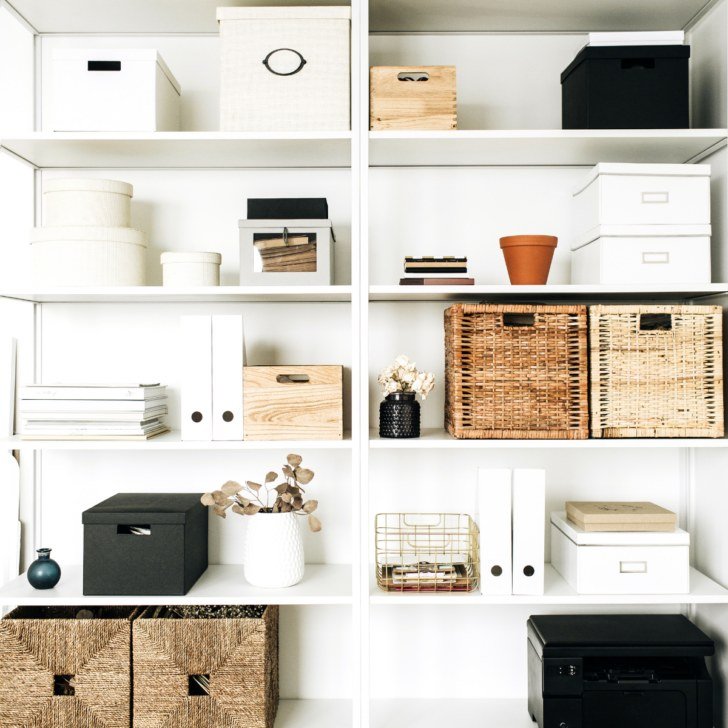
London flats have a storage problem. Victorian conversions with not a single built-in wardrobe, new-builds with “bedrooms” barely wider than the bed, and landlords who consider one kitchen cupboard adequate. I’ve lived in a 38-square-metre one-bed where the ironing board lived behind the sofa for two years, so I know the particular despair of having nowhere to put things. Here’s the system that finally tamed my flat — no renovation required. This guide shows you how to organise a small London flat with no storage — the systems and storage hacks that actually work in tiny spaces.
Step 1: Declutter Before You Organise
This is the step everyone skips, and it’s the whole game. You cannot organise clutter — you can only arrange it more neatly. Before buying a single storage box:
- Go room by room with three bags: keep, donate, bin.
- Be ruthless with duplicates (you don’t need four wooden spoons), dead tech (cables for devices you no longer own), and “someday” items (someday never comes).
- Donate the good stuff — our charity shop donation guide covers what shops actually want.
- Apply the one-in-one-out rule going forward: something new comes in, something old goes out.
Most small-flat chaos is 30% too much stuff, not 100% too little space. Our decluttering guide has the full method.
Step 2: Go Vertical — Walls Are Free Space
Floor space is precious; wall space is usually wasted. In a small flat, vertical storage is everything:
- Tall bookcases over wide ones. A 2m Billy bookcase holds as much as two short ones in half the footprint.
- Over-door hooks and racks — bedroom, bathroom and kitchen doors are all storage waiting to happen. Renter-friendly, no drilling.
- Wall-mounted shelves above desks, sofas and in awkward alcoves. (Check your tenancy agreement about drilling — many landlords allow it if you fill holes on exit.)
- Pegboards in kitchens and hallways for utensils, keys, bags.
- High shelves above door frames for rarely-used items — suitcases, seasonal stuff.
Step 3: Exploit Hidden and Dead Space
- Under the bed: the biggest storage area in most flats. Vacuum bags for clothes, flat boxes for shoes, or a divan/ottoman bed if you’re buying.
- Above wardrobes and kitchen cupboards: the dusty top zone is perfect for rarely-needed items in labelled boxes.
- Behind doors: narrow shoe racks, cleaning product holders.
- Under the sofa: flat storage boxes for wrapping paper, board games, spare bedding.
- The hallway: a narrow console with baskets beats a dumping ground. Coat hooks > coat pile.
- Bathroom: over-toilet shelving, shower caddies, magnetic strips for bobby pins and tweezers.
Step 4: Choose Furniture That Works Twice
In a small flat, every piece of furniture should earn its footprint:
- Ottoman/storage beds and storage sofas
- Coffee tables with drawers or lift-tops
- Nesting side tables that tuck away
- Drop-leaf or extendable dining tables
- Storage benches in the hallway (shoes inside, seat on top)
Second-hand is your friend here — Facebook Marketplace and Gumtree are full of good storage furniture from people upsizing. Just measure twice; London flats punish optimism.
Step 5: Systems That Keep It Organised
Organisation decays without systems. The ones that work:
- Everything has a home. If an item has no designated spot, it’ll live on surfaces forever. Assign homes ruthlessly.
- Labels. Unsexy, transformative. Labelled boxes get used; mystery boxes become junk drawers.
- The 10-minute reset. Every evening, 10 minutes returning things to homes. Prevents the slow slide into chaos.
- One junk drawer, maximum. Contain the chaos to a single drawer rather than letting it colonise the flat.
- Seasonal rotation. Winter coats and boots get vacuum-packed in summer and vice versa — our moving house cost guide also covers storage unit pricing if you need overflow.
No-Drill, No-Damage Rules for London Renters
Most Londoners rent, so: use Command strips and adhesive hooks instead of nails where possible, get written permission for proper shelving, keep the original fixture packaging to restore on exit (deposit protection — see getting your deposit back), and favour freestanding furniture over fitted. Your landlord can’t object to a bookcase.
Small Flat, Specific Rooms: Targeted Fixes
The bedroom
Under-bed storage is the headline act, but don’t stop there: a headboard with shelves replaces a bedside table, over-door hooks handle dressing gowns and tomorrow’s clothes, and a single slim wardrobe organiser (hanging shelves, £10–£15) doubles hanging space efficiency. If two people share a small bedroom, divide ruthlessly — his/hers zones prevent the creeping territory wars.
The kitchen
Small kitchens drown in gadgets. Keep on the counter only what you use daily (kettle, maybe toaster); everything else lives in cupboards. Magnetic knife strips free drawer space, over-sink dish racks exploit vertical space, and stackable containers (decant the half-empty packets) transform chaotic cupboards. Be honest about single-use gadgets — the bread maker used twice in 2021 is decoration, not equipment. Our cooking guide lists the only kit beginners actually need.
The bathroom
The smallest room causes the most daily friction. Over-toilet shelving (£20–£30), a shower caddy (no more bottle-juggling), magnetic strips for small metal items, and decanting products into matching dispensers (reduces visual chaos enormously). One-in-one-out is strictest here — a new product means an old one gets finished or binned.
The “office” corner
Working from home in a small flat needs boundaries: a folding desk (£40–£80) that disappears after hours, a proper chair (your back is worth it — check Which? office chair reviews), and a hard stop ritual (laptop in a drawer, desk folded). Without physical separation, work colonises the flat and the flat colonises work.
Storage Products Actually Worth Buying
- Vacuum storage bags (£10–£15 for a set) — shrink winter clothes/bedding by 75%. The single highest-impact small-flat purchase.
- Over-door organisers (£8–£15) — for every door in the flat.
- Stackable clear boxes (£5–£12 each) — clear beats opaque (you can see what’s inside); labels beat memory.
- Under-bed boxes on wheels (£10–£20) — accessible storage, not archaeological storage.
- A proper clothes airer (heated £40–£60 if no tumble dryer) — drying laundry is the small flat’s eternal puzzle; a heated airer solves it for pennies per use.
- Command strips and adhesive hooks (£5–£10) — renter-friendly hanging for everything.
Total investment for a full small-flat organisation kit: £100–£200. Compare that to the cost of a bigger flat (£200–£400/month more in London) and it’s the best-value spending in this entire guide. For the full declutter-first approach, see our decluttering guide — and if you’re moving to a smaller place, moving costs to budget the transition.
The Practical Takeaway
Organising a small London flat with no storage is a five-step job: declutter ruthlessly first, go vertical with walls and doors, exploit under-bed and above-cupboard dead space, buy furniture that stores as well as serves, and maintain it with a 10-minute nightly reset. You don’t need more space — you need less stuff and smarter homes for what remains. Start with one room this weekend; the momentum will carry you through the rest.