
How to Donate Clothes to Charity Shops: The Complete UK Guide
How to Donate Clothes to Charity Shops: The Complete UK Guide
Every January I do the same thing: pull everything out of my wardrobe, stare at the mountain of jumpers I’ve not worn since 2023, and promise myself this is the year I sort it out. If your drawers are bursting and the charity bag by the front door has been sitting there for three weeks, this guide is for you. Donating clothes to charity shops in the UK is easy, but doing it well — so your donation actually raises money rather than costing the charity money — takes a bit of know-how. If you’re wondering how to donate clothes to charity shops in the UK, the good news is it’s one of the easiest good deeds going.
Charity shops are a proper British high street institution. There are around 11,000 of them across the UK, raising hundreds of millions of pounds a year for good causes. But they can only sell what people want to buy, and they can’t afford to waste volunteer hours sorting through rubbish. Here’s how to donate clothes properly.
What Charity Shops Actually Want
The golden rule is simple: only donate what you’d be happy to give to a friend. Shops need clean, wearable items in decent condition — clothes with plenty of life left in them. That means:
- Clean, washed clothes with no stains, holes or broken zips
- Shoes that are paired up and not falling apart
- Accessories: belts, handbags, scarves, hats
- Good-quality bedding and curtains (some shops take duvets, some don’t — ask first)
What they can’t use: single shoes, heavily stained or torn items, worn-out underwear, and anything damp or musty. I’ve seen people dump bin bags of genuinely ruined clothes at shop doors after hours, and honestly it just creates work for volunteers who then have to pay to dispose of them. If an item is truly at the end of its life, keep reading — there are better options below.
How to Donate Clothes Step by Step
The process couldn’t be simpler, but a few small touches make a big difference.
- Sort and bag. Go through your clothes honestly. If you haven’t worn it in a year and it’s not a special-occasion piece, it can go. Use sturdy bags — charity bags from the shop itself are ideal, or any clean carrier bag.
- Check the condition. Quick once-over for stains, missing buttons and broken zips. Minor issues like a loose button are fine; a jacket with a snapped zip isn’t.
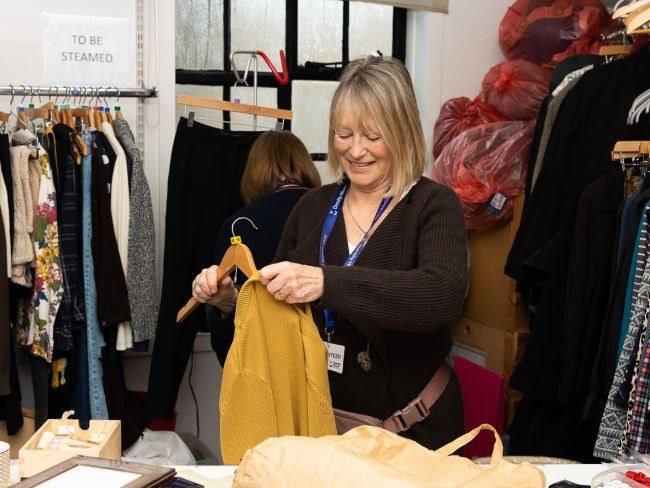
- Drop off in opening hours. This matters more than people realise. Bags left outside overnight get rained on, rummaged through or stolen. Take them inside during opening hours and hand them to a volunteer if you can.
- Sign a Gift Aid declaration. This is the bit most people skip, and it’s free money for the charity. More on this below.
Gift Aid: 25% Extra at No Cost to You
If you’re a UK taxpayer, signing a Gift Aid form lets the charity claim an extra 25p for every £1 your clothes raise. A bag of clothes that sells for £40 becomes £50 for the charity — and it costs you nothing. You just need to be a UK taxpayer paying at least as much Income Tax or Capital Gains Tax as the charity will reclaim. The official rules are straightforward on the gov.uk guide to donating to charity, and most shops have the forms ready at the till. I sign one everywhere I donate now; it takes thirty seconds.
What Happens to Clothes They Can’t Sell?
Here’s something most donors don’t know: unsold clothes aren’t wasted. Most charity shops sell unsellable textiles to “rag merchants” who recycle them into insulation, wiping cloths or new fibres. So even a stained T-shirt has some value — but the shop earns far less from rags than from resellable clothes, which is why quality donations matter. Around 90% of donated textiles find some use, which is a far better fate than landfill.
Alternatives When Charity Shops Won’t Take Something
Some items are better donated elsewhere:
- Clothing banks: Those big bins in supermarket car parks accept worn-out textiles for recycling. Find your nearest on your council’s website.
- Homeless charities: Organisations like Crisis and local shelters often need warm coats, jeans and jumpers directly — check Oxfam’s website or your local council for clothing drives, especially in winter.
- Sell it yourself: Good brands in excellent condition can earn you real money on Vinted or Depop. I’ve funded more than a few holidays from selling coats I’d stopped wearing.
- Council textile collections: Many London boroughs now collect textiles at the kerbside. Check your borough’s recycling page.
My Tips After Years of Wardrobe Clearouts
In my experience, the people who donate best follow a simple rhythm: little and often. One bag a month beats a car boot full of musty stuff once a year, because shops get a steady flow of fresh stock and your clothes don’t sit around going stale. Also, time your donation well — shops are desperate for warm coats in October and light summer dresses in April, so donate seasonally if you can.
And please, label anything valuable. If you’re donating a designer bag or a barely-worn pair of boots, tell the volunteer. Otherwise it might end up on the £2 rail, and the charity loses out on what could have been a £40 sale.
The Practical Takeaway
Donating clothes is one of the easiest good deeds going: bag up clean, wearable items, drop them off during opening hours, and sign the Gift Aid form. Your cast-offs fund everything from cancer research to children’s hospices, keep textiles out of landfill, and give someone else a bargain. Clear out that wardrobe this weekend — and if you’re moving to a smaller place, our guide on how much deposit you need to rent a flat in London pairs well with a ruthless declutter. Dropping bags off on your way to work? Check the cheapest ways to commute in London to combine the trip, and if you’re sorting a shared flat’s hallway mountain, read our tips on finding a good flatmate in London first.
One thought on “How to Donate Clothes to Charity Shops: The Complete UK Guide”