
How Many Pairs of Shoes Does a Minimalist Wardrobe Need?
How Many Pairs of Shoes Does a Minimalist Wardrobe Need?
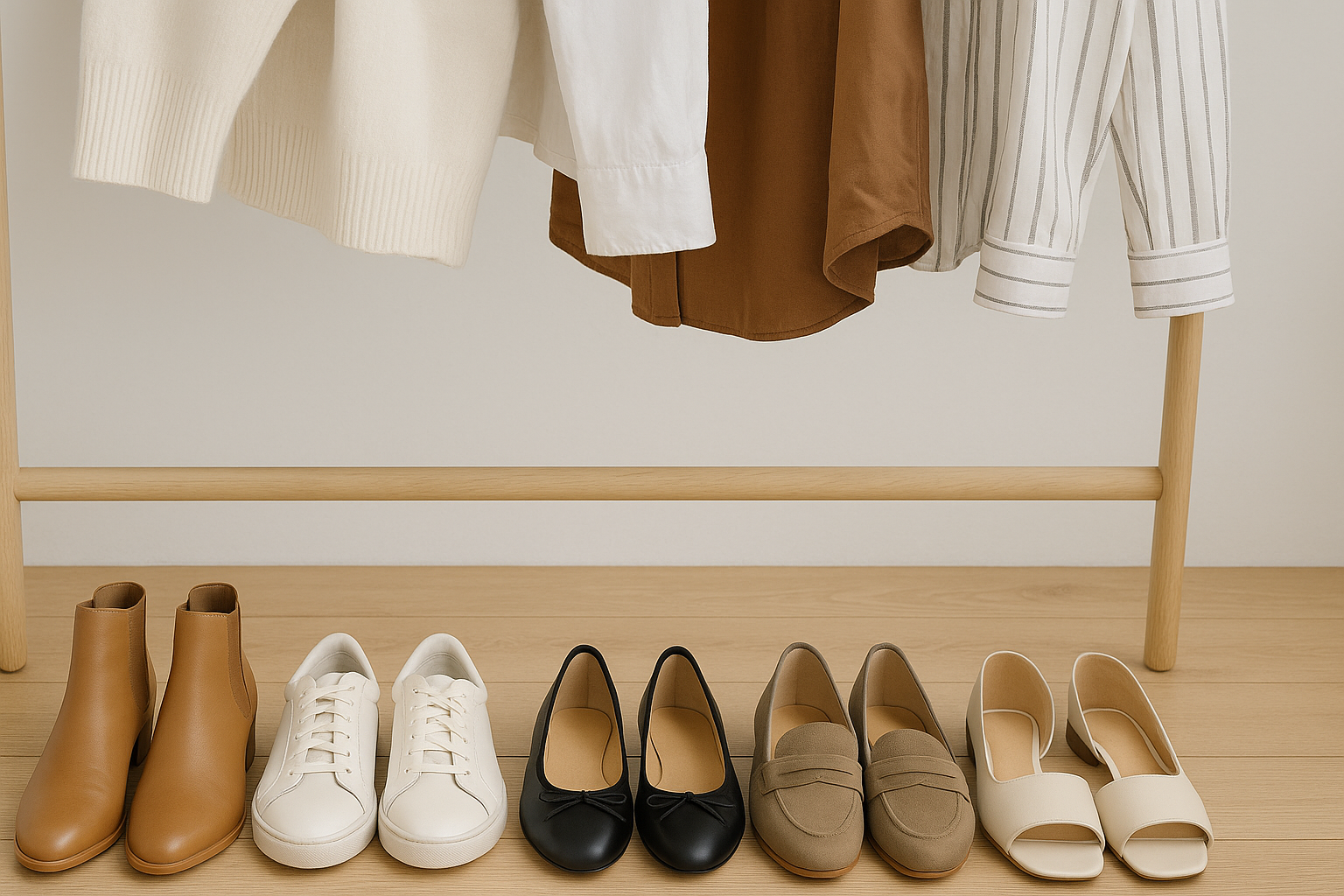
Shoe collections expand to fill available space — it’s practically physics. But how many do you actually need? The minimalist answer is smaller than most people own and larger than the purists claim: 4–6 pairs covers every realistic scenario for most lifestyles, with each pair earning its place through constant use. I’ve run a 5-pair rotation for years, and I’ve never once thought “if only I had more shoes.” If “how many pairs of shoes does a minimalist wardrobe need” is the question you’ve been asking, here’s the straight answer — practical, honest, and based on what actually works.
Here’s the formula, what each pair should be, and how to choose quality that survives the heavy rotation minimalist shoes endure.
The formula: 5 pairs that cover everything
The everyday pair: comfortable, versatile, goes with 80% of your wardrobe — clean white trainers, smart loafers, or Chelsea boots depending on lifestyle. This pair does the most work; spend the quality budget here (see whether expensive shoes are worth it). The smart pair: for work, interviews, and dressed-up occasions — Oxfords/Derbies, block heels, or elegant flats. Polished, classic, timeless.
The casual pair: for weekends, walking, and bad weather — trainers (see all-day walking trainers), or sturdy boots. The seasonal pair: sandals for summer or insulated boots for winter — the one that rotates with the calendar. The occasion pair: the heels, the party shoes, the wedding-guest pair — worn rarely, chosen carefully, comfortable enough to actually wear (see breaking in heels).
That’s five. Four works if your lifestyle is uniform (drop the occasion pair or merge smart/casual). Six allows a dedicated exercise pair (runners that never do double duty — running shoes worn daily wear out fast). Beyond six, you’re collecting, not minimising — which is fine, but it’s not minimalism.
- Pair 1: everyday workhorse — spend the quality budget here
- Pair 2: smart — work, interviews, occasions
- Pair 3: casual — weekends, walking, weather
- Pair 4: seasonal — sandals or winter boots
- Pair 5: occasion — heels/party shoes, rarely worn
- (Pair 6: dedicated exercise — if you train regularly)
Choosing the five: quality and versatility
Versatility is the selection criterion: each pair must work with multiple outfits, or it doesn’t earn its place. Colour discipline helps enormously — black, brown/tan, white, and navy cover everything; the red statement heel is lovely but it’s pair seven, not pair five. Stick to classics: trends date, and a minimalist shoe bought trendy becomes unwearable fast.
Quality matters more in a small rotation because each pair works harder — five pairs worn constantly need to survive. This is where the cost-per-wear maths strongly favours investment: £150 shoes worn 200 times a year for 4 years cost 19p per wear. Buy the best quality you can afford for pairs 1–3 (the workhorses); economise on pairs 4–5 (seasonal and occasion get less wear). For the repair question, see repair vs replace.
Fit is non-negotiable when pairs are few — an uncomfortable shoe in a 20-pair collection gets skipped; in a 5-pair rotation it’s a crisis. Buy in the afternoon, get the width right, break in properly, and don’t keep the “almost comfortable” pair. The minimalist shoe wardrobe has no passengers.
Making five pairs last: rotation and care
Rotation is the longevity engine: never wear the same pair two days running — shoes need 24 hours to dry out and decompress. With five pairs, natural rotation happens; with fewer, be deliberate. Shoe trees (£15–£25) in leather pairs after every wear — they maintain shape, absorb moisture, and prevent creasing. They’re the single best shoe-care investment.
The maintenance rhythm: brush/wipe after wearing (30 seconds), condition leather monthly in heavy use, polish when scuffed, resole before the damage reaches the welt (see boot care), and replace heel tips promptly (£8–£15 — the cheapest repair with the biggest protective effect). Store properly: not piled in a heap (the minimalist with 5 pairs has no excuse — give them space), stuffed with tissue or trees, away from direct heat.
Know when to replace: trainers with compressed midsoles (the cushioning dies before the uppers look worn — if your knees ache, check the shoes), leather shoes with cracked uppers or worn-through linings, any shoe that hurts despite breaking in. And the one-in-one-out rule: a new pair means an old pair leaves (donate, sell, recycle) — this is what keeps it at five rather than drifting back to fifteen.
What to skip (the minimalist cuts)
The duplicates: three black heel heights, four white trainers, two near-identical ankle boots — keep the best, release the rest. The aspirational: hiking boots for the hike you’ll never take, stilettos for the lifestyle you don’t have, the “someday” occasion shoes. The uncomfortable: if you haven’t worn them in a year because they hurt, they’re not minimalist — they’re clutter with guilt attached.
The “but it was expensive” trap: sunk cost isn’t a reason to keep shoes — sell them (quality shoes resell well; see selling second-hand) and free the space. The “but I might need them” trap: in a year of five-pair living, note what you actually missed — usually nothing. Needs are revealed by absence; most feared absences never materialise.
The honest truth: the right number is the number you actually wear. Count what left your shoe rack in the last month — that’s your real rotation. Build the minimalist wardrobe around reality, not aspiration, and you’ll end up with fewer, better shoes that you love wearing. That’s the whole point: not deprivation, but curation.
The travel shoe capsule: 3 pairs for any trip
Travel compresses the formula further: three pairs maximum. Pair 1: the walkers — comfortable trainers or walking shoes, worn on the plane (the bulkiest). Pair 2: the smart-casual — loafers, ankle boots, or dressy flats that handle dinners and smarter days. Pair 3: the seasonal — sandals (summer) or the alternative boot (winter). That’s it — three pairs for a week, worn in rotation.
The selection rules for travel: every pair must be broken in (never travel in new shoes — the blister risk ruins trips), the walkers must handle 20,000 steps (see all-day trainers), and the smart pair must work with every evening outfit in your capsule. Neutral colours only — the red heels don’t make the travel cut.
Packing: wear the bulkiest, pack the other two (stuffed with socks and accessories, in shoe bags). The hotel test: if you haven’t worn a pair by day three, it shouldn’t have come. Most travellers find two pairs suffice for short trips — the third is insurance. And the universal travel shoe truth: comfort beats style on the road, because the trip you enjoy in trainers beats the trip you endure in heels.
How Many Pairs of Shoes Does a Minimalist Wardrobe Need: The Short Answer
Five pairs: everyday workhorse, smart, casual, seasonal, occasion — versatile classics in neutral colours, quality for the hard-working pairs, rotated daily with shoe trees. Related reading: MoneySavingExpert guides.