
Why Is London Recycling So Complicated? The Mess, Explained
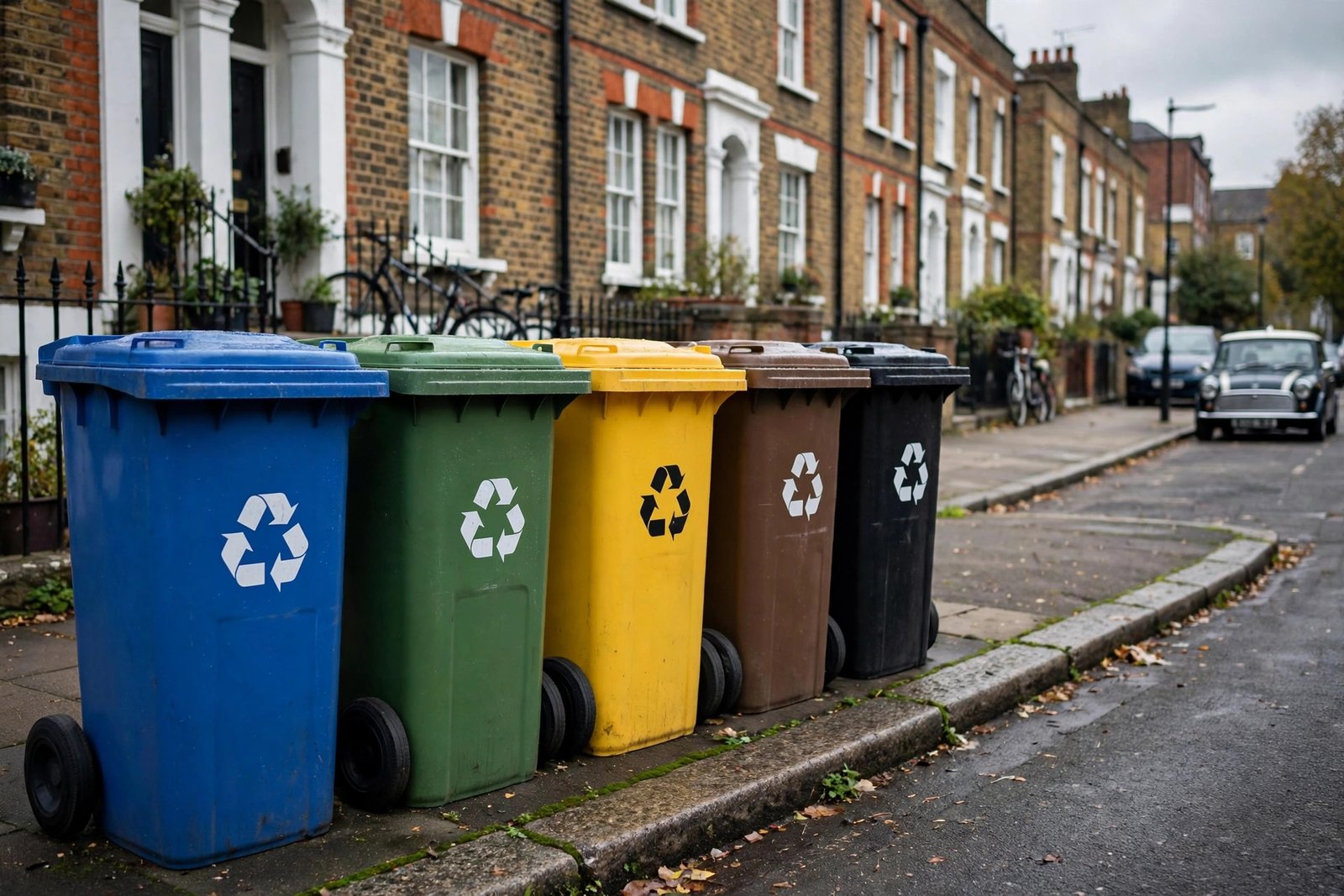
Stand on any London street on bin day and you’ll see the chaos: three different bin colours, contradictory stickers, and a neighbour peering at a yoghurt pot like it’s a bomb disposal decision. Is the lid recyclable? Does this borough take Tetra Paks? Why does your friend in Manchester recycle things your council rejects? London’s recycling system has been, for years, genuinely confusing — a postcode lottery of rules that even the councils struggled to explain. The good news: as of 2026, the rules are finally being simplified. Here’s why it was such a mess, what’s changing, and how to get it right from now on.
The postcode lottery: 32 boroughs, 32 rulebooks
The root cause of the confusion is structural. London has 32 boroughs plus the City, each historically responsible for its own waste collections, each negotiating its own contracts with different sorting facilities. The result: what goes in the recycling bin in Camden might be rejected in Croydon. Some boroughs collected glass separately; others mixed it. Food waste collections existed in some boroughs and not others. Contamination rules varied — one borough’s “rinse it” was another’s “don’t bother.”
This wasn’t councils being difficult. Different areas have different housing stock (flats versus houses need different collection systems), different contractors, and different processing plants with different capabilities. But from the resident’s perspective, it was madness: move three streets over and the rules change. Research consistently showed confusion was the biggest barrier to recycling — not laziness, not apathy, but genuine uncertainty about what goes where. When in doubt, people either bin recyclables (waste) or recycle rubbish (contamination) — and both are expensive problems.
Contamination: why the rules were so picky
The second source of complexity is what happens after collection. Recycling isn’t magic — it’s manufacturing, and manufacturers need clean, sorted material. A single greasy pizza box in a tonne of paper can ruin the batch. Plastic bags tangle sorting machinery. The wrong plastics mixed in degrade the recycled output. So councils wrote ever-longer lists of dos and don’ts, each reflecting what their particular facility could handle.
This is also why “wishcycling” — tossing questionable items in the recycling hoping for the best — is actively harmful. A hopeful nappy or a tangled hose doesn’t get recycled; it contaminates the load and can send an entire truck’s worth of good recycling to incineration. The rule of thumb that was always true and remains true: when in doubt, check — don’t guess. Your council’s website has the definitive list (Reading’s what goes in each bin guide is a good example of the format, though Londoners should check their own borough’s equivalent).
2026: Simpler Recycling finally arrives
Here’s the genuinely good news. On 31 March 2026, the government’s Simpler Recycling scheme came into force across England, ending the postcode lottery by law. Waste collectors must now by default collect four streams separately: food and garden waste; paper and card; all other dry recyclables (glass, metal, plastic including cartons); and residual waste. Councils keep some flexibility in how they deliver it, but the materials collected must be consistent — citizens can recycle the same things whether at home, work or school, anywhere in England.
For Londoners, the practical changes: weekly food waste collections become standard (a big deal — food waste is the heaviest, smelliest part of the bin), paper and card get their own stream in many areas, and the “does my council take this?” question largely disappears. The official Simpler Recycling announcement sets out the four streams and the ambition behind them: boosting recycling rates toward 65% of municipal waste by 2035 and cutting the emissions and costs of the old patchwork. If your borough hasn’t fully transitioned yet, check its website — the rollout timetables vary, but the destination is now fixed.
What still confuses people (and the answers)
Even under simpler rules, some items trip everyone up. Crisp packets and soft plastics: now collected at kerbside in the dry recyclables stream under Simpler Recycling — previously the single biggest confusion item. Coffee cups: the plastic lining means most aren’t recyclable in standard streams; use a reusable cup. Tetra Paks/cartons: now in the dry recyclables stream. Electronics: never in any bin — they need specialist recycling (see how to recycle old electronics in the UK). Batteries: never in bins — fire risk; take them to collection points. Food-soiled paper/card: compost or food waste, not recycling.
The deeper fix for confusion is reducing what needs deciding. The waste hierarchy — reduce, reuse, recycle, in that order — means the simplest bin is an empty one. Cutting food waste (see how to reduce food waste at home) shrinks the smelliest stream; buying less packaging shrinks the rest. Recycling matters, but it’s the third-best option, not the first.
The money side: who’s paying for all this
Simpler Recycling doesn’t just reorganise bins — it reorganises who pays. Under Extended Producer Responsibility (EPR) for packaging, now in force, the brands that produce packaging must cover the cost of collecting and recycling it — around £1 billion a year shifting from taxpayers to producers. That’s why you’re seeing packaging redesigns and clearer recycling labels: companies now have a direct financial incentive to make packaging recyclable, because unrecyclable packaging costs them more.
And there’s more coming. In October 2027, the UK-wide Deposit Return Scheme launches: a small deposit (expected around 20p) added to drinks containers, refunded when you return the bottle or can. Scotland, England, Wales and Northern Ireland will run aligned schemes covering PET plastic, aluminium and steel containers. It’s the single most effective anti-litter policy ever trialled — countries with DRS routinely hit 90%+ return rates. Between EPR, Simpler Recycling, and DRS, the UK is rebuilding its entire packaging system in about three years. The bin chaos of the 2010s wasn’t just confusing — it was the old system dying. This is what replaces it.
Frequently asked questions
Why did different London boroughs have different recycling rules?
Each borough historically ran its own waste contracts with different sorting facilities, which could handle different materials. Housing stock differences (flats vs houses) also shaped collection systems. Simpler Recycling (in force from March 2026) now standardises the materials collected across England.
What are the four Simpler Recycling streams?
Food and garden waste; paper and card; dry recyclables (glass, metal, plastic including cartons); and residual waste. Collectors must separate these by default, with weekly food waste collections.
Does Simpler Recycling apply to flats?
Yes — the rules apply to all homes in England including flats, though the practical arrangements (communal bins, collection points) are organised by boroughs and managing agents to suit the buildings.
What is “wishcycling” and why is it bad?
Putting non-recyclable items in the recycling bin hoping they’ll be recycled. It contaminates loads, jams machinery, and can divert entire truckloads to incineration. When in doubt, check your council’s list — don’t guess.
Will recycling actually get simpler, or just differently complicated?
Materially simpler: the same materials collected everywhere ends the postcode lottery, which was the top source of confusion. Some local variation in bins and schedules remains, but the “what goes where” question now has one national answer.
The bottom line
London recycling was complicated because 32 boroughs ran 32 systems feeding different facilities with different capabilities — a genuine structural mess, not just poor communication. Simpler Recycling, in force from March 2026, standardises the four streams across England and makes food waste collection universal. Learn the four streams, stop wishcycling, check your borough’s page for local arrangements, and remember the hierarchy: the best recycling system is the one you barely need because you reduced first.