
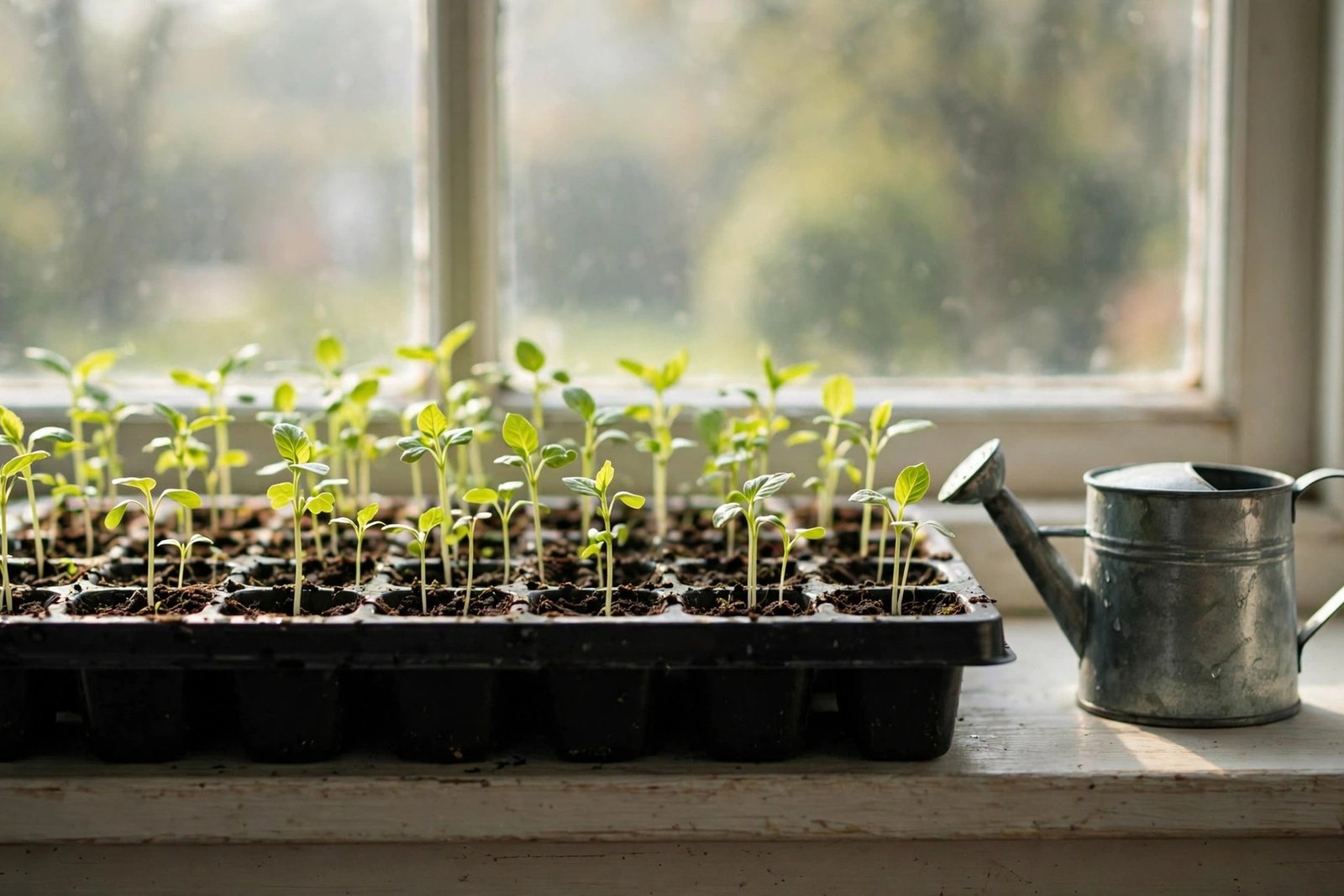
Why Your Seedlings Keel Over: Damping Off Explained
It is every seed-sower's heartbreak: healthy seedlings one evening, a tray of collapsed stems the next morning — each seedling pinched at soil level as if snipped by invisible scissors. This is damping off, the single biggest killer of indoor-sown seeds, and it strikes fast, often wiping out entire trays overnight. The culprit is not bad luck but a group of soil fungi exploiting exactly the conditions seedlings love.
Here is why your seedlings keel over, how damping off works, and the prevention routine that makes it a rarity rather than a rite of passage.
What Damping Off Actually Is
Damping off is caused by soil-borne fungi — chiefly Pythium, Rhizoctonia and Fusarium species — that attack seedlings at or just below soil level. The classic symptom is a thin, pinched, discoloured stem base; the seedling topples because its plumbing is severed, and it will not recover. A second form strikes before emergence: seeds rot in the compost and simply never appear, which gardeners often misread as bad seed.
These fungi are ubiquitous — present in most garden soil, on unwashed trays, and in reused compost. They are opportunists, not invaders: they overwhelm seedlings only when conditions favour the fungus over the plant. That is the hopeful part of the diagnosis. Damping off is not a curse on your gardening but a signal that the seedling environment needs adjusting — and the adjustments are simple, free, and permanent habits.
The Conditions That Invite It
Four factors roll out the red carpet for damping-off fungi. Excess moisture tops the list: constantly soggy compost, trays sitting in water, misting that never dries — fungi thrive in wet, airless conditions while seedling stems soften and become vulnerable. Poor air circulation compounds it: still, humid air around crowded seedlings is a fungal paradise.
Contaminated materials provide the inoculum: reused compost, unwashed trays and pots, garden soil used for sowing (never sow in garden soil — it is full of these fungi). And sowing too densely creates the perfect storm: crowded seedlings stay damp, touch each other (spreading infection stem to stem), and compete weakly. Cold compounds everything — seeds sown in chilly compost germinate slowly, spending longer in the vulnerable just-emerged stage. Each factor alone is survivable; combined, they are lethal.
Learn more from Garden Organic.
Prevention: The Five Habits
Compost, trays and watering
First, sow in fresh, sterile seed compost — new bag, not last year's opened sack, and never garden soil. Second, clean trays and pots: wash in hot soapy water, or a dilute bleach rinse for trays with a history of damping off. Third, water from below or carefully at the compost surface, and let the surface dry slightly between waterings — the top centimetre drying is the single most effective preventative.
Air circulation and temperature
Fourth, give air: space seeds properly, thin ruthlessly to prevent crowding, and ventilate — a gently open propagator vent or a small fan on low nearby transforms still air. Remove propagator lids once seeds germinate; the humid germination chamber becomes a death trap for emerged seedlings. Fifth, sow at the right temperature for the species — warm, fast germination minimises the vulnerable window. Cinnamon dusted on the compost surface is a popular folk remedy with mild antifungal properties; harmless, possibly helpful, but no substitute for the five habits.
Can Affected Seedlings Be Saved?
Honest answer: a seedling that has keeled over with a pinched stem is dead — the vascular tissue is destroyed and it will not regrow. Remove affected seedlings immediately, along with the surrounding compost, to protect their neighbours; the fungi spread through moisture and contact. Do not compost diseased seedlings in a cold heap.
But a partially affected tray is salvageable: improve conditions instantly (dry the surface, ventilate, space out), and the remaining healthy seedlings usually survive. If seeds have not yet emerged and you suspect pre-emergence damping off, you can resow immediately in fresh compost with corrected conditions — the season is rarely lost. Treat an outbreak as tuition: note which of the five habits slipped, fix it, and the next sowing succeeds. Every experienced gardener has lost trays to damping off; the difference is they only pay that tuition once.
Hardening Off: The Step Everyone Skips
The cruellest seedling deaths happen after germination — when pampered indoor plants meet the real world unprepared. Hardening off is the 7-10 day acclimatisation: place trays outside in sheltered shade for an hour or two daily, increasing exposure to sun and wind gradually, bringing them in at night for the first week. Wind is the shock people forget — indoor seedlings have never flexed against moving air, and unhardened stems snap or desiccate.
Transplant on a cloudy, calm day or in the evening to minimise shock; water the hole before planting, not just after; and protect with fleece if a cold snap threatens. Handle by the leaves, never the stem — a crushed stem is fatal, a torn leaf is trivia. Seedlings hardened properly establish in days; unhardened ones sulk for weeks or die outright. Damping off gets the attention, but transplant shock kills nearly as many young plants — and it is entirely preventable with ten days of patience.
Further reading: Defra.
Building Long-Term Resilience
Beyond the five habits, deeper practices harden seedlings generally. Bottom heat (a heated propagator) speeds germination past the danger window. Watering with room-temperature water avoids chilling roots. Pricking out seedlings promptly into individual pots gives each plant air and space. And hardening off — gradually acclimatising indoor seedlings to outdoor conditions — produces stocky, tough plants far less susceptible to every stress, fungal or otherwise.
Consider your compost: cheap, heavy composts stay wetter and harbour more problems; a quality seed compost with good structure drains and aerates better. Some gardeners add perlite to open up the mix. None of this requires spending much — it requires respecting that seedlings are babies, and babies need clean, warm, airy conditions. Get the environment right and damping off becomes something that happens to other people's trays.
Want to go deeper? Our article on do i need planning permission for a garden shed and how do i make a small garden look bigger is worth a look next.
Seedlings keel over from damping off — soil fungi (Pythium, Rhizoctonia, Fusarium) that sever stems at soil level when conditions favour them: soggy compost, still air, dirty trays, overcrowding and cold. Prevent it with fresh seed compost, cleaned trays, surface-drying between waterings, ventilation and proper spacing. Collapsed seedlings cannot be saved — remove them fast to protect neighbours — but corrected conditions save the tray. It is tuition every gardener pays once.
Frequently Asked Questions
What is damping off in seedlings?
A fungal disease where soil-borne fungi attack seedling stems at soil level, pinching them until the seedling topples. It can also rot seeds before they emerge.
Can you save seedlings with damping off?
No — a seedling with a pinched, collapsed stem base will not recover. Remove affected seedlings immediately and improve conditions (drier surface, more air) to save the rest of the tray.
Does cinnamon prevent damping off?
Cinnamon has mild antifungal properties and does no harm dusted on compost, but it is no substitute for the real preventatives: fresh compost, clean trays, careful watering and ventilation.
Why do my seeds not germinate at all?
Possibly pre-emergence damping off — fungi rotting seeds in cold, wet compost. Other causes: old seed, sowing too deep, or temperatures wrong for the species. Resow in fresh compost with corrected conditions.