
The Secret to a Perfect Shepherd’s Pie (It’s Not What You Think)
The Secret to a Perfect Shepherd’s Pie (It’s Not What You Think)
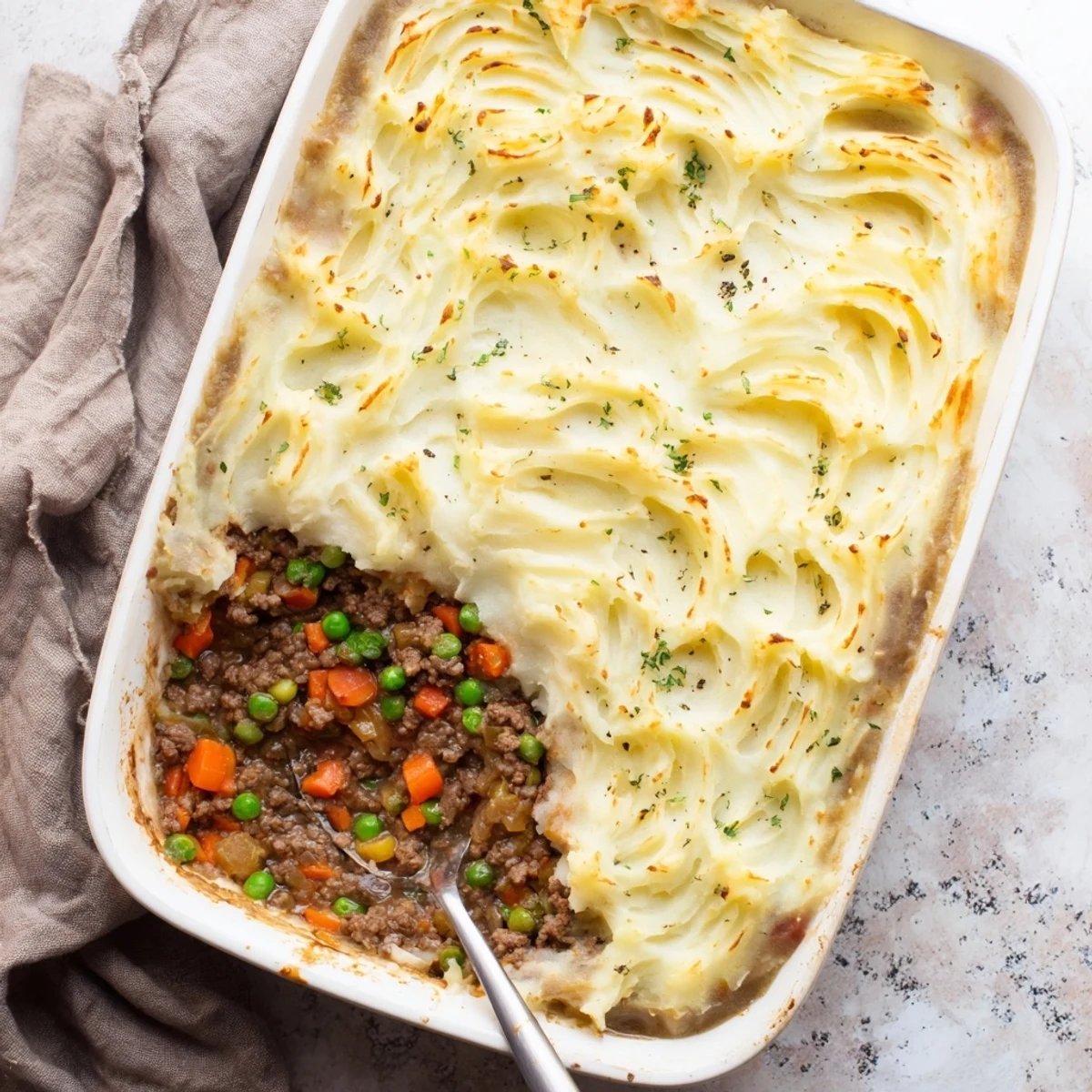
Shepherd’s pie is simple food — mince, veg, mash — yet most versions are bland, watery or both. Here’s the secret to a good shepherd’s pie: it’s not one trick but five small ones that add up to something greater than the sum of its parts.
First: it’s lamb (that’s the actual rule)
Shepherd’s pie = lamb. Made with beef, it’s cottage pie. This isn’t snobbery — it’s the definition, and lamb’s flavour is the soul of the dish. Use lamb mince (or even better, diced lamb shoulder slow-cooked until tender). The beef version is lovely too, but call it cottage pie and nobody gets hurt.
Secret 1: Brown the meat properly
The #1 mistake: grey, steamed mince. Brown it in batches in a ripping-hot pan, leaving it undisturbed to develop a deep crust before breaking it up. This Maillard browning is where 80% of the flavour comes from. Crowd the pan and the meat steams in its own juice — grey, sad, flavourless. Two batches, 5 minutes each, transformative.
Secret 2: Build the gravy in layers
- Tomato purée fried with the meat for 2 minutes (cooking out the rawness)
- A splash of red wine or ale — deglaze the pan, scraping up the browned bits (fond = flavour gold)
- Worcestershire sauce — a tablespoon; the umami backbone
- Good stock — lamb or beef stock, not just water
- Thyme and a bay leaf — simmer 30+ minutes to marry the flavours
The filling should be rich and thick, not swimming — reduce until a spoon leaves a trail. Watery filling = soggy pie.
Secret 3: The mash matters as much as the meat
- Floury potatoes (Maris Piper) — fluffy, not gluey
- Steam-dry after draining — wet mash slides off and waters the filling
- Butter and warm milk (or cream for luxury) — generous amounts; this is comfort food
- Season boldly — under-salted mash is the silent killer of shepherd’s pie
- Egg yolk beaten in — richer, sets firmer, browns beautifully (the old-school secret)
Secret 4: Texture on top
Spread the mash with a fork to create ridges and peaks — these catch the heat and go golden-crisp. Dot with butter. For the ultimate crust: a handful of grated cheddar scattered over for the last 10 minutes. The contrast of crisp ridges against soft valleys is what makes people go back for seconds.
Secret 5: Rest it
Like all great pies, it needs 10–15 minutes resting out of the oven. Cut too soon and it slumps into a (delicious) mess; rested, it slices cleanly with distinct layers. Patience, rewarded.
The veg question
Traditionalists: onion, carrot, maybe peas — that’s it. The filling is about the lamb, not a vegetable medley. Diced small, cooked with the meat. Sweetcorn is a modern interloper; celery is acceptable; anything beyond that is a different dish. (Fight me in the comments.)
Make-ahead and freezing
Shepherd’s pie is a perfect batch-cook dish: assemble, cool, refrigerate (3 days) or freeze (3 months). Bake from chilled at 200°C for 35–40 minutes; from frozen, 60–75 minutes covered in foil, then uncovered to brown. See our budget batch recipes for more freezer-friendly ideas.
The bottom line
Brown the lamb hard, build a thick layered gravy, make proper buttery mash with forked ridges, and rest it. Five secrets, none complicated, all essential. Total cost: about £8–£10 for 4–6 generous portions. Serve with peas and extra gravy, and accept the compliments with false modesty. For the full Sunday lineup, add Yorkshire puddings — controversial with pie, but nobody’s ever complained.
Cottage pie vs shepherd’s pie vs Cumberland pie (settle it)
The terminology matters to traditionalists. Shepherd’s pie: lamb (shepherds herd sheep — the name is the recipe). Cottage pie: beef — the older dish (1790s, “cottage” = modest rural dwelling). Most of what Britain calls “shepherd’s pie” is technically cottage pie — the beef version won the popularity contest. Cumberland pie: beef (or lamb) with a cheese-topped mash and often a breadcrumb layer — the dressed-up cousin.
Does it matter? Culinarily: no — make it with what you like and call it what you want at home. Socially: calling beef mince “shepherd’s pie” in front of a Yorkshireman is a provocation — proceed with awareness. The practical difference: lamb mince (£5–£7/kg) costs more than beef mince (£4–£6/kg) but brings a deeper, sweeter flavour that defines the dish. If you’ve only ever had the beef version, the lamb original is worth trying — it’s richer and more aromatic, especially with the red wine and thyme treatment.
Shepherd’s pie FAQs
Can I make it ahead? Yes — it’s ideal. Assemble completely, cool, refrigerate 3 days or freeze 3 months. From chilled: 200°C for 35–40 minutes. From frozen: 60–75 minutes covered in foil, then 15 minutes uncovered to brown. Don’t freeze with a cheese topping (it goes rubbery — add cheese for the last 15 minutes of reheating instead).
How do I stop the mash sinking into the filling? Cool the filling first (warm filling + soft mash = sinking). Pipe or spoon the mash on in dollops, then spread gently — don’t pour and drag. Stiffer mash (less milk) holds better. The egg yolk trick (beaten into the mash) firms it up and improves browning. Chill the assembled pie 30 minutes before baking — sets the layers.
Can I make it in a slow cooker? The filling: yes, brilliantly — 6–8 hours on low gives a rich, tender filling (see our slow cooker recipes). The whole pie: no — the mash won’t crisp. Method: slow-cook the filling, transfer to a dish, top with mash, bake 25–30 minutes at 200°C for the crust. Best of both worlds.
What’s the vegetarian version? Lentil shepherd’s pie — red/green lentils + the same gravy-building technique (tomato purée, wine, Worcestershire sauce — use Biona organic or Henderson’s Relish for vegetarian Worcestershire-style). Mushroom + chestnut is the luxury version. The mash technique is identical — the topping doesn’t care what’s underneath. Honestly, a well-made lentil version converts sceptics.
Why is my filling watery? Too much liquid, not enough reduction. Fix: simmer uncovered until a spoon leaves a trail (30+ minutes), or thicken with 1 tbsp cornflour mixed to a slurry. Prevention: use less stock than you think (the veg and meat release liquid), brown the meat properly (removes moisture), and cool before topping (hot filling continues releasing steam under the mash). Watery filling is the #1 shepherd’s pie failure — and entirely fixable.
Related reading
More batch cooking: budget slow cooker recipes — and BBC Good Food’s shepherd’s pie.