
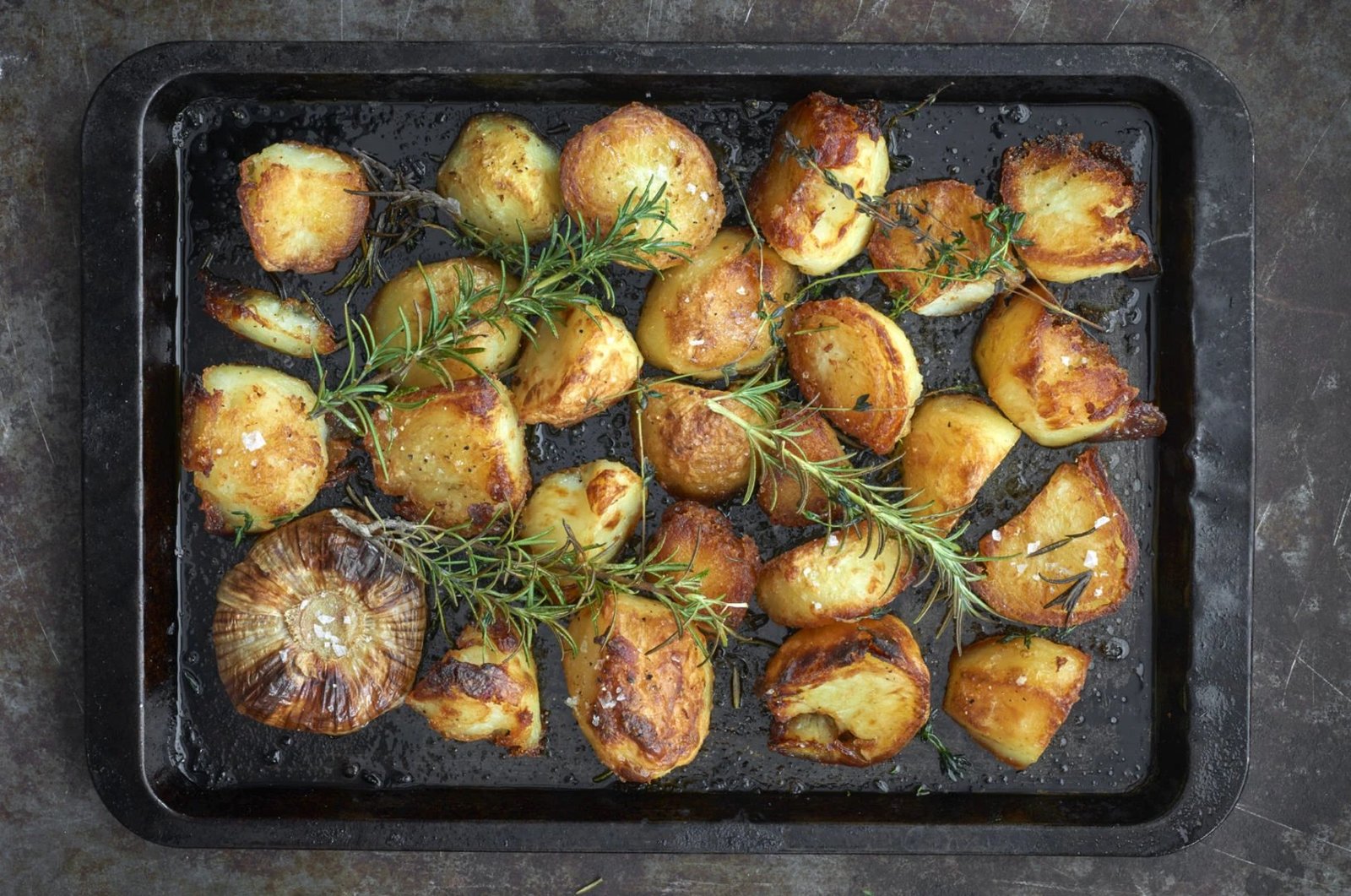
How to Cook Roast Potatoes Perfectly Crispy Every Time
How to Cook Roast Potatoes Perfectly Crispy Every Time
Crisp, golden, shattering outside — fluffy, steaming inside. That’s the target. Here’s the best way to cook roast potatoes crispy: the method behind every great Sunday roast, with the science of why it works.
Choose the right potato
Floury potatoes only: Maris Piper (the gold standard), King Edward, Rooster, or Desiree. Floury potatoes break down at the edges when roughed up, creating the craggy surface that goes ultra-crisp. Waxy potatoes (Charlotte, Anya, new potatoes) stay smooth and never crisp properly — they’re for salads, not roasts.
The fat question
- Goose fat: the traditional champion — rich flavour, superb crisping. £4–£6 a tub, reusable 2–3 times (strain and refrigerate).
- Beef dripping: the old-school pub choice — incredible flavour.
- Vegetable oil / sunflower oil: perfectly good, neutral, high smoke point. The practical everyday choice.
- Olive oil: fine, but don’t waste extra virgin — its low smoke point isn’t ideal; regular olive oil is OK.
- Butter: burns before the potatoes crisp — avoid as the main fat (a knob added at the end for flavour is fine).
The method (step by step)
- Cut large, even chunks — roughly egg-sized. Too small and they dry out; uneven and they cook unevenly.
- Parboil 8–10 minutes in well-salted water until the edges are just softening. This is non-negotiable — it’s what creates the fluffy interior.
- Drain and steam-dry for 2–3 minutes in the colander. Wet potatoes steam; dry potatoes roast.
- Rough them up: shake the colander vigorously to fluff the edges into a mashed-potato-like coating. This craggy surface = maximum crispiness. Be bold here.
- Heat the fat first: put the roasting tin with fat into a 220°C (200°C fan) oven for 5 minutes until shimmering hot. Cold fat = soggy potatoes.
- In they go: carefully add potatoes to the hot fat (it should sizzle aggressively), turn to coat, and season with salt.
- Roast 45–60 minutes, turning every 15–20 minutes, until deep golden and audibly crisp.
- Drain on a wire rack (not kitchen paper — they steam underneath), season again, serve immediately.
Flavour upgrades
- Garlic + rosemary: add whole unpeeled garlic cloves and rosemary sprigs for the last 20 minutes (earlier and they burn).
- Semolina or flour dusting: toss the roughed-up potatoes in a tablespoon of semolina before roasting — extra crunch armour.
- Smoked paprika or polenta: a light dusting adds colour and bite.
- Finish with flaky sea salt and a knob of butter tossed through.
Common failures (and fixes)
- Soggy: fat wasn’t hot enough, potatoes were wet, or the tin was overcrowded (use two tins — crowding steams them).
- Pale and soft: oven too cool, or waxy potatoes. Crank to 220°C and use Maris Piper.
- Burnt outside, hard inside: chunks too big or parboil skipped.
- Sticking: fat wasn’t hot when potatoes went in, or you turned them too early — let them form a crust before the first turn.
Make-ahead strategy
Parboil and rough up the potatoes the day before, then refrigerate uncovered (the fridge dries the surface further — bonus crispiness). On the day, straight into hot fat. One less job in the Sunday chaos. For the full roast timing, see chicken roasting times and Yorkshire puddings.
The bottom line
Floury potatoes + parboil + steam-dry + rough up + screaming-hot fat + 220°C + don’t crowd the tin. That sequence has never failed me, and it’s the difference between roast potatoes and roast potatoes. The goose fat is worth it for Christmas; sunflower oil does the job every other Sunday. Get these right and they’re the best thing on the plate — yes, even better than the meat.
The science of crispiness (why this method works)
Understanding the why makes you a better cook. Parboiling gelatinises the surface starch — creating a starchy slurry on the outside that, when roughed up, forms thousands of tiny craggy surfaces. More surface area = more crispiness (it’s geometry). Steam-drying removes surface moisture — water must evaporate before browning can begin (the Maillard reaction needs temperatures above ~140°C, impossible while water is present at 100°C). Wet potatoes steam; dry potatoes roast.
Hot fat does two things: it fries the exterior on contact (instant crisping) and conducts heat far better than air (oil transfers heat ~10x more efficiently than oven air). High heat (220°C) drives the Maillard reaction hard — the browning that creates flavour compounds (hundreds of them). Turning exposes all sides to the hot fat and prevents sticking. Not crowding maintains airflow — crowded potatoes trap steam, dropping the effective temperature below the crisping threshold. Every step has a reason; skip one and you know exactly what you lose.
Roast potato FAQs
Can I prepare roast potatoes the day before? Yes — parboil, rough up, then refrigerate uncovered overnight. The fridge dries the surface further (cold air is dry air), which actually improves crispiness. On the day: straight from fridge into hot fat. This is the Christmas Day lifesaver — one major job done 24 hours early.
Why do my roast potatoes stick to the tin? Fat wasn’t hot enough when they went in (the #1 cause), turned too early (let a crust form before the first turn — 20 minutes), or wrong tin (thin tins have hot spots; use a heavy-gauge roasting tin). Non-stick tins help but degrade at high heat — a well-seasoned heavy tin with properly hot fat doesn’t stick. If they stick, don’t force them — give them 5 more minutes; the crust releases when it’s ready.
Goose fat vs oil — is goose fat really better? Flavour: yes — goose fat adds a rich, savoury depth that neutral oils don’t. Crispiness: marginal difference — hot oil crisps just as well. Verdict: goose fat for Christmas and special occasions (£5 a tub, reusable 2–3 times); sunflower/vegetable oil for every other Sunday. Beef dripping splits the difference — superb flavour, traditional, cheap from butchers.
Can I roast potatoes in an air fryer? Yes, brilliantly — air fryers are essentially small, fierce convection ovens: parboil and rough up as normal, toss in a tablespoon of hot oil, 200°C for 20–25 minutes, shaking halfway. Smaller batches than oven (don’t overcrowd the basket), but the intense circulating heat gives superb crispiness. For 2–3 people, the air fryer beats heating a full oven.
How do I reheat leftover roast potatoes? Oven or air fryer (200°C, 10 minutes) — they re-crisp well. Microwave: never — it steams them into sadness. Cold leftover roast potatoes, sliced into a fry-up or Spanish omelette, are arguably better than reheated — plan for leftovers deliberately.
Related reading
The full roast: chicken roasting times — plus BBC Good Food’s roast potato method.