
Counting Michael Jackson’s Fortune: Net Worth, Age, Height and Family
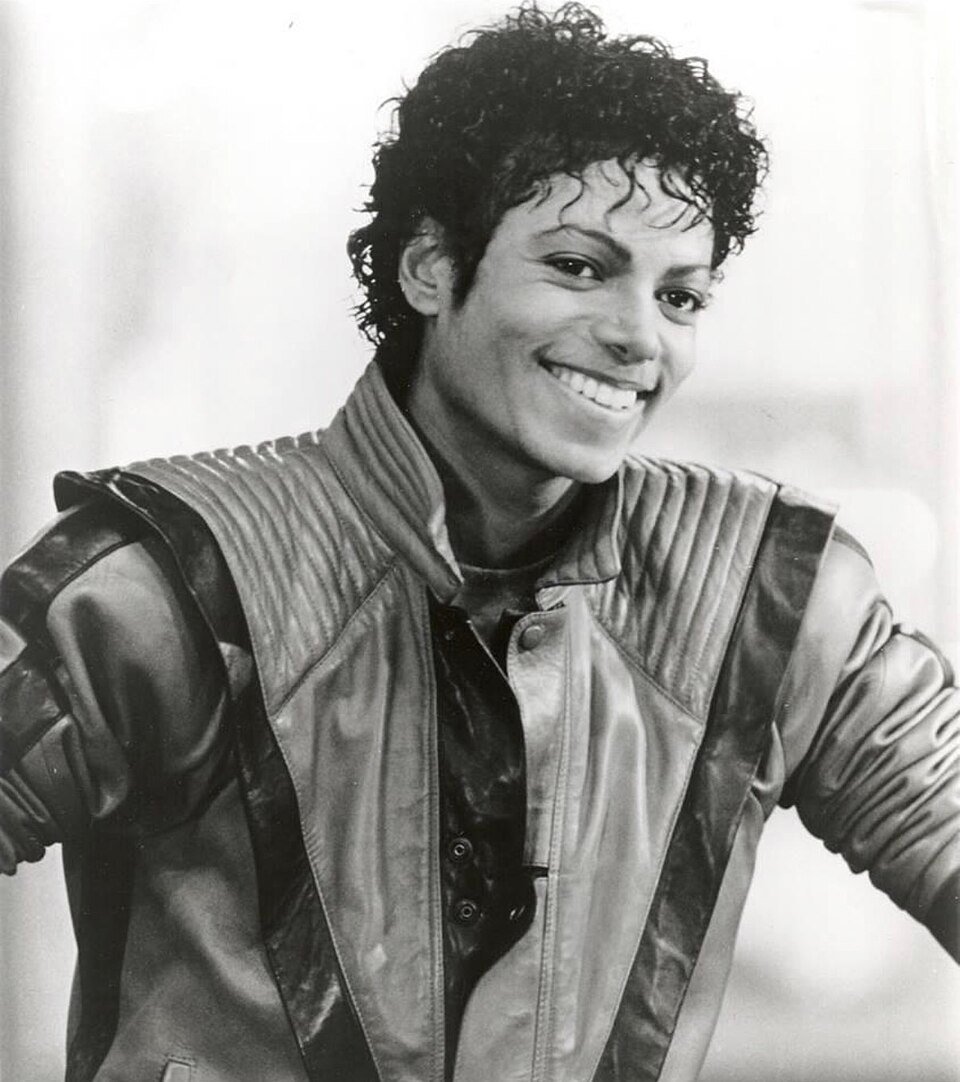
Counting Michael Jackson's Fortune: Net Worth, Age, Height and Family
The Life of Michael Jackson, Told in Plain Facts
Michael Jackson died on 25 June 2009 in Los Angeles, aged 50, and this profile is written posthumously throughout, because that is the only honest way to write it. In life he was the most famous popular musician in the world: a child star in a family group who became, as a solo artist, the performer against whom every later pop star has been measured, with Thriller standing as the best-selling album of all time.
The money requires equal plainness, because the two figures attached to his name are routinely confused. At his death, his net worth was negative: Celebrity Net Worth puts it at −$500 million, with debts of more than $500 million, a position confirmed in estate executors’ court filings in 2024. Separately — and kept strictly separate in this profile — his estate has earned more than $3.5 billion since his death, according to Forbes. Those estate earnings are not his net worth at death, and the two numbers must never be merged.
What follows sets out the life in the order this layout requires: the upbringing in Gary, Indiana, the family he came from and the children he left, the career year by year, the facts table table, and then the fortune — the debt at death and the extraordinary earnings of the estate since, each labelled for exactly what it is.
The Private Life Michael Jackson Keeps Off Camera
At his death Michael Jackson was unmarried and had no partner, and the partner row in the facts table states exactly that. His two marriages belong to the historical record. He married Lisa Marie Presley in 1994, and that marriage ended in 1996. He then married Debbie Rowe in 1996; that marriage also later ended in divorce. Both are recorded here as history, which is what they are.
He left three children. Prince was born in February 1997 and Paris was born in April 1998; their mother is Debbie Rowe. His youngest child, Prince Michael II, known as Bigi, was born in February 2002 to a surrogate. The three children were aged between seven and twelve when their father died in 2009, and they were raised thereafter within the wider Jackson family.
His parents were Joseph “Joe” Jackson, who died in 2018, and Katherine Jackson. He was the eighth of ten children, and his siblings are named here in full because the pattern is carried for this subject: Rebbie, Jackie, Tito, Jermaine, La Toya, Marlon, Brandon — Marlon’s twin, who died at birth — Randy and Janet. Several of them, Janet above all, built major careers of their own, but it was the family group of the five performing brothers that began the story.
On religion, the verified record is specific and this profile follows it exactly. He was raised as a Jehovah’s Witness, his mother having been baptised in 1963. In 1987 he disassociated himself from the Jehovah’s Witnesses. Claims made after his death that he had converted to another faith are unconfirmed, and they are recorded here as unconfirmed — not adopted, and not presented as fact.
The Michael Jackson Record in Black and White
| The Michael Jackson Record in Black and White | Details |
|---|---|
| Born | 29 August 1958, Gary, Indiana; died 25 June 2009, Los Angeles, aged 50 |
| Age | 50 at death (died 25 June 2009) |
| Net Worth | −$500 million at death — Celebrity Net Worth (debts of more than $500 million) |
| Height | 5 ft 9 in (1.75 m) |
| Weight | No reliable published figure exists |
| Partner | None — unmarried at death, no partner |
| Children | Three: Prince (b. February 1997), Paris (b. April 1998), Prince Michael II “Bigi” (b. February 2002) |
| Parents | Joseph “Joe” Jackson (d. 2018); Katherine Jackson |
| Siblings | Rebbie, Jackie, Tito, Jermaine, La Toya, Marlon, Brandon (twin, died at birth), Randy, Janet — he was the eighth of ten children |
| Religion | Raised a Jehovah’s Witness; disassociated in 1987; posthumous conversion claims unconfirmed |
Michael’s First Years: Gary and the Family Around Michael
Michael Jackson was born on 29 August 1958 in Gary, Indiana. He was the eighth of ten children in his family, a fact that shaped everything that followed: the Jackson household was organised around music, and the children performed together from an early age, first locally and then professionally, long before any of them was famous in his own right.
His father, Joseph “Joe” Jackson, managed the children’s act; his mother, Katherine Jackson, was the family’s other central figure, and it was she who had been baptised in 1963 into the faith in which Michael was raised — a matter covered, on the verified record, in the family section. The family group, the Jackson 5, signed to Motown at the end of the 1960s and had immediate, large-scale success, which meant that Michael Jackson’s childhood was spent working: recording, touring and appearing on television while still a boy.
That early start is the essential background to the solo career. By the time he recorded his first fully adult solo albums, he had already spent more than a decade as a professional performer, had learned the studio craft of the Motown system at close quarters, and had a clear, documented ambition to move beyond the group format and control his own records. The solo career that followed was built on that long apprenticeship, not on sudden discovery.
What Michael Jackson Did After The Jackson 5
1969 — The Jackson 5
The Jackson 5 signed to Motown in 1969 and opened with a run of number one singles, including “I Want You Back” and “ABC”. Michael, still a child, was the lead singer and the focus of the act. Solo records alongside the group work followed in the early 1970s, including “Ben” in 1972, but the group remained the centre of his working life through his teens.
1979 — Off the Wall
Off the Wall, released in 1979 and produced with Quincy Jones, was the breakthrough adult solo album: a record of disco, soul and pop that produced singles including “Don’t Stop ‘Til You Get Enough” and “Rock with You”, and established him as a solo artist of the first rank rather than a former child star.
1982 — Thriller
Thriller, in 1982, changed the scale of what a pop album could be. It produced seven hit singles, including “Billie Jean” and “Beat It”, its videos reshaped the relationship between music and television, and it became the best-selling album of all time. It also produced his best-known collaborations with Paul McCartney — “The Girl Is Mine” on this album, and “Say Say Say” the following year; McCartney’s own career and fortune are set out in Paul McCartney’s net worth profile. After Thriller, Jackson was, by any commercial measure, the biggest star in popular music.
1987 — Bad
Bad followed in 1987, the third of his albums with Quincy Jones, and produced a run of number one singles including the title track, “The Way You Make Me Feel” and “Man in the Mirror”. The supporting world tour was among the largest of its era and confirmed the live scale that his later tours would maintain. This was also the year, noted in this profile, in which he disassociated from the Jehovah’s Witnesses.
1991 — Dangerous
Dangerous, released in 1991, opened with “Black or White” and moved his sound towards the new jack swing production of its period. It sold in the tens of millions worldwide and was supported by another vast world tour. By this point his albums were global events with long campaigns, and the commercial machinery around each release was as much a part of the story as the music.
1995 — HIStory
HIStory, in 1995, paired a greatest hits collection with a disc of new material, including “Scream”, recorded with his sister Janet, and “You Are Not Alone”, which entered the chart at number one. The album and its tour closed the 1990s phase of his career, after which his release rate slowed markedly.
2001 — Invincible
Invincible, released in 2001, was his final studio album of new material in his lifetime. It reached number one but received a shorter campaign than its predecessors, and the 2000s became a decade of reduced output, business disputes and mounting financial pressure — the background to the debt position set out in the fortune section.
2009 — This Is It and Death
In 2009 he was preparing a run of comeback concerts in London under the title This Is It. He died on 25 June 2009, aged 50, before the concerts took place. A film assembled from rehearsal footage was released later that year under the same title. His death closed a forty-year professional career that had begun when he was a small child in Gary, Indiana.
From Gary to the Present: Michael Jackson’s Lasting Mark
His legacy is not in serious dispute. Thriller remains the best-selling album ever made, his videos and stagecraft set the template that mainstream pop still follows, and the catalogue continues to reach audiences who were born after his death. The London concerts he was rehearsing for in 2009 never happened, but the rehearsal film and the estate’s stage productions have kept the work in front of the public ever since.
The estate’s position is the financial half of that legacy: earnings of more than $3.5 billion since 2009 on Forbes’s count, the highest-earning deceased celebrity ranking held thirteen times, and a debt of more than $500 million at death long since overtaken by posthumous income. The man died in debt; the estate is a fortune. This profile has kept those two facts separate, because both are true and neither cancels the other.
Counting Michael Jackson’s Fortune, Source by Source
This section keeps two numbers apart with care, because mixing them is the commonest error in writing about his money. The first number is his net worth at death. Celebrity Net Worth puts it at −$500 million: negative, because his debts — of more than $500 million — exceeded his assets on that accounting. That position was confirmed in court filings by the estate’s executors in 2024, which is as firm a sourcing as celebrity finance reporting ever gets. He died, on the verified record, half a billion dollars in debt.
The second number belongs to the estate, not to the man at death, and it is labelled estate earnings wherever it appears in this profile. Forbes puts the estate’s earnings since his death at more than $3.5 billion. In the single year from October 2024 to September 2025 the estate earned around $105 million, and Forbes has named him the highest-earning deceased celebrity for the thirteenth time. Catalogue licensing, the value of his music publishing interests, stage productions built on his work and continued record sales drive those earnings — all of it income to the estate after 2009, none of it altering the negative net worth at death.
The Neverland: The Jackson Property Record
His best-known property was Neverland, the California ranch he bought in 1988 for around $19.5 million and made his home for much of his career. The estate sold the property in 2020 for around $22 million, by then renamed Sycamore Valley Ranch; those are purchase and sale prices, labelled as such. At his death he was renting a mansion in Holmby Hills, Los Angeles — a tenancy, not an owned asset, and recorded here as exactly that.
The Rolls-Royce in Michael’s Garage
No authoritative inventory of his cars exists. Four vehicles are multiply reported in coverage of his collection: a 1999 Rolls-Royce Silver Seraph, a 1990 Rolls-Royce Silver Spur II limousine, a 1985 Mercedes-Benz 500 SEL and a 1954 Cadillac Fleetwood. That is the documented extent of it — named cars in reporting, no verified total and no verified valuation, and none is invented here.
The contrast between the two halves of this section is the story of his finances in one paragraph: an artist who earned at the highest level in the history of popular music, who nevertheless died $500 million in debt, and whose estate then earned more than $3.5 billion after his death once the catalogue was managed without the spending that had consumed the lifetime earnings.