
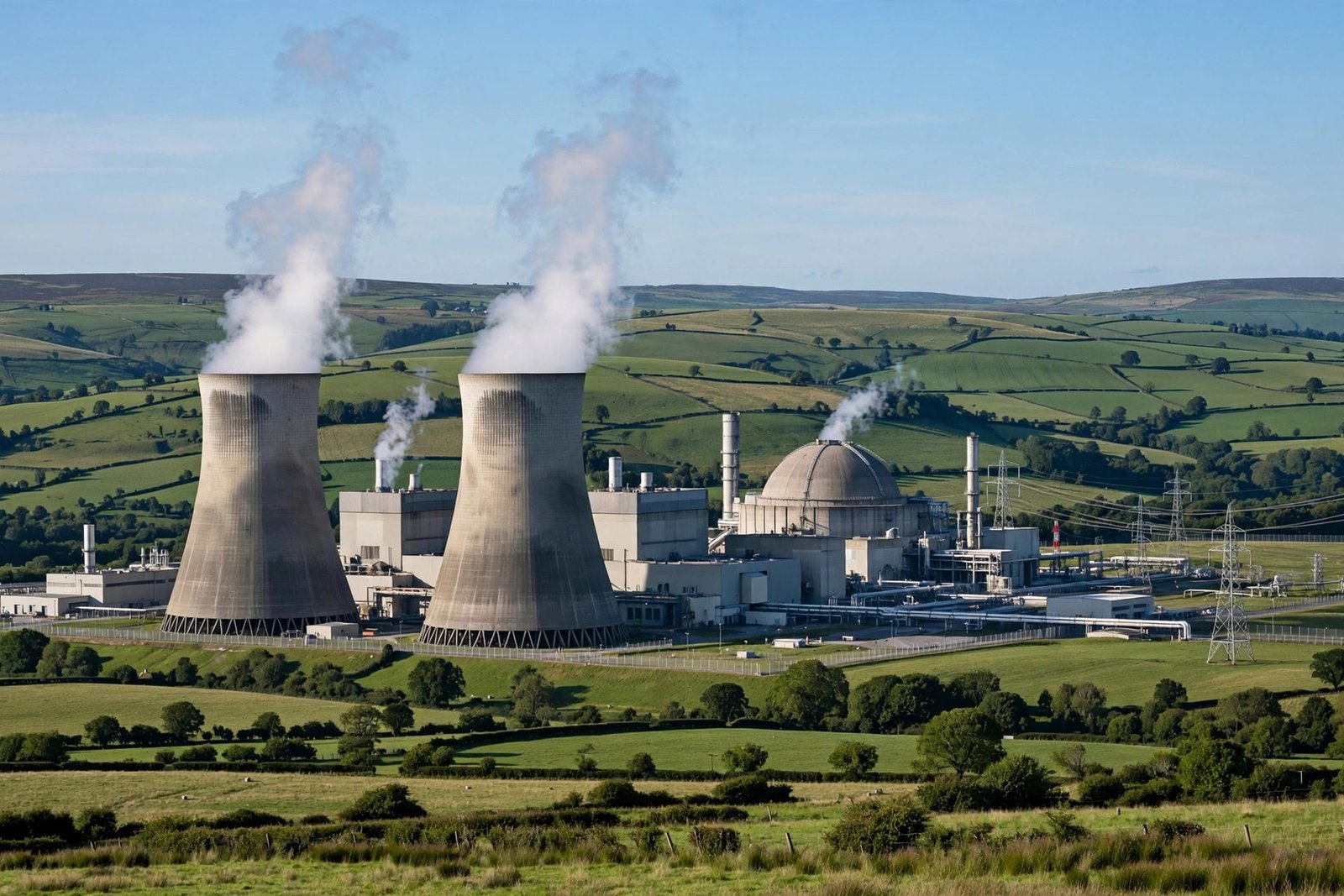
Is Nuclear Power Green or Not? The Honest Assessment
Few energy debates generate more heat than nuclear power — fitting, given the subject. Environmentalists split bitterly over it: some call it the indispensable climate tool, others an expensive distraction from renewables. Both sides wield facts, which makes the question genuinely confusing. The honest answer requires separating several questions people conflate: carbon emissions, waste, safety, cost, and speed.
Here is the evidence-based assessment of whether nuclear power is green — what the data says on each dimension, and where the honest uncertainties lie.
Carbon Emissions: The Strongest Case
On lifecycle carbon emissions — the full accounting from mining to decommissioning — nuclear is among the lowest-carbon energy sources in existence. Major assessments (including the IPCC and UNECE) place nuclear's lifecycle emissions around 12g CO2 per kWh, comparable to wind (around 11-12g) and far below solar (around 27-48g depending on manufacturing) and gas (around 400-500g). In carbon terms, nuclear is unambiguously green: a green energy source by the measure that matters most for the climate.
This is the foundation of the pro-nuclear environmental case, and it is solid. Every kilowatt-hour from a nuclear plant is one not generated from fossil fuels, and nuclear provides firm, dispatchable low-carbon power — available regardless of weather — which complements intermittent renewables. Countries that retained nuclear (France, Sweden, Ontario) decarbonised electricity faster and more completely than those that did not. On carbon alone, the verdict is clear: nuclear is green. The complications lie elsewhere.
Waste: The Real but Manageable Problem
How much waste there really is
Nuclear waste is the issue opponents lead with, and it deserves honest treatment. High-level waste remains hazardous for thousands of years — a timescale that strains human institutions. But scale matters enormously: all the high-level waste from decades of a country's nuclear programme fits in volumes that surprise people — the UK's entire legacy could fit in a space roughly the size of a large warehouse. Compare that with fossil fuel waste — billions of tonnes of CO2 dumped freely into the atmosphere, plus coal ash containing heavy metals.
Deep geological disposal
The technical solution exists and works: deep geological disposal — burying waste in stable rock formations — is the international scientific consensus, implemented in Finland's Onkalo facility, the world's first operating repository. The problem is political, not technical: no country enjoys hosting the repository. Reprocessing and advanced reactor designs can further reduce waste volumes and lifetimes. Honest framing: waste is a genuine intergenerational responsibility, but a small-volume, contained, solvable one — unlike the uncontained waste of fossil fuels, which is already altering the climate.
Further reading: Defra.
Safety: Records vs Fears
Nuclear's safety record, measured in deaths per unit of energy, is among the best of any energy source — including wind and solar. Coal kills hundreds of thousands annually through air pollution; even accounting for Chernobyl and Fukushima, nuclear's death rate per terawatt-hour sits near the bottom of the table. Modern reactor designs are passively safe in ways early Soviet designs were not; Fukushima's 1960s-era design survived an earthquake beyond its design basis, with the tsunami causing the catastrophe.
Yet fear is rationally explicable: nuclear accidents are dread risks — rare, catastrophic-seeming, involuntary, and poorly understood — which human psychology weights far above familiar, voluntary risks like air pollution. Add the weapons association and waste's deep-time dimension, and opposition becomes psychologically inevitable regardless of statistics. The honest position acknowledges both: the statistical record is excellent, and the dread is humanly understandable. Policy made purely on statistics would expand nuclear; policy must also carry democratic consent, which the dread complicates.
Cost and Speed: The Practical Constraints
Here the pro-nuclear case weakens. New nuclear plants in Western countries have become staggeringly expensive and slow: Hinkley Point C's costs ballooned past £30 billion with repeated delays, and similar stories plague projects in France and the US. At these costs and timescales, nuclear struggles to compete with renewables-plus-storage on economics — though comparisons must be like-for-like on firm power, where the maths is closer.
Small modular reactors (SMRs) promise factory-built, cheaper, faster nuclear — the industry's great hope — but remain largely pre-commercial, with costs unproven at scale. The speed argument cuts both ways: we need massive clean energy this decade, and a plant starting now delivers in the 2030s; but we also need firm power for decades, and the grid of 2040 benefits from plants approved today. Honest assessment: cost and speed are nuclear's genuine weaknesses, and its climate contribution depends on solving them.
The UK's Nuclear Fleet: Where Things Stand
The UK's nuclear story is at an inflection point. The ageing AGR fleet — the stations that powered Britain for decades — is retiring, with most closing in the 2020s, leaving Sizewell B and the new builds to carry nuclear's share. Hinkley Point C, Britain's first new nuclear station in a generation, has become the case study in Western nuclear's cost disease: budget past £30 billion, years late, yet still the country's biggest single low-carbon investment.
The future bets: Sizewell C (essentially a Hinkley replica, aiming to capture learning-by-doing savings) and small modular reactors — Rolls-Royce SMR's designs progressing through regulatory assessment, promising factory-built units at lower cost and faster deployment. Whether SMRs deliver on the economics is the open question the whole industry watches. For the UK's net-zero grid, the arithmetic is stark: retiring 8GW of nuclear while electrifying heat and transport leaves a firm-power gap that renewables-plus-storage must fill expensively — or that new nuclear fills directly. The fleet's future will be decided less by physics than by whether Britain can build affordably this time.
Learn more from Recycle Now.
The Verdict: Green, With Caveats
So: is nuclear power green? On the climate measure that matters most — carbon emissions — yes, unambiguously, at wind-like levels. On waste: a real, small-volume, technically solvable responsibility. On safety: statistically excellent, psychologically fraught. On cost and speed: genuinely problematic in current Western delivery, the main practical constraint.
The most defensible position, held by a growing number of climate scientists and environmentalists: we need both rapid renewables deployment and retained/expanded nuclear, because decarbonising fully with intermittents alone is harder and slower. Opposing nuclear on green grounds requires believing the waste and cost problems outweigh the carbon benefit — a judgment call, not a scientific fact. The climate does not care about our energy preferences; it cares about emissions. By that measure, nuclear is green — an expensive, slow-to-build, politically difficult green, but green.
If you found this useful, keep reading: how do i reduce food waste at home in the UK and do i need a licence to sell food from home in the UK.
Nuclear power is green on the measure that matters most: lifecycle carbon emissions around 12g CO2/kWh, comparable to wind and far below fossil fuels. Waste is real but small-volume and technically solvable via geological disposal; safety statistics are excellent though dread is understandable; cost and construction speed are the genuine weaknesses. The evidence-based position: nuclear is a green, firm, low-carbon source whose climate contribution is constrained by economics and politics, not physics. We likely need it alongside rapid renewables.
Frequently Asked Questions
How much CO2 does nuclear power produce?
Around 12g CO2 per kWh over its full lifecycle — similar to wind, lower than solar's manufacturing footprint, and roughly 3% of gas-fired electricity's emissions.
What happens to nuclear waste?
High-level waste is a small volume stored securely, with deep geological disposal (burying it in stable rock) the scientific consensus solution — Finland's Onkalo repository is the first operating example.
Is nuclear power safer than renewables?
By deaths per unit of energy, nuclear ranks among the safest sources — comparable to wind, far safer than fossil fuels. Chernobyl and Fukushima are included in these assessments.
Why is nuclear power so expensive to build?
First-of-a-kind designs, stringent safety regulation, financing costs over decade-long builds, and loss of construction expertise all inflate Western nuclear costs. Small modular reactors aim to cut costs via factory production but remain largely unproven.