
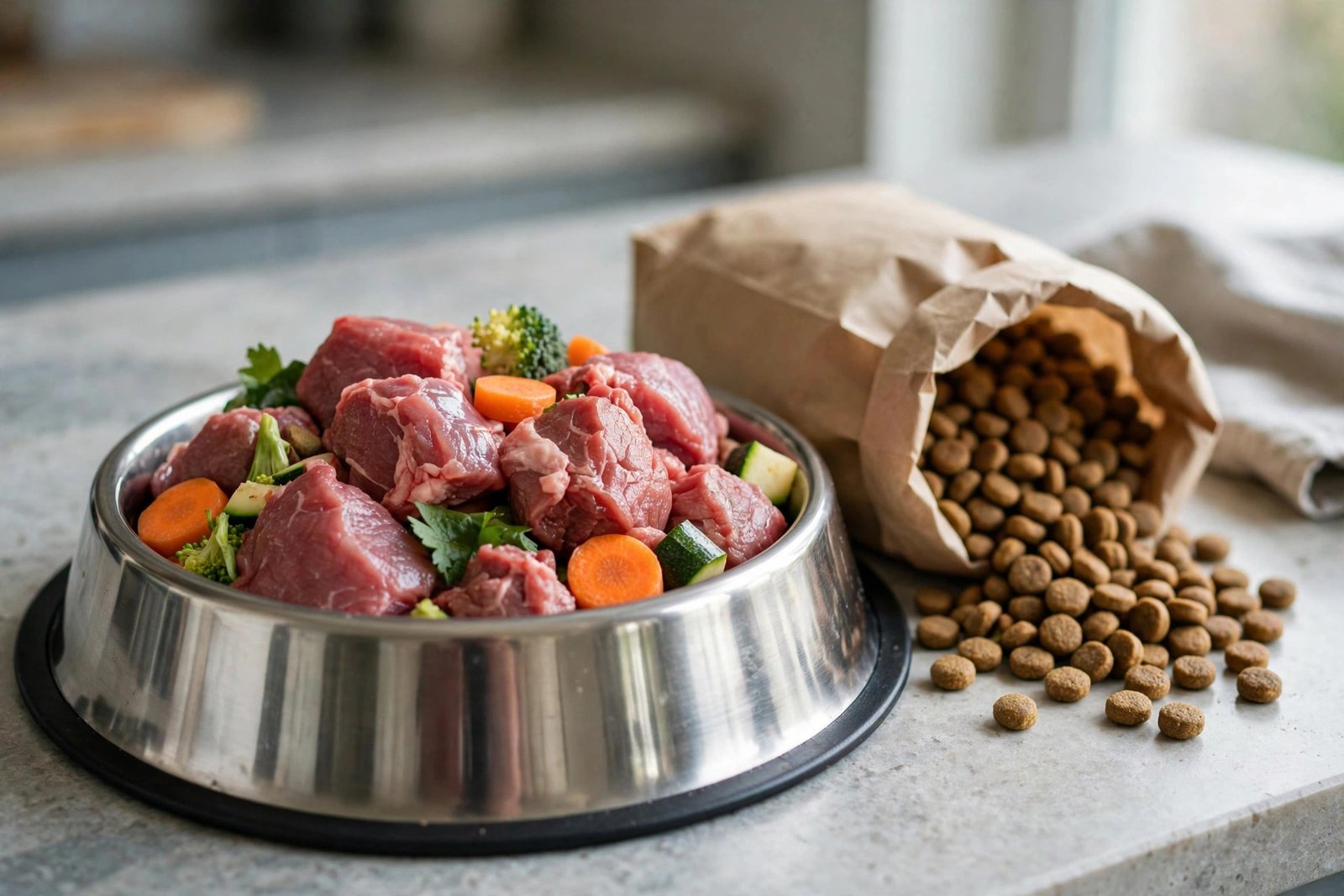
Is a Raw Diet Genuinely Healthier for Dogs? The Evidence Says…
Walk into any upmarket pet shop in London and you will find freezer cabinets full of raw dog food: neatly packed minces of chicken, tripe, duck necks, and “complete” raw meals promising a shinier coat, cleaner teeth, and boundless energy. The raw feeding movement — BARF (biologically appropriate raw food) and its cousins — has grown from a fringe practice into a serious industry, and its advocates are passionate. But passion is not evidence. So what does the science actually say: is a raw diet genuinely healthier for dogs, or is it an expensive gamble dressed up as nature?
The honest answer is uncomfortable for both camps: there is no robust scientific evidence that raw diets are healthier than well-formulated cooked diets, while there is substantial evidence that they carry real risks — for dogs and for the humans who handle the food. Here is what the research shows, and how to think clearly about it.
What raw feeders claim — and what the evidence supports
The core claims of raw feeding are appealing: dogs evolved eating raw prey, so raw must be natural; raw food produces smaller, firmer stools; coats become glossier; teeth stay cleaner; allergies improve. Some of these observations are real. Raw diets are typically high in protein and fat and low in carbohydrate, and dogs on high-meat diets often do produce smaller stools — simply because there is less indigestible bulk. Coat condition can improve when a dog moves from a poor-quality kibble to any better diet, raw or cooked.
But “natural” is doing a lot of heavy lifting in these arguments. Wolves eat raw prey because they have no choice, and wild canids live dramatically shorter lives than domestic dogs — hardly a ringing endorsement. More importantly, controlled studies comparing raw and cooked diets head-to-head are vanishingly rare. A frequently cited 2003 study found improved digestibility for a raw diet versus kibble, but it was small, short, and industry-adjacent. No large, peer-reviewed trial has demonstrated that raw-fed dogs live longer, get sick less, or enjoy better long-term health outcomes than dogs on complete cooked diets. The claimed dental benefits are similarly shaky: recreational raw bones can fracture teeth and cause obstructions, a risk veterinary dentists see regularly.
The contamination problem is real and well-documented
This is where the evidence gets serious. Multiple peer-reviewed studies across Europe and North America have tested commercial and homemade raw dog foods for pathogens, and the results are consistently alarming: a substantial proportion — in several studies between a quarter and half of samples — test positive for Salmonella, E. coli, Campylobacter, or Listeria. A widely reported Dutch study found particularly high contamination rates, and UK surveillance has found similar patterns.
Dogs themselves are relatively resistant to some of these bacteria — though not immune, and puppies, elderly dogs, and immunocompromised dogs are genuinely vulnerable. The bigger risk, emphasised by the British Veterinary Association, is to humans: raw-fed dogs shed pathogens in their saliva and faeces, contaminating bowls, floors, and the faces they lick. Households with small children, pregnant women, or immunocompromised people face a risk that cooked feeding simply does not carry. This is why the BVA, the American Veterinary Medical Association, and the World Small Animal Veterinary Association all advise against raw feeding — a remarkable consensus among organisations that rarely agree on anything.
Handling raw dog food with the rigour of raw chicken for human consumption mitigates some risk — separate boards, thorough handwashing, disinfecting bowls — but surveys show most raw feeders do not maintain that discipline consistently. And freezing does not reliably kill these pathogens; it merely pauses them.
Nutritional balance is harder than it looks
The second underappreciated risk is nutritional imbalance, particularly in homemade raw diets. Studies analysing homemade raw recipes — including many published in books and shared in online raw-feeding groups — find the majority are deficient or excessive in key nutrients: calcium and phosphorus ratios skewed by too much or too little bone, vitamin D and zinc deficiencies, excess vitamin A from too much liver. Growing puppies are especially vulnerable: calcium imbalance during growth can cause permanent skeletal deformities.
Commercial “complete” raw foods in the UK must meet FEDIAF (European Pet Food Industry Federation) nutritional guidelines to make that claim, which helps — but “complementary” raw products carry no such guarantee, and the labelling distinction is lost on many buyers. The PDSA advises owners considering raw to consult a vet or qualified animal nutritionist first, and to be wary of any diet promising miracle cures. If you would not trust a human nutrition plan sourced from a Facebook group, apply the same scepticism here. (For the human side of label-reading, see how to lower cholesterol through diet — the ingredient-awareness habit transfers.)
What about the cost?
Raw feeding is significantly more expensive than quality kibble — often two to four times the price for commercial raw, plus freezer space and the time cost of careful hygiene. For a large breed in London, raw feeding can easily exceed £100 a month. Whether that money buys better health is, as we have seen, unproven. Understanding how much a dog costs per year in the UK helps put the premium in context: food is already one of the biggest line items, and raw roughly doubles it.
If you still want to feed raw: harm reduction
Some owners will choose raw regardless, and honest harm reduction beats judgment. If that is you: buy only “complete” products from reputable manufacturers that publish FEDIAF-compliant nutritional analysis; handle everything like raw poultry — dedicated utensils, hot soapy washing, disinfection; never feed cooked bones (they splinter) and be cautious even with raw weight-bearing bones; keep raw away from children and immunocompromised household members; and tell your vet, so they can monitor for nutritional issues and factor zoonotic risk into advice. Avoid exotic proteins from unregulated sources, and never feed wild-shot game without understanding the lead-shot contamination issue.
There is also a middle path many vets quietly recommend: lightly cooked fresh food. Gently cooking meat to safe temperatures eliminates the pathogen risk while retaining the high-meat, low-filler profile raw feeders value. Several UK companies now sell gently cooked fresh diets, and home-cooking with veterinary nutritionist-formulated recipes achieves the same. Nutritionally, the evidence base for “fresh cooked beats extruded kibble” is thin too — but at least the safety profile is uncontroversial.
The bottom line
Is a raw diet genuinely healthier for dogs? On current evidence: no proven benefit, documented risks. The shinier coat and smaller stools that raw feeders report are real observations with mundane explanations (better overall diet quality, higher digestibility of meat), not proof of raw’s superiority. Against that stand peer-reviewed contamination data, veterinary consensus against the practice, and the genuine difficulty of balancing homemade recipes. Dogs thrive on complete, balanced nutrition — and a well-formulated cooked diet delivers that with a fraction of the risk. Nature is a good starting point for thinking about dog food, but it is a poor substitute for evidence.
Frequently Asked Questions
Do vets recommend raw diets for dogs?
Overwhelmingly, no. The British Veterinary Association, the American Veterinary Medical Association, and the World Small Animal Veterinary Association all advise against raw feeding, citing pathogen risks to pets and humans and the difficulty of achieving nutritional balance.
Can raw dog food make my family sick?
Yes — this is the primary concern. Studies find high rates of Salmonella, E. coli, and Campylobacter in raw pet foods, and dogs shed these bacteria in saliva and faeces. Children, pregnant women, and immunocompromised people are most at risk.
Is homemade raw food better than commercial raw?
Not necessarily. Analyses of homemade raw recipes find most are nutritionally imbalanced. Commercial “complete” raw foods at least must meet FEDIAF nutritional standards, though they share the same contamination risks.
Will raw bones clean my dog’s teeth?
Chewing provides some mechanical cleaning, but veterinary dentists warn that bones — raw or cooked — commonly cause slab fractures of teeth, plus risks of obstruction and constipation. Dental-specific chews and regular vet checks are safer.
What is the safest alternative if I want fresh food for my dog?
Gently cooked fresh diets offer the high-meat profile of raw without the pathogen risk. Choose FEDIAF-compliant commercial products or recipes formulated by a qualified veterinary nutritionist, and discuss any diet change with your vet.