
How to Slow Down Wrinkles in Your Early 30s
Your early 30s are when skin quietly changes gear. Collagen production — the scaffolding that keeps skin firm — begins declining by about 1% a year from your mid-20s, and by 32 or 33 the first fine lines often appear around the eyes and forehead. The good news: this is the decade when prevention works hardest. What you do now determines far more than any cream you buy at 50.
This is not about fear or freezing your face in time. It is a practical, evidence-based guide to slowing wrinkle formation in your early 30s: the habits that genuinely work, the products worth your money, and the expensive myths to skip.
Why wrinkles start in your early 30s
Skin ageing has two drivers. Intrinsic ageing — the slow, genetically programmed decline in collagen, elastin and natural moisturising factors — ticks along regardless. Extrinsic ageing, caused by sun, smoking, pollution and lifestyle, is where you have real power: dermatologists estimate up to 80% of visible facial ageing comes from UV exposure alone.
In your early 30s, the visible signs are usually dynamic lines (visible when you smile or frown) rather than static wrinkles (visible at rest). Dynamic lines are the warning stage — the moment when prevention pays maximum dividends. Once lines etch in at rest, reversing them gets much harder and pricier.
Sun protection: the single biggest lever
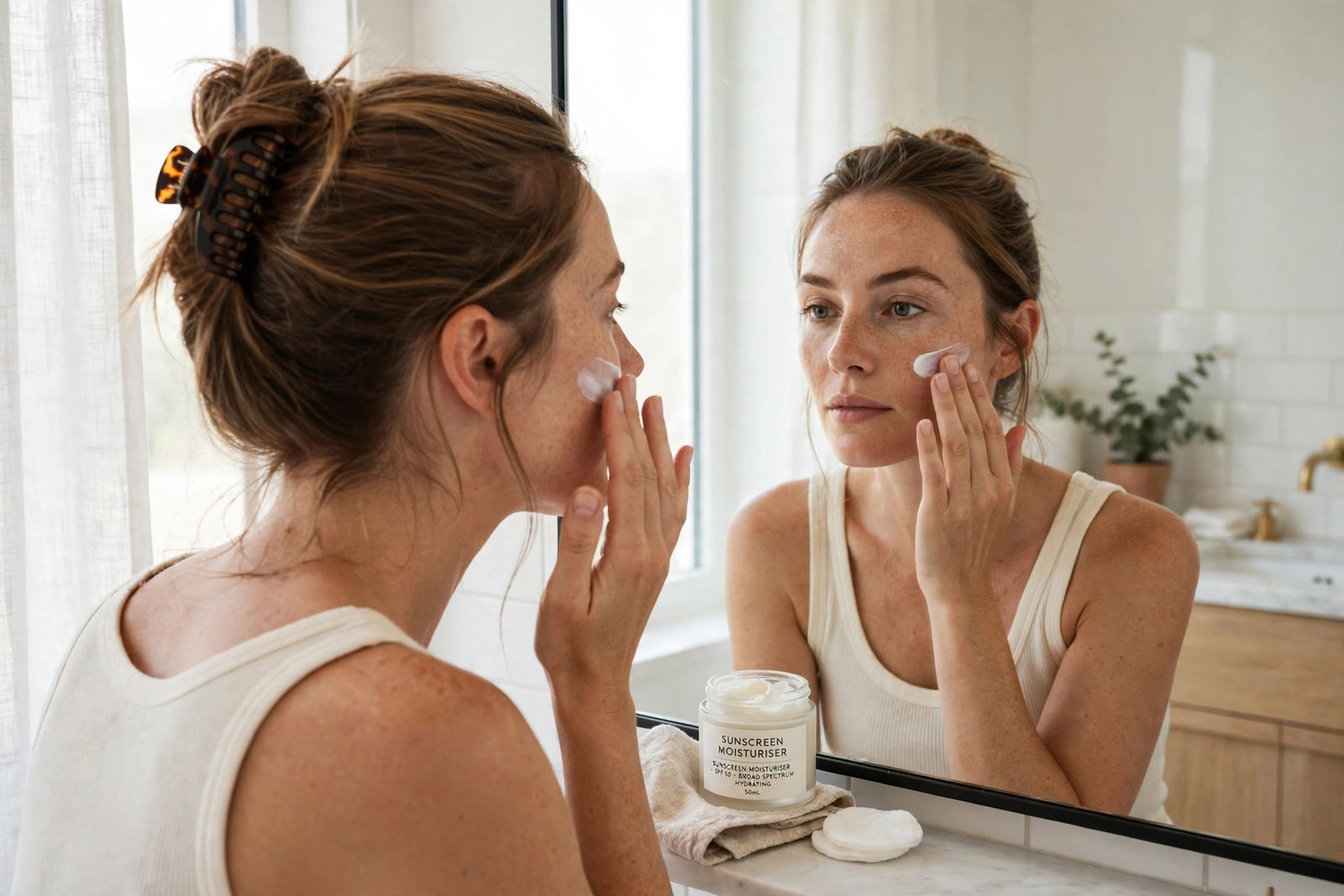
If you do one thing, wear sunscreen daily. Not just on holiday — every day, including cloudy London days, because UVA (the ageing ray) penetrates cloud and glass. Choose SPF 30 or higher with broad-spectrum protection, apply a full finger-length of product to your face, and reapply if you are outdoors for hours.
Sunglasses are the underrated partner: squinting etches crow’s feet, and the thin skin around the eyes is the first to show damage. A decent pair of UV400 sunglasses worn consistently from your early 30s genuinely delays eye-area lines — our guide to choosing sunglasses for your face shape helps you find a pair you will actually wear. Hats, shade-seeking and avoiding midday sun complete the picture. The British Skin Foundation is blunt on this point: sun protection is the most effective anti-ageing intervention that exists. The NHS likewise advises daily sun protection as the cornerstone of skin health at every age.
The skincare routine that actually works
You do not need twelve steps. The evidence-backed core is four products: a gentle cleanser, a moisturiser suited to your skin type, daily sunscreen, and — the one active ingredient with the strongest evidence — a retinoid in the evening. Prescription tretinoin is the gold standard for collagen stimulation, but over-the-counter retinol works too; start low (0.3%), twice a week, and build up to avoid irritation.
Vitamin C serum in the morning adds antioxidant protection and modest collagen support — look for 10–20% L-ascorbic acid in opaque packaging. Niacinamide (vitamin B3) helps barrier function and uneven tone. That is genuinely it for actives with solid evidence. Peptides, stem-cell creams and most “miracle” ingredients have thin data behind luxurious price tags.
Consistency beats intensity. A simple routine followed daily for years outperforms an elaborate one abandoned after a month — and a £12 moisturiser used religiously beats a £120 one used sporadically.
Lifestyle factors that show on your face
Sleep is skin repair time: chronic short sleep raises cortisol, which breaks down collagen. Aim for 7–9 hours. Smoking is catastrophic for skin — it constricts blood vessels, depletes vitamin C and etches lines around the mouth; quitting in your 30s lets significant recovery happen.
Hydration matters, though not how adverts claim: drinking water will not directly plump wrinkles, but chronic dehydration makes skin look dull and lines more visible. Aim for steady intake through the day — see how much water to drink in the UK climate. Diet-wise, high-sugar diets accelerate glycation, a process that stiffens collagen fibres; you do not need to quit sugar, but moderating it helps. And do not underestimate vitamin D — deficiency is widespread in the UK and linked to poorer skin health, so check the signs of vitamin D deficiency if you are always indoors.
What about treatments?
In your early 30s, most people need no clinical treatments — prevention is the treatment. That said, options exist for specific concerns: medical-grade chemical peels for texture, microneedling for early scarring, and laser for sun damage. Botox for dynamic forehead lines is increasingly common in the early-30s cohort; it is effective but temporary (3–4 months), costs £150–£350 per area in London, and should only be done by a qualified medical professional — the UK has minimal regulation of who can inject, so verify credentials ruthlessly.
Be sceptical of facials marketed as anti-ageing: relaxing, yes; wrinkle-reversing, no. Save the money for sunscreen and retinoids.
Treatments and products to skip
Save your money on these. Expensive “collagen” creams cannot replace lost collagen — collagen molecules are too large to penetrate skin, so they merely moisturise. Facial yoga and face-massage gadgets have no credible evidence for wrinkle prevention, though massage feels pleasant. LED masks show modest promise in clinical settings but the at-home devices are far weaker than professional ones, and the evidence for wrinkle reduction specifically is thin.
Oxygen facials, 24k gold treatments and vampire facials belong to marketing, not dermatology. Every pound spent on unproven treatments is a pound not spent on the two things with overwhelming evidence: sunscreen and retinoids. Boring is beautiful in skincare.
The mindset that keeps you sane
Some lines are simply your face living its life — smile lines are evidence of joy, not failure. The goal is healthy, well-cared-for skin that ages slowly and gracefully, not the elimination of every mark. Social media’s filtered faces are not a standard; they are fiction. Protect your skin diligently, then get on with enjoying your 30s.
Conclusion
Slowing wrinkles in your early 30s comes down to unglamorous consistency: daily sunscreen, a retinoid at night, sunglasses, good sleep, no smoking and sensible sugar intake. These boring habits outperform every expensive cream and most clinic treatments. Start now, while lines are still dynamic, and your 40-year-old self will thank you every morning in the mirror. The best anti-ageing routine is the one you actually follow — keep it simple, keep it daily, and let consistency do the heavy lifting.
Frequently Asked Questions
At what age should I start using retinol?
Late 20s to early 30s is ideal for prevention. Start with a low strength (0.25–0.3%) twice weekly, build gradually, and always pair with daily sunscreen since retinoids increase sun sensitivity.
Can wrinkles in your 30s be reversed?
Fine dynamic lines can soften significantly with retinoids, sun protection and hydration. Deeper static wrinkles are harder to reverse without clinical treatments — which is why prevention in your early 30s matters so much.
Does drinking water prevent wrinkles?
Not directly — skin hydration comes mainly from barrier function and moisturisers. But adequate water intake keeps skin looking fresher and fine lines less visible.
Are expensive anti-ageing creams worth it?
Rarely. The evidence supports sunscreen, retinoids, vitamin C and niacinamide — all available affordably. Price correlates with packaging and marketing, not efficacy.
Does sleeping on your side cause wrinkles?
Possibly, over decades — “sleep lines” from pillow compression are a real phenomenon. A silk pillowcase reduces friction, but sun protection matters far more.