
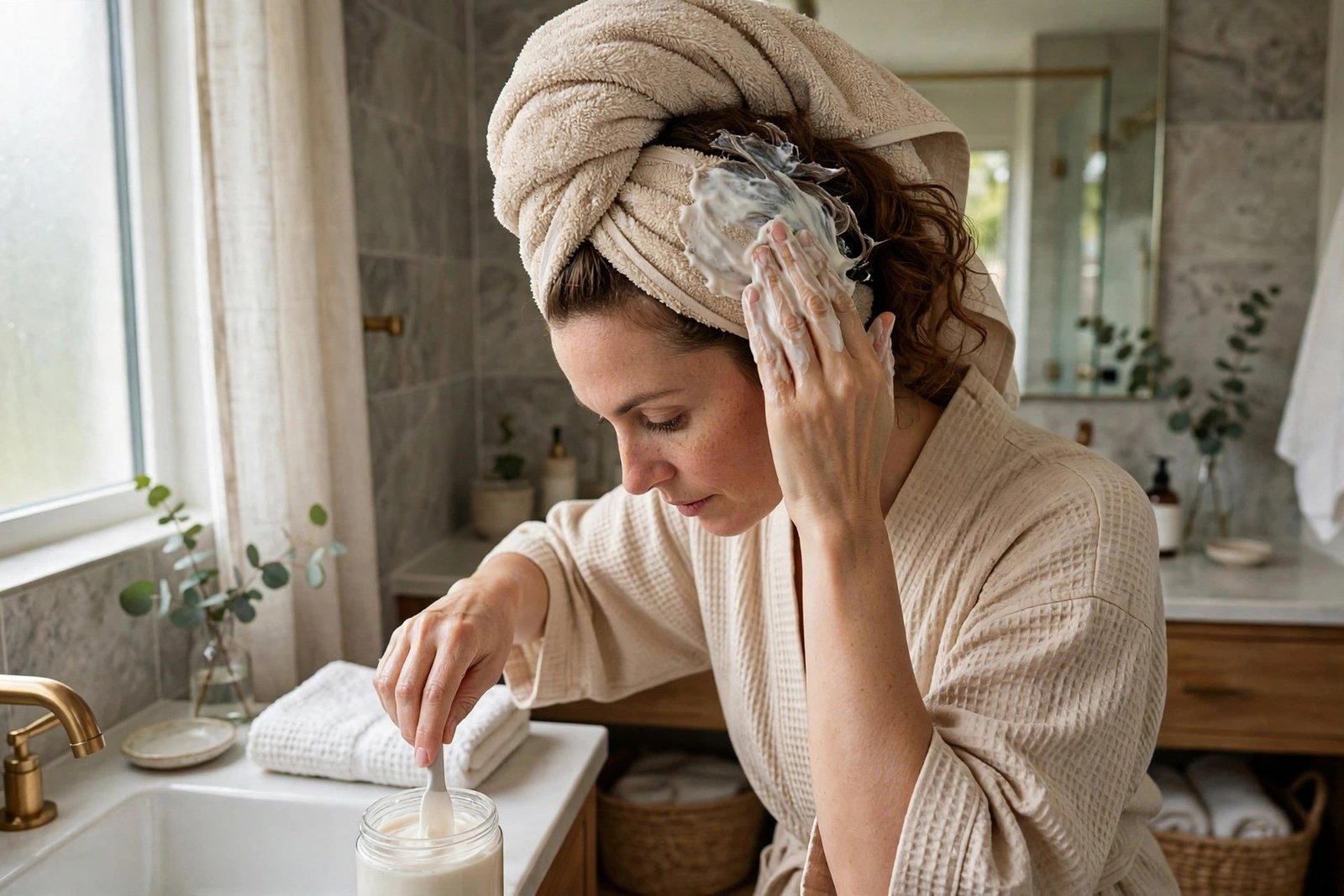
How to Rescue Heat-Damaged Hair: The Recovery Plan
The straighteners were set to 230°C, the heat protectant was skipped 'just this once', and now your hair tells the story: straw-like texture, ends that snap, curls that will not curl, and a frizz halo impervious to serum. Heat damage is the most common hair injury of the styling age — and unlike split ends, it cannot be 'repaired' in any literal sense. But it can be dramatically improved, managed, and grown out.
Here is how to rescue heat-damaged hair — the science of what happened, the recovery routine, and honest timelines.
What Heat Actually Did to Your Hair
Hair is primarily keratin protein, and excessive heat breaks it down structurally. Above roughly 180-200°C (varying by hair type — fine hair damages at lower temperatures), the heat denatures keratin, cracks the protective cuticle, and boils the water inside the hair shaft — literally creating tiny steam bubbles ('bubble hair') that weaken the strand from within. The visible results: loss of elasticity (hair snaps instead of stretching), porosity (absorbs water fast, dries fast, frizzes), and for curly hair, heat-trained curls that hang limp.
The critical fact: this damage is irreversible at the molecular level — no product rebuilds denatured keratin. 'Repair' products work by patching, filling and protecting, not by resurrecting. This is not cause for despair but for strategy: the plan is to maximise the damaged hair's appearance and manageability while growing out healthy new hair, then gradually removing the damage. Honest expectations make the routine work; miracle claims make it fail.
Stop the Damage First
Recovery cannot outpace ongoing injury. Drop the heat — or radically reduce it: air-dry instead of blow-drying, embrace heatless styling (overnight braids, rollers, twist-outs), and when heat is unavoidable, never exceed 180°C on fine/medium hair (200°C max for coarse), always with a genuine heat protectant (silicone-based protectants measurably reduce damage; 'natural oils' mostly do not protect at styling temperatures).
Audit the other damage sources compounding the problem: overlapping bleach or colour, harsh sulfates on already-porous hair, rough towel-drying, tight hairstyles on weakened strands, and over-brushing. The rescue period is a protection period — silk pillowcases, gentle detangling from ends upward with a wide-tooth comb, microfibre towels. Every avoided injury is progress the routine does not have to repair.
Worth a look: the NHS.
The Protein-Moisture Balance
Protein: patching the cuticle
Damaged hair needs both protein and moisture in the right ratio — this is the core of the recovery routine. Protein treatments (keratin, wheat or silk protein masks) temporarily patch the damaged cuticle, restoring strength and reducing breakage; use every 1-2 weeks, not daily — over-proteinised hair becomes stiff and brittle, the opposite problem. Moisture (deep conditioning masks, leave-in conditioners, the LOC/LCO layering method) restores elasticity and softness; damaged, porous hair needs it generously.
Moisture and bond builders
Bond builders (olaplex-style bis-aminopropyl treatments) deserve their reputation: they relink broken disulfide bonds inside the hair, the closest thing to genuine structural repair available — use as directed, typically weekly initially. Alternate protein and moisture weeks, watching your hair's response: mushy when wet needs protein; snapping dry needs moisture. This responsive balancing, sustained for 8-12 weeks, transforms manageability. It will not make damaged hair virgin again — but it makes it look, feel and behave dramatically better.
The Grow-Out Strategy
The permanent fix is new growth, and the strategy is managing the transition. Get regular micro-trims (1-2cm every 8-10 weeks) — gradually removing damage while retaining length, the 'dusting' approach. For severely damaged hair, the honest options are a significant cut (the fastest route to healthy hair) or patient growing with protective styles (braids, buns, wigs/weaves as protective styling, not concealment).
Support growth from within: adequate protein in diet, iron and vitamin D if deficient (common and relevant to hair health — check with your GP before supplementing), scalp care (gentle exfoliation, massage to stimulate circulation), and minimising new damage on the virgin growth so you are not replacing damage with damage. Track progress with photos monthly — the gradual improvement is invisible day-to-day but dramatic across the quarter. Most heads of hair substantially recover within 6-12 months of consistent care.
Building a Heatless Styling Repertoire
The best heat protection is not needing heat. Overnight methods: braids for waves (damp hair, loose plaits, sleep, unravel), the sock bun or heatless curl headband for defined curls, twists for coil definition. Morning methods: rollers on damp hair while you get ready, pin curls, or simply enhancing natural texture with the right products — curl creams and gels have improved enormously.
Day looks that need zero heat: the sleek low bun (gel + boar-bristle brush), the polished ponytail, braided styles, scarves and headbands as features not cover-ups. The transition takes experimentation — document what works for your hair type, and expect two weeks of awkwardness while you learn. Most converts report the surprise: heatless styles, once mastered, look better than their heat-styled predecessors because the underlying hair is healthier. Build five reliable heatless looks and the straighteners become occasional tools, not daily dependencies — which is the entire point of the rescue.
The full background is available at the British Association of Dermatologists.
Preventing the Next Cycle
The rescue is wasted if the habits return. The sustainable heat-styling rules: always use heat protectant, stay below 180-200°C, one pass per section (repeated passes multiply damage), never straighten damp hair (boils the shaft), and give hair regular heat-free weeks. Invest in the tools that reduce damage: a dryer with adjustable heat, straighteners with accurate thermostats (cheap ones overshoot wildly).
Build heat-free styling into your repertoire so the tools are a choice, not a dependence — the healthiest hair relationship is versatility. And reframe the goal: not 'perfect hair despite heat' but 'healthy hair with occasional styled moments'. The women with the best hair are not those with the best products but those with the least damage. Rescue the hair, then keep it rescued — the second recovery is always harder than the first.
Want to go deeper? Our article on what is the best robot vacuum for pet hair in the UK and what colours suit pale skin tones best is worth a look next.
Rescue heat-damaged hair by first stopping the injury (drop heat below 180°C, always use protectant, embrace heatless styling), then running the protein-moisture recovery — alternating protein treatments and deep moisture, weekly bond builders — for 8-12 weeks while micro-trimming damage away gradually. Damage cannot be literally reversed, only patched, protected and grown out; most hair substantially recovers in 6-12 months. Then lock in sustainable heat habits so the rescue is the last one.
Frequently Asked Questions
Can heat-damaged hair be repaired?
Not literally — denatured keratin cannot be rebuilt. But protein treatments, bond builders and deep moisture dramatically improve strength, appearance and manageability while healthy hair grows out to replace the damage.
How long does it take to recover heat-damaged hair?
Noticeable improvement in 8-12 weeks of consistent care; substantial recovery in 6-12 months with regular micro-trims. Severely damaged hair may need a significant cut for the fastest route.
What temperature damages hair?
Damage begins around 180-200°C depending on hair type (fine hair at lower temperatures). Stay below 180°C for fine/medium hair, always use heat protectant, and never straighten damp hair.
Do bond builders like Olaplex really work?
Yes — they relink broken disulfide bonds inside the hair shaft, the closest available thing to structural repair. They significantly improve strength and manageability of damaged hair when used as directed.