
How to Pay for a London Wedding Without Debt: Smart Guide
The average London wedding now costs upwards of £25,000, and in the capital that figure can double without anyone doing anything extravagant. Venue hire in Zone 2, catering for a hundred guests, photography, outfits — it adds up faster than the champagne disappears. Too many couples start married life servicing wedding debt. Here is how to have a genuinely brilliant London wedding without borrowing a penny of it.
Start with the number, not the Pinterest board
The single most important wedding decision happens before you look at a single venue: agree on a total budget you can fund from savings and contributions, with zero debt. Write it down. Every decision after that is just arithmetic.
A useful framework is the 50/30/20 of weddings: roughly half the budget on venue, food and drink; 30% on the big-ticket details that matter to you (photography, outfits, music); 20% on everything else. Couples who skip this step almost always overspend by 20–30%. The MoneyHelper service offers free budgeting tools that work just as well for weddings as for household finances.
The venue: your biggest lever
Venue and catering typically swallow 40–50% of the budget, so this is where debt-free weddings are won. London-specific tricks: marry on a Friday or Sunday (20–30% cheaper than Saturday), choose January–March or November dates, and look beyond traditional venues.
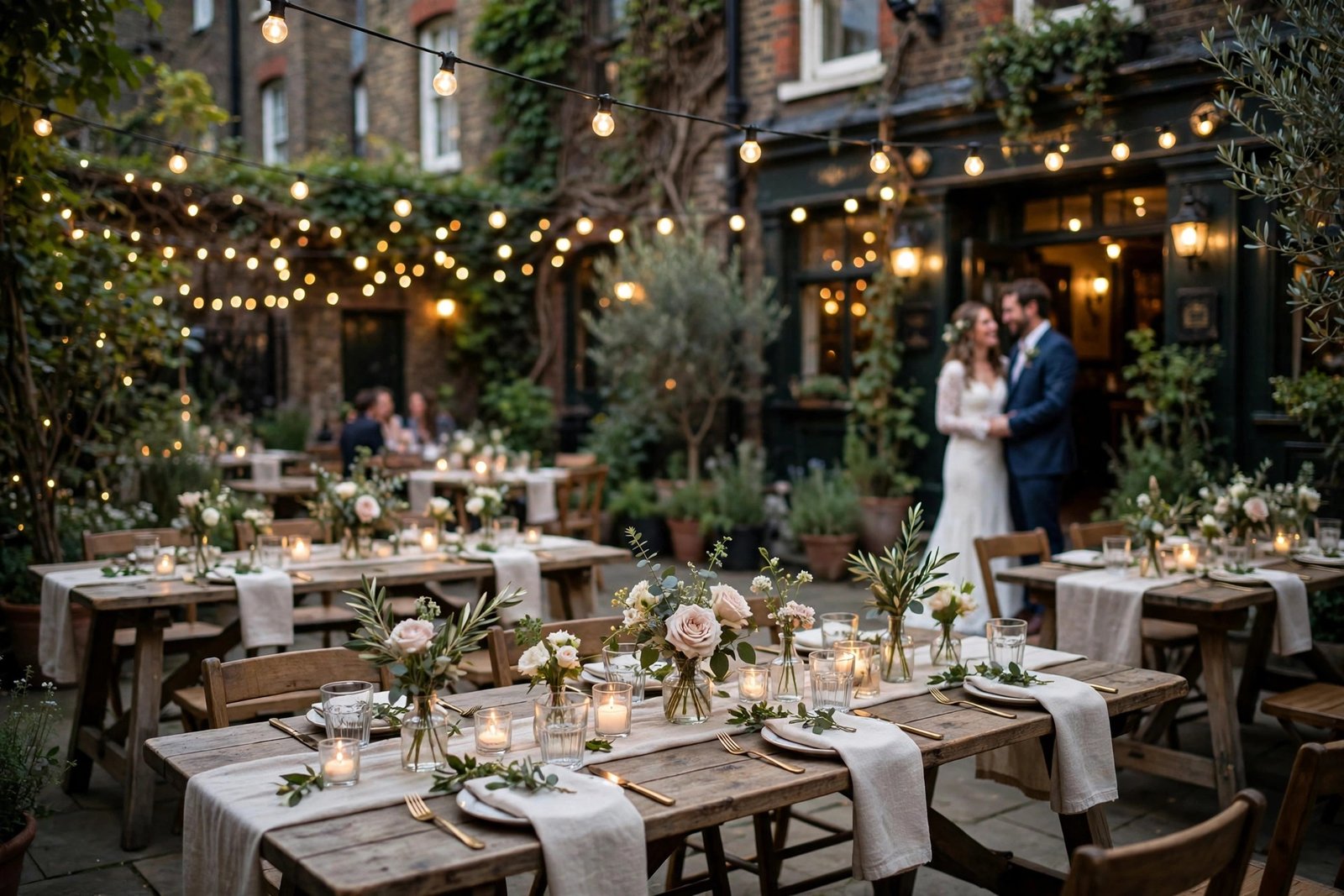
Consider licensed pubs with private rooms, town hall ceremony rooms followed by a restaurant buyout, or community halls in parks like Victoria Park or Greenwich. A restaurant wedding for 60 can cost less than a marquee wedding for 120 while feeling more luxurious. The guest list is the other lever — every ten guests you cut saves roughly £1,000–£1,500 in London catering costs. Be ruthless; your second cousin will survive.
Fund it like a project, not a fantasy
Open a dedicated wedding savings account — ideally one paying decent interest — and automate transfers the day you get engaged. If the wedding is 18 months away and you need £18,000, that is £1,000 a month between you. Painful but possible, and far cheaper than a loan at 9% APR.
Do a proper audit of where the money comes from: your savings, a monthly savings plan, and any family contributions (agree these explicitly — “Mum and Dad are covering the flowers” beats vague promises). Our guide to starting an emergency fund from scratch uses the same pay-yourself-first mechanics that make wedding saving painless. Crucially, keep a £1,000–£2,000 buffer inside the wedding budget for the inevitable overruns.
Cut costs without looking cheap
Guests remember food, music and atmosphere. They do not remember chair sashes, favours or the third dessert option. Spend where it shows:
Save big here
Flowers (seasonal and local, or dried arrangements), stationery (digital invites are now completely normal), wedding cars (a black cab is iconic and cheap), and the cake (a small display cake plus sheet cake from a good bakery). A talented amateur photographer friend plus a professional for two hours beats a mediocre full-day package.
Spend here
Food and drink quality, a great DJ or band, and photography you will look at for decades. These are the memories. Everything else is negotiable.
London’s secondhand wedding market is a goldmine: nearly-new dresses on resale sites, décor bundles from couples married last month, and sample-sale outfits. Check what wedding guest outfits cost on average for perspective on how much the whole wedding party spends — then apply the same thrift to your own outfit.
What about “good debt”?
There is no such thing as good wedding debt. A 0% credit card used with a cast-iron repayment plan before the promotional period ends is the only acceptable exception — and even that requires discipline most stressed, loved-up couples lack. Divide the balance by the number of interest-free months, set up the direct debit on day one, and cut the card up so nothing gets added to it. Personal loans for weddings are simply paying interest on a party.
The Financial Conduct Authority has repeatedly warned about the growth of buy-now-pay-later for big life events. If you cannot afford it without credit, scale the wedding to what you can afford. A £12,000 wedding you own outright beats a £30,000 wedding you are still paying for at your fifth anniversary.
The conversation to have
Money fights are a leading cause of wedding stress. Agree early: total budget, who contributes what, and three non-negotiables each. Write a shared spreadsheet and review it monthly. Couples who track spending together report far less conflict — the numbers remove the emotion from “can we afford the string quartet?”
Be honest about family expectations too. If parents are contributing, clarify whether it is a gift or comes with strings attached — a £5,000 gift that buys control over the guest list is not really a gift. Awkward conversations now prevent explosive ones later. Many couples find that a smaller, self-funded wedding actually buys them more freedom than a larger one funded by committee.
Three debt-free London weddings that actually worked
Theory is nice; examples are better. A couple in Walthamstow married on a Thursday in February: town hall ceremony (£500), pub private room with sharing platters (£4,200 for 70 guests), a friend on photography and a Spotify playlist through the pub’s speakers. Total: just under £7,000, paid from savings.
Another couple in Peckham went bigger but still debt-free: a Saturday in October at a community arts venue (£3,800), street-food caterers (£8,500 for 110 guests), a secondhand dress (£600) and a professional photographer for three hours. Total: £16,000, saved over 20 months at £800 a month.
A third couple skipped the traditional format entirely: a morning ceremony followed by a long lunch at their favourite restaurant for 24 people, then drinks for 80 at a Bermondsey bar that evening. Total: £9,500 — and guests still talk about the food. The pattern is consistent: fewer guests, off-peak timing and one venue doing the heavy lifting beat elaborate multi-part productions every time.
Conclusion
A debt-free London wedding is not about being cheap — it is about being deliberate. Set a number you can actually fund, attack the venue and guest list first, save systematically, and spend only where guests will notice. You will remember the day for the people and the joy, not the chair covers. Start married life with memories, not monthly payments.
Frequently Asked Questions
How much does a wedding cost in London in 2026?
Average London weddings run £25,000–£35,000, though smart couples regularly deliver brilliant days for £12,000–£18,000 by choosing off-peak dates, smaller guest lists and non-traditional venues.
Is it OK to have a small wedding to save money?
Absolutely — and it is increasingly the norm. Smaller weddings consistently get better reviews from guests because the couple is relaxed and the budget stretches further per head.
Should I take a loan for my wedding?
No. Wedding loans convert one expensive day into years of payments with interest. Scale the wedding to your savings instead — future you will be grateful.
How far in advance should we start saving?
12–18 months is ideal for most couples. Divide your target budget by the number of months and automate that amount into a separate savings account the day you start planning.