
How to Match Foundation to Your Skin Tone Online (Without Stores)
Buying foundation online feels like gambling with your face: forty shades with names like “Warm Ivory”, “Cool Beige”, and “Neutral Sand”, a screen that lies about colour, and no counter assistant in sight. Yet online is increasingly where UK shoppers buy base makeup — and with the right method, you can match your shade accurately without ever swatching in store. The secret is that foundation matching is two separate decisions, and most people only get one of them right.
Those two decisions are depth (how light or dark) and undertone (the underlying hue of your skin). Get both right and foundation disappears into skin; get undertone wrong and even the right depth looks off. Here is how to nail both from your sofa.
Step one: find your undertone
Undertone is the subtle hue beneath your skin’s surface, and it falls into three camps: warm (golden, peachy, yellow), cool (pink, red, bluish), and neutral (a mix). Unlike depth, undertone does not change with tanning. Three classic tests, done in natural daylight:
The vein test: look at the veins on the inside of your wrist. Greenish veins suggest warm undertones; blue or purple veins suggest cool; a mix suggests neutral. The jewellery test: which metal looks better against your skin — gold (warm) or silver (cool)? If both look fine, you are likely neutral. The white test: hold pure white fabric, then off-white or cream, against your bare face. If pure white brightens you, you are probably cool-toned; if it washes you out and cream looks better, you are probably warm.
No single test is definitive — use at least two. And ignore the old advice about “warm skin can’t wear pink” and similar rules; undertone guides foundation choice, not your whole wardrobe (for that, see our guide to colours that suit pale skin tones).
Step two: determine your depth
Depth is simply how light or dark your skin is, and it is the part screens distort most. The most reliable at-home method is the photo-reference technique: take a clear, makeup-free selfie in natural daylight facing a window (no direct sun, no filters), then compare it against the model’s swatch photos on retailer sites — not the brand’s colour dots, which are notoriously inaccurate, but real swatch photos on skin.
Boots, Sephora UK, and Cult Beauty all host customer photos and shade-finder quizzes that cross-reference products you have used before. The most powerful free tool is Findation, which takes foundation shades that matched you previously and calculates your equivalents across hundreds of brands — if you know one match, it unlocks the rest. Many brands (MAC, NARS, Estée Lauder) also offer virtual try-on tools that, while imperfect, help narrow a shortlist.
Order smart: samples, sets, and return policies
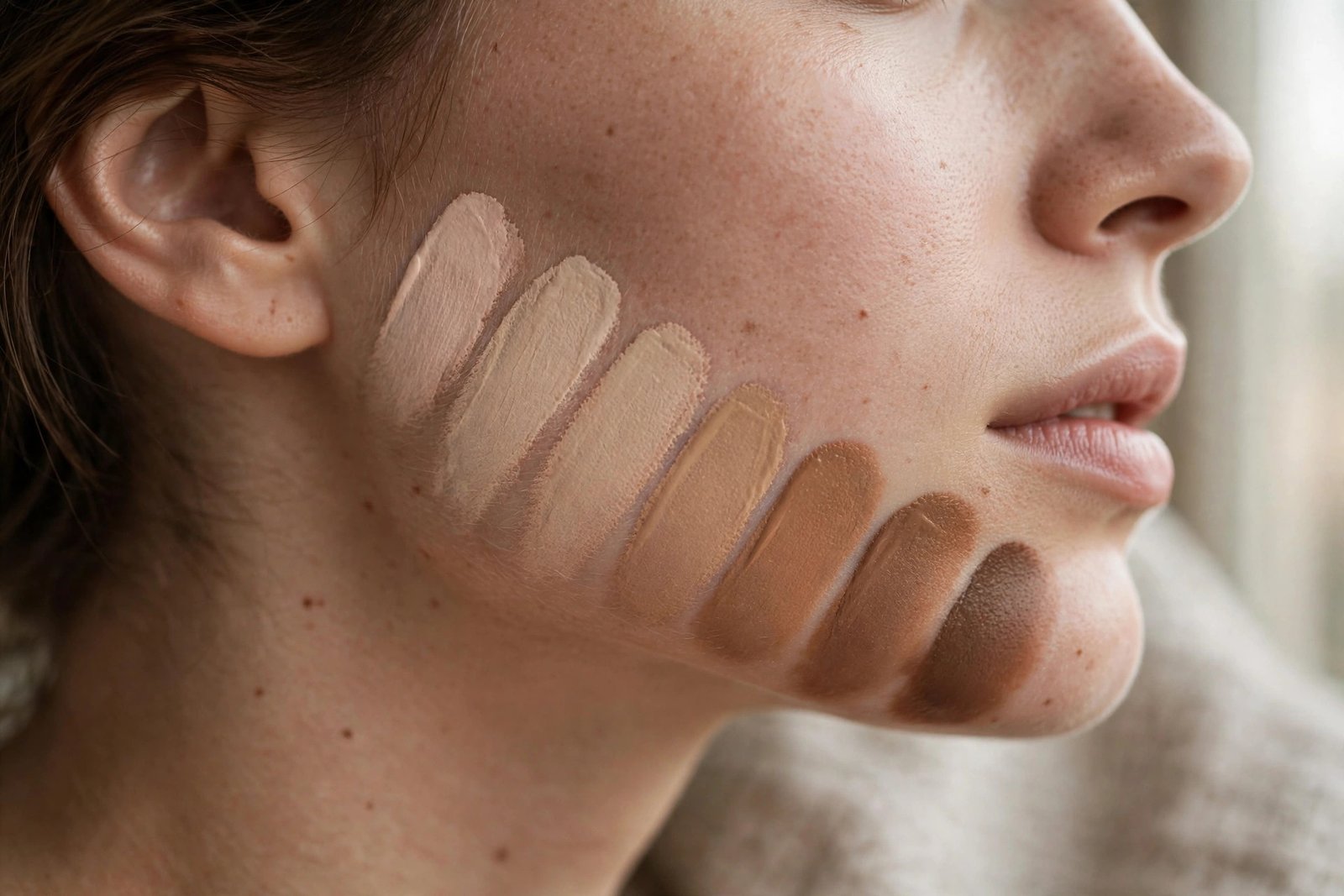
The professional move is to never commit to a full bottle untested. Many brands sell sample sachets or mini sizes for £5–£10; some, like Boots’ own No7, offer shade-matching services with samples included. When testing, swatch along your jawline — not your hand or wrist, which are different colours — and check the match in three lights: daylight, indoor warm light, and your phone flashlight. A shade that matches in all three is a keeper.
Check return policies before buying: Boots and Superdrug both accept returns of opened makeup within their standard windows if the shade is wrong, which removes most of the risk. Keep receipts and buy from retailers with explicit cosmetics return policies rather than marketplace sellers.
The oxidation trap
Some foundations darken or turn orange an hour after application — a chemical reaction between the formula and your skin’s oils and pH. If a foundation looks perfect in the mirror at 9am and dubious by lunchtime, oxidation is likely. Test wear for a full day before judging, choose formulas marketed as non-oxidising, and consider going half a shade lighter if you know you oxidise. Oily skin oxidises foundation faster, so a mattifying primer or light powder on the T-zone helps.
Common matching mistakes
Matching to your hand is the classic error — hands are darker and differently undertoned than faces. Testing under shop-style fluorescent light (or your screen’s blue glow) is another; always judge in daylight. Buying your summer shade in October guarantees a winter mismatch — many people need two depths across the year, or a mixer to adjust. And shade names are meaningless across brands: one brand’s “Natural” is another’s “Honey”. Trust numbers and undertone labels (W/C/N, or warm/cool/neutral) over poetic names.
It is also worth remembering that foundation is only part of the picture — the right base makes everything from blush to lipstick sit better, much as well-fitting basics make an outfit, like finding jeans that fit properly as a tall woman, transform how the rest of your wardrobe works.
The bottom line
Matching foundation online comes down to: determine your undertone with the vein, jewellery, and white-fabric tests; estimate depth with daylight selfies and shade-finder tools like Findation; then verify with samples tested on the jawline in three lights before buying the bottle. Do that, and online foundation shopping stops being a gamble — it becomes the efficient, return-policy-backed process it should be.
When your match stops working: undertone and depth shifts
A foundation that matched perfectly in July can look wrong by January — and it isn’t the product’s fault. Skin depth shifts with sun exposure even in Britain’s modest summers, while undertone stays constant. The practical fix most makeup artists recommend is owning two depths (summer and winter) of the same formula, or keeping a white mixer to lighten and a deeper mixer to darken a single bottle across seasons.
Hormonal changes, certain medications, and even significant weight changes can subtly alter skin tone and oiliness, affecting how a familiar foundation wears. If a long-time holy grail suddenly oxidises or looks ashy, reassess rather than repurchasing blindly: re-swatch in daylight, check whether your skin’s needs changed (drier skin often needs a more hydrating formula in a truer depth), and consider that the formula itself may have been reformulated — brands do this quietly, and online reviews will usually flag it. Shade matching isn’t a one-time event; it’s a seasonal calibration.
Frequently Asked Questions
How do I know my skin undertone for foundation?
Use the vein test (greenish = warm, blue/purple = cool), the jewellery test (gold flatters warm, silver flatters cool), and the white-versus-cream fabric test in natural daylight. Agreement between two or more tests gives a reliable answer.
Should I match foundation to my face or neck?
Match to your jawline and blend down — the goal is a shade that bridges face and neck seamlessly. Most faces are slightly darker or redder than necks, so a jawline swatch that disappears into both is ideal.
Why does my foundation look orange after a few hours?
Oxidation: the formula reacts with your skin’s oils and pH and darkens. Test full-day wear before committing, choose non-oxidising formulas, and consider going half a shade lighter or using a mattifying primer if you have oily skin.
Can I return foundation if the shade is wrong?
In the UK, major retailers like Boots and Superdrug accept returns of opened cosmetics within their standard return windows. Always check the specific policy before buying, and keep your receipt.
Do I need a different foundation shade in winter and summer?
Most people do — skin depth shifts with sun exposure even in the UK. Either keep two depths, buy a shade-adjusting mixer, or choose a sheer formula that is more forgiving across small depth changes.