
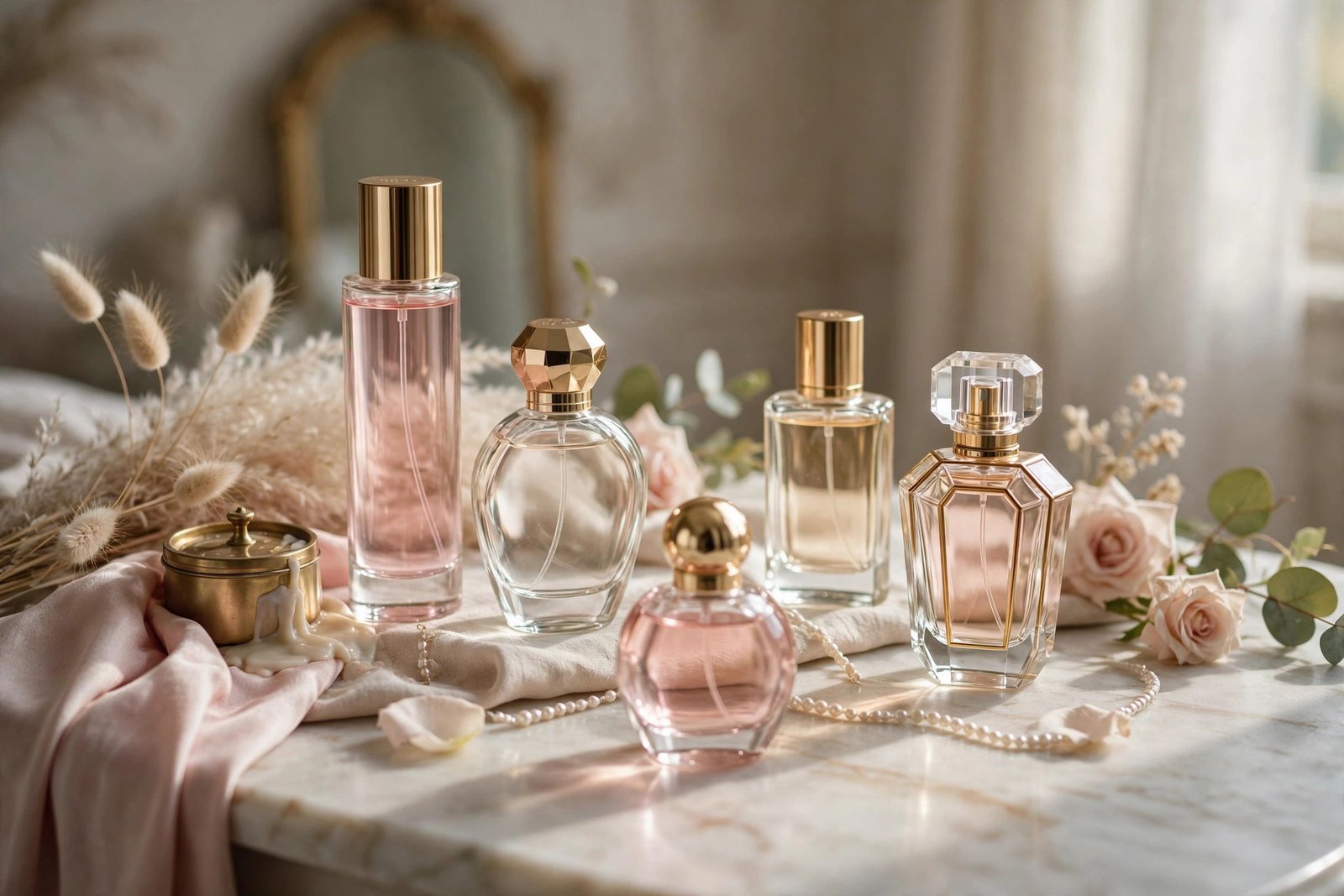
How to Make Fragrance Last From Morning to Night: 7 Pro Tricks
You spray your favourite perfume at 8am. By 10am, you can barely smell it; by lunchtime, it is a memory. Meanwhile, someone at the office wears a scent you notice from three desks away at 5pm. The difference is rarely the perfume itself — it is application technique. Fragrance longevity is governed by chemistry and skin science, and small changes in how, where, and when you apply can double or triple wear time.
Here is what actually makes fragrance last from morning to night, and the popular habits that quietly sabotage it.
Start with moisturised skin
The single biggest factor in fragrance longevity is the surface you spray onto. Perfume evaporates far faster from dry skin than from moisturised skin — oils and emollients slow the evaporation of fragrance molecules, anchoring them for hours longer. The professional routine is: apply an unscented body lotion or oil after showering, wait a minute for it to absorb, then spray fragrance onto the moisturised skin.
Layering takes this further. Using the matching shower gel and body lotion from the same fragrance line builds the scent in strata, each layer reinforcing the next. It is also the most economical way to boost longevity, since body products cost less per millilitre than the perfume itself. Even an unscented lotion under the fragrance makes a measurable difference — this one change alone often adds two to three hours of wear.
Spray the right places (and more of them)
Pulse points — wrists, neck, behind ears — are classic advice because body heat there helps project the scent. But heat also accelerates evaporation, so pulse points give projection at the cost of longevity. For all-day wear, add the longer-lasting spots: the chest and torso (fabric and body heat create a slow-release effect), behind the knees (scent rises through the day), the small of the back, and the hair.
Hair is a superb fragrance carrier — it holds scent for hours longer than skin — but alcohol-based perfumes can dry hair out. Either mist from a distance, spray onto your brush before brushing through, or use a dedicated hair mist. Clothing also holds fragrance far longer than skin: a spray on a scarf or the inside of a coat can still be detectable days later. Test on an inconspicuous spot first, as some fragrances stain delicate fabrics. When packing scent for travel, our guide to what to pack for a weekend city break covers keeping bottles safe in transit.
Stop rubbing your wrists together
The most widespread fragrance habit is also one of the most damaging: spraying both wrists and rubbing them together. Friction generates heat that breaks down top notes prematurely and crushes the fragrance’s development — you are essentially fast-forwarding past the brightest part of the scent. Spray and let it dry untouched. The same goes for dabbing: pressing is fine, rubbing is not.
Choose concentration wisely
Not all bottles with the same name are equal. Fragrances come in concentrations: parfum/extrait (20–30% perfume oil, 8–12+ hours), eau de parfum (15–20%, 6–8 hours), eau de toilette (5–15%, 3–5 hours), and eau de cologne (2–5%, 2–3 hours). If your scent vanishes by lunch, you may simply own the EDT when you need the EDP. Before rebuying, check which concentration you have — upgrading concentration of a scent you love is often cheaper than chasing a new “long-lasting” fragrance. Boots lists fragrance concentrations clearly on product pages, and Which? has tested whether premium fragrances genuinely outlast high-street ones.
Certain note families naturally last longer: orientals, ouds, ambers, vanillas, and musks persist far longer than citrus and light florals, which are volatile by nature. A citrus cologne will never last like an amber parfum regardless of technique — so match expectations to chemistry, or layer a citrus scent over a musky base to extend it.
Reapply strategically, store correctly
Even perfect technique benefits from a midday top-up. A small atomiser — a 5ml refillable spray decanted from your full bottle — fits in any bag and makes reapplication discreet. One or two sprays at lunchtime on pulse points refreshes the scent without the sillage overload of a full morning reapplication. This is also how the “always smells amazing” people do it; almost nobody gets 12 hours from a single morning application.
Storage affects every bottle you own: heat, light, and humidity degrade fragrance. The bathroom — the most common storage spot — is the worst, with its steam and temperature swings. Store perfume in a cool, dark place, ideally in its box, and it will smell as intended for years. A degraded, turned fragrance not only smells off but also fades faster, so that ancient bottle on the windowsill is working against you twice over.
Fragrance is the invisible finish of getting dressed — the same thinking that makes wearing the same dress to two weddings differently work: small, deliberate choices in application transform the whole effect without buying anything new.
The bottom line
Fragrance that lasts from morning to night is: moisturised skin as the base, layered body products, strategic placement (torso, hair, clothing — not just wrists), no wrist-rubbing, the right concentration for your needs, a midday atomiser top-up, and proper storage. None of these require a new perfume — just a better relationship with the ones you own.
Fragrance and fabric: making scent last on clothes
Skin chemistry varies wildly between people — the same perfume lasts eight hours on one person and three on another — but fabric is the great equaliser. Natural fibres (cotton, wool, cashmere) absorb and hold fragrance far longer than skin, releasing it slowly through the day. A spray on the inside of your coat, on a scarf, or on the lining of a blazer can still be detectable the next morning, long after skin applications have faded.
A few cautions: always test on an inconspicuous area first, as some fragrances (particularly those with natural oils or deep colours) can stain silk and light fabrics. Spray from 15–20 cm to avoid concentrated droplets, and favour sturdy fabrics over delicates. Hair, as mentioned, is another superb carrier — a light mist on the ends (never the roots, where alcohol dries the scalp) creates a scent trail that moves with you. Between fabric, hair, and moisturised skin, you have three slow-release systems working in parallel — which is genuinely how the “always smells incredible” people do it.
Frequently Asked Questions
Why can’t I smell my own perfume after an hour?
Olfactory fatigue — your nose tunes out constant stimuli. Others can usually still smell it. Ask a trusted friend rather than over-applying; spraying more because you have gone “nose-blind” is the classic route to overpowering everyone else.
Does rubbing wrists together really ruin perfume?
Yes, measurably. Friction and heat break down the volatile top notes prematurely, flattening the fragrance’s development. Spray and let it air-dry untouched for the scent to unfold as designed.
What is the longest-lasting type of fragrance?
Parfum/extrait de parfum (20–30% oil concentration) lasts longest, typically 8–12+ hours. Among scent families, orientals, ambers, ouds, and musks outlast citruses and light florals regardless of concentration.
Can I make cheap perfume last longer?
Yes — technique matters more than price. Moisturised skin, layering, spraying clothes and hair, and a midday reapplication extend any fragrance. A well-applied affordable scent outlasts a carelessly applied expensive one.
How should I store perfume to keep it fresh?
Cool, dark, and dry — not the bathroom. Heat, light, and humidity degrade fragrance oils. Kept properly in its box, an unopened bottle lasts years; opened, most remain true for two to three years.