
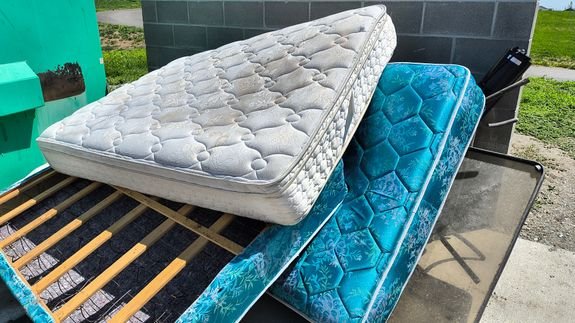
How to Get Rid of Mattress: Step-by-Step Guide (2026)
Getting rid of a mattress in the UK is straightforward: your main options are a council bulky waste collection (usually £20–£50), taking it to your local household waste recycling centre for free, using a retailer take-back service when you buy a new mattress, or donating it if it’s still in good condition. Fly-tipping a mattress is illegal and can land you a hefty fine, so it’s worth knowing the proper routes. This guide covers every option, the costs involved, and how to do it responsibly.
Option 1: Council Bulky Waste Collection
Almost every UK council offers a bulky waste collection service for large items like mattresses. This is usually the simplest option if you can’t transport the mattress yourself.
How it works: Book online through your council’s website, choose a collection day, and leave the mattress outside your property (usually at the front boundary) on the morning of collection. Most councils collect within 1 to 3 weeks of booking.
Cost: Prices vary by council but typically range from £20 to £50 for a single mattress. Some councils offer a set price for up to 3–5 items, which is good value if you have other bulky items to shift at the same time. A few councils still offer one free collection per year — check your local council’s website.
Tip: Mattresses must usually be clean, dry, and free of bedbugs for the council to take them. Wrap yours in a mattress bag or old sheets to keep it dry if rain is forecast — a soggy mattress is much harder for the crew to handle.
Option 2: Take It to the Recycling Centre (Free)
Your local household waste recycling centre (HWRC — what most people call “the tip”) will accept mattresses free of charge. This is the cheapest option if you have a car big enough or can borrow a van.
How it works: Check your council’s website for your nearest HWRC, its opening hours, and whether you need to book a slot (many introduced booking systems in recent years). Drive in, and staff will direct you to the mattress skip.
What happens to it: Mattresses are surprisingly recyclable — around 90% of the materials (springs, foam, fabric, wood) can be recovered. The metal springs are melted down, foam is shredded for insulation or carpet underlay, and textiles are recycled into new products. Taking your mattress to the tip means it gets broken down properly rather than going to landfill.
Tip: A double mattress just about fits in most estate cars with the seats down, but measure first. For king-size, you’ll likely need a van — or ask a friend with one. Secure it well so it doesn’t shift in transit.
Option 3: Retailer Take-Back When Buying New
If you’re replacing your mattress, many UK retailers will take the old one away when they deliver the new one. This is often the most convenient option.
- Dreams, Bensons for Beds, and Furniture Village typically offer old-mattress removal for £20–£40 when delivering a new one.
- IKEA offers a take-back service in many areas — check at the time of purchase.
- Online brands (Emma, Simba, Eve) often include free removal of your old mattress with delivery, or offer it as a cheap add-on at checkout.
Always confirm the take-back service when ordering — it’s much harder to arrange afterwards. The delivery team will usually take the old mattress away on the same visit, saving you a separate trip or booking.
Option 4: Donate It (If It’s Still Good)
If your mattress is clean, undamaged, and still comfortable, someone else may be glad of it. UK charities have strict rules about accepting used mattresses, but options exist:
- British Heart Foundation furniture shops accept mattresses in good condition and will collect for free in many areas. They must have a fire safety label attached (most mattresses sold in the UK since 1988 do).
- Emmaus, Sue Ryder, and local furniture reuse charities often take good-quality mattresses — search for furniture reuse projects near you.
- Freecycle, Freegle, and Gumtree: List it as free to a good home. Be honest about its age and condition, and include photos. Collection-only listings move fastest.
Important: The mattress must have its original fire safety label to be legally resold or donated in the UK. If the label is missing, charities can’t take it — it’ll need to go for recycling instead. GOV.UK explains the fire safety rules for second-hand furniture.
Option 5: Private Waste Removal Companies
Companies like AnyJunk, Clearabee, and local “man with a van” services will collect a mattress from inside your home — handy if you can’t move it yourself or need it gone quickly.
Cost: Expect £40–£80 for a single mattress, depending on your area and how quickly you need it collected. Same-day or next-day service costs more.
Warning: Only use a licensed waste carrier. Ask for their waste carrier licence number and check it on the Environment Agency’s public register. Unlicensed operators are behind much of the UK’s fly-tipping problem — if your mattress ends up dumped in a layby, you can be held responsible. You can check waste carrier licences on GOV.UK.
What NOT to Do
- Don’t fly-tip. Dumping a mattress anywhere — a layby, an alley, outside a charity shop after hours — is illegal. Fines can reach £50,000 and include possible prison time. Councils actively prosecute.
- Don’t put it in your wheelie bin. It won’t fit, and the bin crew won’t take it.
- Don’t leave it outside a charity shop. This counts as fly-tipping, and the charity has to pay to dispose of it.
- Don’t burn it. Mattresses contain foams and chemicals that release toxic fumes when burned. It’s also illegal in most situations.
How to Prepare Your Mattress for Collection or the Tip
- Strip it completely — remove all bedding, protectors, and toppers.
- Check for bedbugs. If you suspect bedbugs, tell the collection service. Don’t donate or give away an infested mattress.
- Keep it dry. Wrap it in plastic sheeting or a mattress bag if it’s going outside before collection.
- Measure doorways. If the crew (or you) need to get it out of the house, check it fits through doors and around corners — bendy foam mattresses are easier than rigid pocket-sprung ones.
- Remove the base if separate. Divan bases are usually collected as a separate item, so book them together.
Frequently Asked Questions
How much does it cost to get rid of a mattress in the UK?
A council bulky waste collection typically costs £20–£50. Taking it to your local recycling centre is free. Retailer take-back with a new mattress costs £20–£40 (sometimes free), and private removal companies charge £40–£80.
Can I put a mattress outside for the bin men?
No — regular bin crews won’t take mattresses. You need to book a bulky waste collection, take it to the tip, or use a private service.
Are mattresses recyclable?
Yes — up to 90% of a mattress can be recycled. Springs become scrap metal, foam becomes insulation or underlay, and fabrics are recycled into new textiles. This is why taking it to a proper recycling route matters.
Will the council take a mattress with bedbugs?
Most councils won’t collect infested mattresses through the standard service because of the risk to crews and vehicles. Contact your council for advice — they may have a specialist procedure, and you’ll need to treat the infestation separately.
How do I dispose of a mattress for free?
Take it to your local household waste recycling centre yourself — it’s free. Alternatively, donate it to a charity like the British Heart Foundation (if it’s in good condition with a fire label), or list it on Freecycle or Freegle for someone to collect.
Final Thoughts
There’s no excuse for dumping a mattress when so many proper options exist. For most people, the choice is simple: take it to the tip for free if you have transport, or book a council collection for £20–£50 if you don’t. Buying new? Ask about take-back at checkout. And if the mattress still has life in it, donating keeps it out of the waste stream entirely. Whichever route you choose, do it properly — it’s cheaper than a fly-tipping fine and far better for the environment.