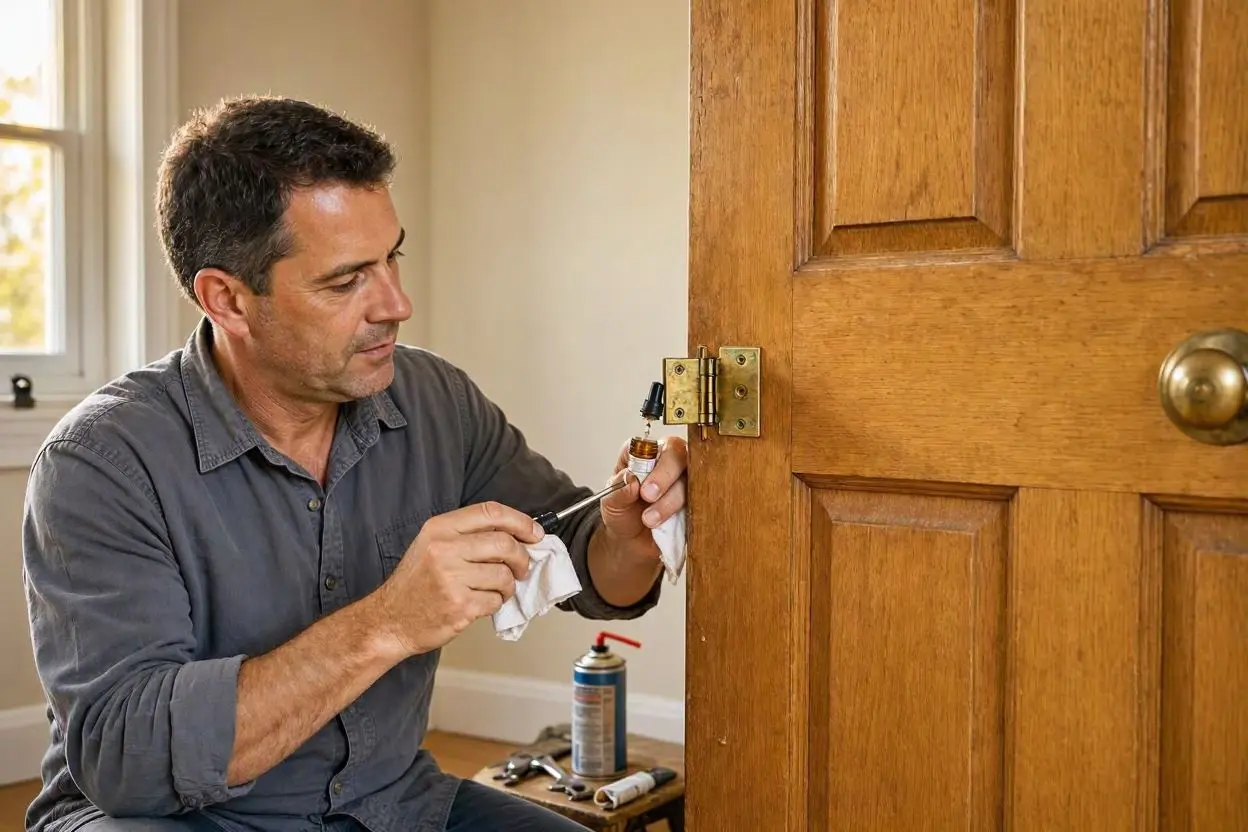
How to Fix a Squeaky Door Without Removing It
A squeaky door can be one of those small household problems that becomes surprisingly annoying. Every time you open or close the door, you hear the same irritating sound. The good news is that you usually do not need to remove the door or call a professional to fix it.
In most cases, a squeaky door is caused by dry or dirty hinges. With a little cleaning and the right lubricant, you can often fix the problem in just a few minutes. This guide explains how to fix a squeaky door without removing it using simple tools and household products.
Why Does a Door Squeak?
Before fixing the problem, it helps to understand what causes the noise. Door hinges contain moving metal parts that rub against each other when the door moves. Over time, the lubricant on these parts can dry out, while dust and dirt can build up around the hinge.
Common causes of a squeaky door include:
- Dry door hinges
- Dirt or dust inside the hinge
- Rust or corrosion
- Loose hinge screws
- Worn-out hinge pins
- Friction between metal parts
If the door is otherwise working properly, lubricating the hinges is usually the easiest solution.
What You Need to Fix a Squeaky Door
You do not need many tools for this simple home improvement task. Depending on the condition of your door, you may need:
- Lubricating oil or silicone spray
- A clean cloth or paper towel
- A screwdriver
- A small brush or old toothbrush
- A rag to protect the floor
For a basic squeaky hinge, a small amount of suitable lubricant is often enough.
Step 1: Find the Source of the Squeak
Open and close the door slowly and listen carefully. Try to identify which hinge is making the noise.
Most doors have two or three hinges. Place your ear near each hinge while moving the door gently. Once you find the noisy hinge, you can focus your attention there instead of applying lubricant everywhere.
Sometimes more than one hinge may be causing the problem, so check all of them if the noise is difficult to locate.
Step 2: Clean the Hinge
Dirt and dust can make a hinge noisy, so cleaning it before applying lubricant can help.
Use a dry cloth or small brush to remove visible dirt around the hinge. If there is built-up grime, gently wipe the area with a slightly damp cloth and allow it to dry.
Avoid soaking the hinge with water because excess moisture can contribute to rust.
Step 3: Apply Lubricant to the Hinge
Once the hinge is clean, apply a small amount of lubricant to the moving parts.
You can use a silicone-based lubricant or another lubricant that is suitable for metal hinges. Apply only a small amount around the hinge pin and the areas where the metal parts move against each other.
Do not flood the hinge with oil. Too much lubricant can attract dust and create another maintenance problem.
If you are using a spray lubricant, place a cloth underneath the hinge to catch any excess.
Step 4: Move the Door Back and Forth
After applying the lubricant, slowly open and close the door several times.
This allows the lubricant to move deeper into the hinge and reach the areas where friction is occurring. You may notice the squeaking becoming quieter after just a few movements.
If the door is still making noise, apply another small amount of lubricant and repeat the process.
Step 5: Tighten Loose Screws
Loose hinge screws can also cause movement and noise. Check the screws on the door hinges and gently tighten any that feel loose.
Use the correct screwdriver and avoid overtightening the screws. If a screw keeps spinning without becoming tight, the screw hole may be damaged and may require additional repair.
Tightening loose screws can also help the door sit correctly in its frame.
What If the Door Still Squeaks?
If lubrication does not solve the problem, the hinge may be rusty, damaged, or worn out.
Look closely for visible rust, bent hinge components, or excessive movement around the hinge. In some cases, cleaning the hinge more thoroughly can help. However, if the hinge is badly damaged, replacing the hinge may eventually be necessary.
You can usually inspect the hinge without removing the entire door, so start with a simple inspection before considering a bigger repair.
Can You Use Household Oil on a Squeaky Door?
Some people use household oils to quiet a noisy door hinge. While certain oils may temporarily reduce friction, they can also attract dust and dirt over time.
A lubricant designed for hinges or metal moving parts is generally a more practical choice for long-term maintenance. Always follow the product’s instructions and avoid using excessive amounts.
How to Prevent Door Hinges From Squeaking Again
Once you have fixed a squeaky door, a little regular maintenance can help prevent the problem from returning.
Keep the hinges reasonably clean and check them occasionally for dust, rust, or loose screws. If you notice a hinge becoming dry or noisy, deal with it early instead of waiting for the squeak to become worse.
Regularly checking your door hardware is a simple part of home maintenance and can help keep doors opening and closing smoothly.
Final Thoughts
Fixing a squeaky door does not have to be a complicated DIY project. In many cases, you can solve the problem without removing the door by cleaning the hinges, applying a suitable lubricant, and tightening loose screws.
The most important thing is to start with the simplest solution. Find the noisy hinge, clean it, lubricate it carefully, and move the door several times. If the squeak continues, inspect the hinge for rust, damage, or excessive wear.
With a few minutes of basic maintenance, you can often make a noisy door quiet again without taking it off its hinges.
FAQs
1. How do I stop a door from squeaking without removing it?
Clean the noisy hinge and apply a small amount of suitable lubricant to the hinge pin and moving parts. Then open and close the door several times to distribute the lubricant.
2. What is the best lubricant for a squeaky door hinge?
A silicone-based lubricant or a lubricant designed for metal moving parts can work well. Use only a small amount and follow the product instructions.
3. Why does my door still squeak after oiling the hinges?
The hinge may still contain dirt or rust, or the screws may be loose. Check the hinge carefully and tighten loose screws. A damaged or worn hinge may need replacement.
4. Can I fix a squeaky door with WD-40?
WD-40 can help loosen and clean certain metal parts, but it may not provide the same long-term lubrication as a dedicated lubricant. For ongoing hinge lubrication, use a product intended for lubricating moving metal parts.
5. How often should I lubricate door hinges?
There is no fixed schedule for every door. Lubricate the hinges when they become noisy, stiff, or difficult to move. Regular inspection can help you catch problems early.
6. Can loose screws cause a squeaky door?
Yes. Loose hinge screws can allow the hinge to move and create friction or vibration. Carefully tightening the screws may reduce or eliminate the noise.
7. Do all squeaky doors have a hinge problem?
No. Although hinges are a common cause, squeaking can sometimes come from the door rubbing against the frame or from other hardware. Check the entire door if lubricating the hinges does not solve the issue.