
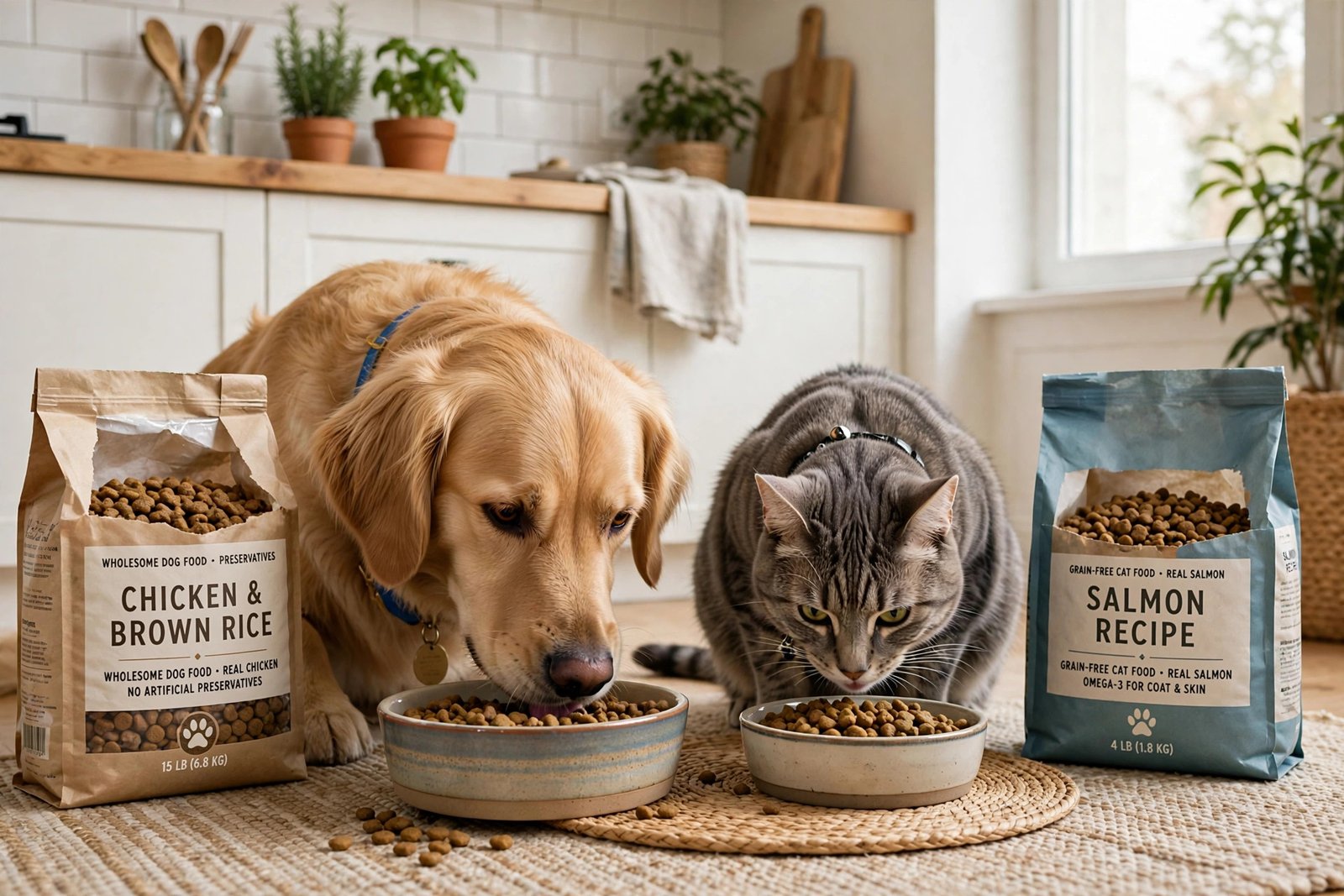
How to Feed Your Pet Well Without Overspending
Pet food marketing wants you to believe that good nutrition costs a fortune — that anything short of the premium grain-free raw-infused artisan kibble is practically neglect. It is nonsense. Dogs and cats need complete, balanced nutrition, and in 2026 the UK market offers that at every price point. Feeding your pet well without overspending is about understanding labels, buying smart and ignoring the hype.
This guide breaks down what “good” pet food actually means, what you can safely economise on, the tricks that cut your bill by a third, and the false economies that end up costing more.
What good pet food actually is
In the UK, any food labelled “complete” must meet nutritional standards set at European level (FEDIAF guidelines) — whether it costs 50p or £5 a tin. That baseline means a mid-range complete food from a supermarket own-brand can be nutritionally sound. Price correlates with ingredient quality, palatability and marketing far more than with basic adequacy.
What matters: named meat or fish as a leading ingredient, a clear nutritional analysis, and suitability for your pet’s life stage. What matters less than adverts claim: “human-grade”, “ancestral diet” and exotic proteins, which are marketing terms with no regulated meaning. The PDSA and RSPCA both advise choosing a reputable complete food appropriate to age and size rather than chasing premium labels.
Wet, dry or raw: the honest cost comparison
Dry food is by far the cheapest way to feed well — a 12kg sack of decent mid-range kibble can feed a medium dog for six weeks at around £30–£40. Wet food costs roughly double per calorie but suits fussy eaters and aids hydration, especially for cats. Raw feeding can be economical if done carefully with bulk suppliers, but it demands freezer space, hygiene discipline and nutritional knowledge — get the balance wrong and you create deficiencies.
A smart compromise many owners use: quality dry food as the base with some wet food mixed in for palatability. For cats, who are obligate carnivores with low thirst drive, prioritising wet food is genuinely worthwhile for urinary health — one area where spending more pays off in avoided vet bills.
Ten ways to cut the bill without cutting quality
Buy bigger bags. The per-kilo price of a 12kg sack is often half that of a 2kg bag. Store it sealed and cool to keep it fresh.
Subscribe and save. Most online pet retailers offer 5–10% off repeat orders, with free delivery thresholds that are easy to hit.
Compare per-kilo, not per-bag. Supermarket shelf-edge labels now show unit pricing — use it. Our guide to the cheapest supermarket for a big shop applies to pet aisles too.
Try own-brand complete foods. Several supermarket own-brands are manufactured in the same factories as premium labels. Check the ingredients, not the logo.
Weigh portions. Most owners overfeed by 20–30%. A £10 set of kitchen scales can cut your food bill by a quarter while keeping your pet healthier.
Cut the treats budget. Commercial treats are wildly overpriced per kilo. Use small pieces of the daily kibble ration as training rewards, or cheap options like carrot sticks for dogs.
Meal-plan like you do for yourself. The same discipline in meal planning to save money on groceries works for pet food: plan, buy in bulk, avoid impulse purchases.
Check cashback and loyalty schemes. Pet store loyalty programmes and cashback sites shave a few percent off every order.
Do not fall for “prescription” upsells without cause. Veterinary therapeutic diets are essential for diagnosed conditions — but they are not needed “just in case”.
Keep your pet lean. An overweight pet eats more, needs more medication and visits the vet more. Correct weight is the ultimate money-saver.
False economies to avoid
The cheapest food that is not “complete” is not a bargain — nutritional deficiencies cause vet bills that dwarf any saving. Constantly switching brands for deals can trigger digestive upset (transition over 7–10 days if you change). And bulk-buying wet food your cat refuses is money in the bin; buy small tins to test first.
Homemade diets are the riskiest false economy. Without veterinary nutritionist input, home-cooked meals for dogs and especially cats are frequently deficient in calcium, taurine and essential vitamins. If you want to home-cook, do it with professional guidance — otherwise stick to complete commercial food.
Treats, chews and extras: the sneaky budget line
Food gets the attention, but treats and chews quietly consume £10–£25 a month in many households. Premium training treats can cost £4–£6 for a tiny pouch — absurd when you do the per-kilo maths. Smarter options: use part of the daily kibble ration as rewards (free and nutritionally accounted for), buy training treats in large resealable tubs, or make your own by baking thin slices of liver or chicken breast and cutting them small.
For chews, match durability to the dog. A power chewer destroys a £3 chew in minutes — false economy. A £12 extra-tough chew that lasts a month is cheaper and safer. Raw carrots, frozen Kongs stuffed with a spoonful of peanut butter (xylitol-free, always), and ice cubes with frozen peas inside all entertain dogs for pennies. Rotate toys rather than constantly buying new ones: a toy that reappears after two weeks in the cupboard is “new” again.
Dental chews deserve a special note. Daily dental sticks at £8–£12 a month seem pricey until you compare them with a £500 professional dental clean under anaesthetic. For dogs prone to tartar, they are one of the best-value preventive spends in pet care.
What about the overall pet budget?
Food is typically 20–30% of annual pet costs. If the wider budget is tight, see what a dog costs per year across the UK to find the other savings — insurance shopping and preventive care usually offer bigger wins than food downgrades.
Conclusion
Feeding your pet well on a budget is entirely realistic: choose a complete food from a reputable maker, buy in sensible bulk, weigh portions, and ignore marketing that equates price with love. The money you save can go toward the things that genuinely extend your pet’s life — insurance, preventive vet care and keeping them lean. A healthy pet on mid-range kibble beats an obese pet on artisan raw every time.
Frequently Asked Questions
Is supermarket own-brand pet food good enough?
Often yes. Any food labelled “complete” meets FEDIAF nutritional standards regardless of price. Check that meat or fish is a leading ingredient and that it suits your pet’s life stage.
How much should I spend on dog food per month?
A medium dog on decent mid-range dry food costs roughly £25–£45 a month in 2026. Premium, wet or raw diets can double or triple that.
Is raw feeding cheaper?
It can be, via bulk suppliers, but factor in freezer costs and the risk of unbalanced nutrition. For most owners, quality dry food is cheaper and safer.
Can I feed my cat vegetarian food?
No. Cats are obligate carnivores and cannot synthesise key nutrients like taurine from plant sources. Vegetarian cat diets risk serious deficiency and blindness.
How do I know if I am overfeeding?
You should be able to feel (not see) your pet’s ribs with light pressure, and they should have a visible waist from above. Weigh food with scales rather than guessing with a scoop.