
How to Meal Plan to Save Money on Groceries (UK Guide)
How to Meal Plan to Save Money on Groceries (UK Guide)
Meal planning sounds like something organised people do — the kind with labelled spice jars and a colour-coded calendar. I’m not that person. I’m the person who used to stand in Tesco at 6pm wondering what to have for dinner, buying random ingredients, and throwing away limp spinach every Sunday. Then I tried proper meal planning for a month, and our grocery bill dropped by nearly a third. Here’s the simple, non-precious system that actually works for real life. This is meal planning for real people: a simple system to save serious money on groceries without becoming a different person.
Why Meal Planning Saves So Much Money
It attacks the three biggest sources of food waste-spending at once:
- Impulse buys disappear. You shop from a list built from a plan, not from hunger and hope. The average impulse spend per supermarket trip is £20+ — multiply that by weekly shops.
- Food waste plummets. UK households bin about £60 of food a month. Planning means buying only what you’ll use, and scheduling “use-it-up” meals for perishables.
- Takeaways drop. The 6pm “there’s nothing in” panic is what drives Deliveroo orders. A plan on the fridge door kills it.
The 30-Minute Weekly System
Pick a consistent slot — Sunday morning with coffee works for most people. Then:
- Check what you’ve got. Fridge, freezer, cupboards. Note what’s expiring soon — it goes into this week’s plan first.
- Pick 5–7 dinners. Not seven ambitious recipes; five is fine, with two easy fallbacks (omelettes, beans on toast, freezer curry). Theme nights help: Meat-free Monday, pasta Wednesday, curry Friday.
- Plan breakfasts and lunches loosely. These can repeat — porridge, overnight oats, sandwiches, leftovers. No need to plan each one individually.
- Write the shopping list from the plan. Go recipe by recipe, checking off what you already have. This is the step that saves the money.
- Shop once. One big shop plus maybe one fresh top-up midweek. Every extra trip is an impulse-buy opportunity.
Build Your Repertoire: The 10-Meal Rotation
You don’t need 50 recipes. You need about ten reliable meals you can cook without thinking. Ours include: chicken curry, spaghetti bolognese, stir-fry, chilli con carne, roast chicken traybake, frittata, lentil dahl, fajitas, sausage and mash, and a big soup. Each costs £1–£2 per portion, uses overlapping ingredients (onions, garlic, tinned tomatoes, rice, pasta appear constantly), and scales easily. Master ten, rotate them, and add one new recipe a month to stop boredom.
Learn the basics properly and everything gets easier — our beginner’s guide to learning to cook covers knife skills, seasoning and the techniques behind these meals.
Batch Cooking: The Multiplier
Cooking double and freezing half is the closest thing to free food:
- Curries, chillies, dahls, bolognese and soups all freeze brilliantly for 3 months.
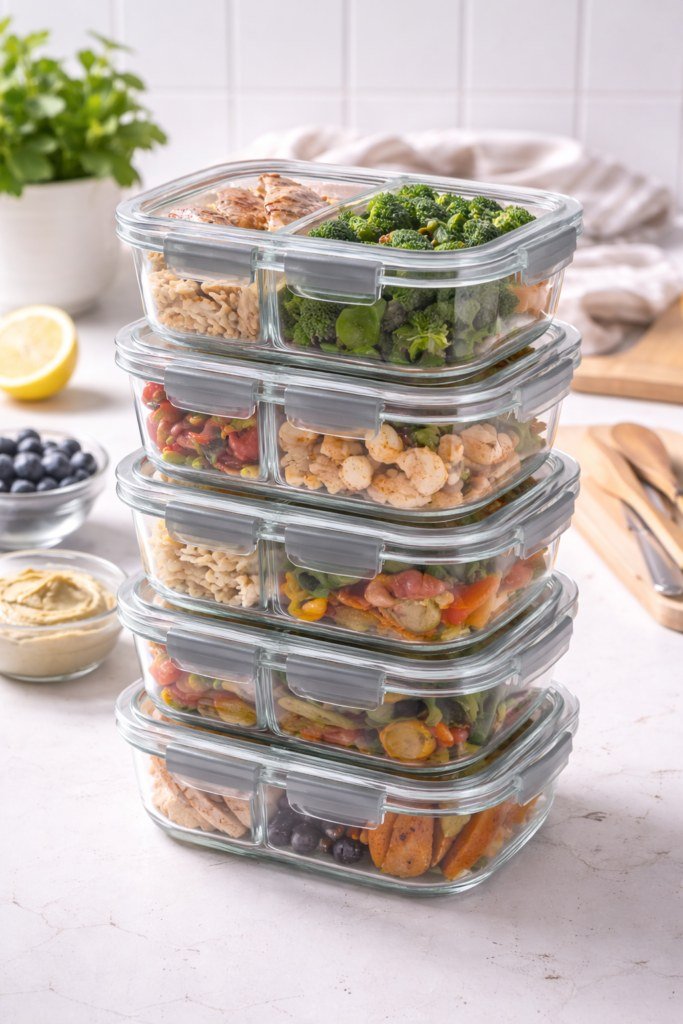
- Portion into reusable containers, label with the date, and cool before freezing.
- Keep a “freezer inventory” on the fridge — otherwise frozen meals become archaeological finds.
- Cook grains in bulk: a big pot of rice on Sunday covers lunches for days.
A Sunday batch-cook session of 90 minutes can cover 6–8 future meals. That’s the habit that separates £80/week shoppers from £120/week shoppers, in my experience.
Grocery Shopping Smarter Around the Plan
- Buy frozen veg and fruit for planned meals — cheaper, no waste, same nutrition.
- Check the reduced section first and flex the plan around yellow stickers.
- Buy spices, rice, lentils and tinned goods in bulk or at world-food shops — often half the supermarket price.
- Compare stores: our cheapest supermarket guide ranks your options.
- Track spending for a month with our weekly shop cost breakdown to set a realistic target.
When Life Gets in the Way
Perfect plans fail; good systems bend. Keep three emergency meals always available (pasta + jar sauce, frozen pizza, eggs + toast), allow one takeaway night a week in the plan itself (planned treats don’t blow budgets; guilty ones do), and if a week falls apart, just restart next Sunday without drama. The goal is a 70% hit rate, not perfection.
Meal Planning for Special Situations
For one person
Solo meal planning has a specific enemy: the family-sized pack. The fixes: shop the reduced section aggressively (single portions, discounted), embrace the freezer (cook 4 portions, eat 1, freeze 3 — future-you’s ready meals), and pick recipes that scale down gracefully (stir-fries, omelettes) over ones that don’t (roasts). Solo shoppers who plan well often spend £30–£45/week — the cheapest per-person food in the country.
For families
Scale up the rotation (12–15 meals), involve kids in choosing (they eat what they pick), and lean on slow-cooker and traybake meals that feed many with minimal effort. The “cook once, eat twice” principle is even more powerful: tonight’s roast chicken becomes tomorrow’s soup and Friday’s fried rice. Our weekly shop cost guide has the couple’s numbers; families scale roughly linearly.
For busy weeks
Some weeks, elaborate planning won’t happen. The minimum viable plan: 3 planned dinners + freezer/emergency meals + one takeaway budgeted. A bad plan beats no plan — even knowing “Tuesday is freezer curry, Thursday is omelettes” prevents the 6pm panic. And keep the emergency shelf stocked always: pasta, jar sauce, tinned tomatoes, eggs, frozen peas. With those five, you’re never more than 15 minutes from dinner.
Digital Tools for Cheaper Groceries
- Supermarket apps (Tesco, Sainsbury’s, Aldi): build your list in the app, check loyalty prices before you go. Clubcard/Nectar prices are now so significant that checking them is part of planning — see our cheapest supermarket guide.
- Recipe managers (Paprika, Samsung Food, or just a notes app): keep your 10-meal rotation with ingredient lists, so list-writing takes minutes.
- Too Good To Go: £3–£5 surprise bags from shops and restaurants — great for flexible “flex meals”, less good for strict plans.
- Olio: free food sharing app — neighbours giving away surplus. Surprisingly good for bread, veg and baby food.
- A simple spreadsheet for the committed: planned meals, actual spend, waste log. The waste log is the eye-opener — writing down what you bin changes buying behaviour within weeks.
The Seasonal Angle
Meal planning gets cheaper and better when it follows the seasons: asparagus and salads in spring, berries and BBQ in summer, squash and apples in autumn, root veg and stews in winter. Seasonal produce is cheaper, tastes better, and varies your rotation naturally. The BBC Good Food seasonal guides are the best free resource for this — plan one seasonal meal a week and your food gets more interesting without getting more expensive.
The Practical Takeaway
Meal planning saves money through one mechanism: you buy what you’ll eat and eat what you buy. Spend 30 minutes every Sunday checking stocks, planning five dinners, and writing the list — then shop once. Build a ten-meal rotation, batch-cook doubles, and keep emergency meals for chaotic weeks. Most households save £100–£200 a month, eat better, and wonder why they ever did the 6pm Tesco wander. Start this Sunday.