
How to Clear Blackheads Without Squeezing: The Chemistry Method
Those tiny dark dots across your nose are not dirt, and scrubbing harder will not remove them. Blackheads are simply pores whose contents — sebum and dead skin cells — have oxidised on contact with air, turning dark. They are one of the most common skin concerns in the UK, and also one of the most mistreated: the instinct to squeeze, pick, and scrape does far more harm than the blackheads themselves ever would.
Here is how to clear blackheads properly — with chemistry instead of force — and why your fingers should stay away from your nose.
Why squeezing is the worst option
It is tempting, it is satisfying, and it is destructive. Squeezing a blackhead with fingernails traumatises the surrounding skin: it can rupture the pore wall beneath the surface, spilling its contents into the dermis and converting a harmless blackhead into an inflamed, painful spot. Repeated squeezing breaks capillaries (the tiny red veins some people develop around the nose), causes scarring and enlarged pores over time, and introduces bacteria from fingers that are never as clean as you think.
Metal comedone extractors are only marginally better — used incorrectly, which is how most people use them, they cause the same damage with more precision. Dermatologists will tell you that professional extraction exists for a reason: it is done on properly prepared skin, with sterile tools, by someone who knows the angle and pressure for each pore. At-home squeezing is not a cheaper version of that; it is a different, damaging activity.
Salicylic acid: the gold standard
The single most effective over-the-counter ingredient for blackheads is salicylic acid, a beta-hydroxy acid (BHA) that is oil-soluble — meaning it can penetrate into the pore itself and dissolve the sebum-dead skin plug from within. No scrub or wash can do this; only an oil-soluble chemical exfoliant reaches inside the pore.
Use a 2% salicylic acid product (the maximum standard over-the-counter strength in the UK) as a leave-on treatment — a toner, serum, or gel — two to three times per week to start, applied to blackhead-prone areas after cleansing. Leave-on beats wash-off here, because the acid needs contact time to work. Expect visible improvement in two to four weeks and continued gains over two to three months. The British Association of Dermatologists supports BHA use for comedonal concerns, with the standard cautions: introduce gradually, use sunscreen daily (acids increase sun sensitivity), and stop if significant irritation develops.
Retinoids for the long game
For persistent blackheads, retinoids (vitamin A derivatives) are the dermatologist’s long-term answer. They normalise skin cell turnover, preventing the dead-cell buildup that forms plugs in the first place, and they are the best-evidenced treatment for keeping pores clear over months and years. Adapalene 0.1% is available over the counter in the UK; stronger tretinoin needs a prescription. Start twice weekly at night, build up slowly, and expect an initial adjustment period — retinoids are a commitment, not a quick fix.
Clay masks, pore strips, and double cleansing
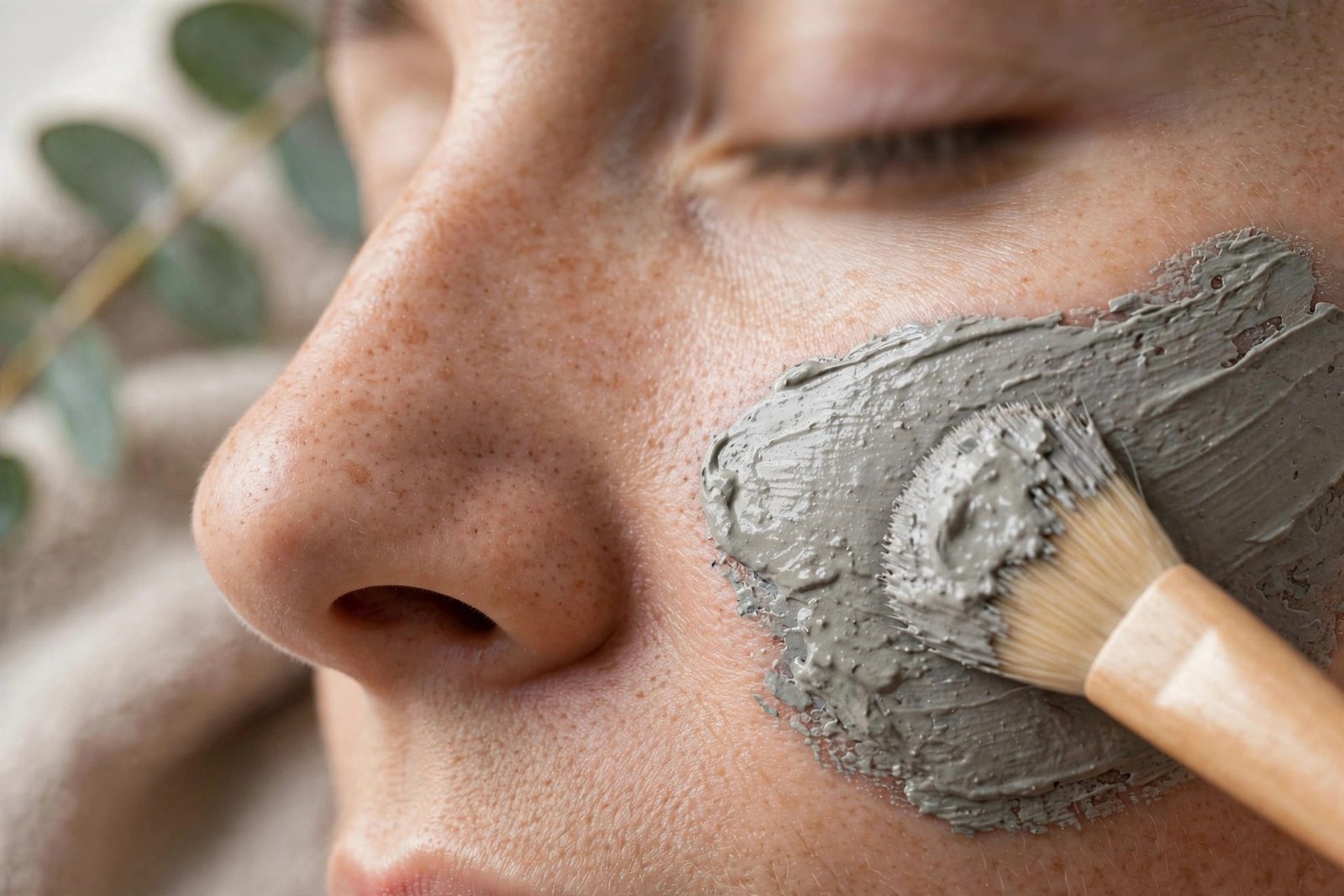
Clay masks (kaolin, bentonite) absorb surface oil and can make pores look temporarily tighter and clearer — useful as a weekly treatment, though they do not extract existing deep plugs. Use once weekly for 10 minutes; leaving clay on until it cracks is overkill that dehydrates skin.
Pore strips are the most misunderstood product in this category. They rip the surface layer off blackheads, which looks dramatic on the strip but leaves the deeper plug behind — and regular use irritates skin without solving anything. Dermatologists consider them a cosmetic parlour trick, not a treatment. Double cleansing (an oil-based cleanser followed by a water-based one) helps prevent new blackheads by fully removing sunscreen, makeup, and sebum each evening — prevention that reduces the problem at its source. And since overall skin health supports every treatment, the fundamentals in our guide to improving your sleep without medication matter more than people expect — stressed, sleep-deprived skin produces more oil.
When to see a professional
If blackheads are extensive, accompanied by inflammatory acne, or resistant to three months of consistent salicylic acid plus retinoid use, see your GP or a dermatologist. Prescription options — stronger retinoids, hormonal treatments where appropriate — succeed where over-the-counter products plateau. A professional facial with proper extraction, done occasionally, is also a legitimate option for stubborn areas; what matters is that extraction is done with prepared skin and sterile technique.
Be wary of aggressive “blackhead removal” videos and tools marketed online: the dramatic extractions that go viral often involve damaged skin, and the NHS advises against picking or squeezing spots precisely because of the scarring and infection risk. For working with your skin’s natural patterns rather than against them, our guide to colours that suit pale skin tones takes the same philosophy into wardrobe choices.
The bottom line
Clear blackheads without squeezing by: using 2% salicylic acid as a leave-on treatment two to three times weekly, adding a retinoid for long-term prevention, double cleansing nightly, and a weekly clay mask for surface oil. Keep your fingers off your face, give the chemistry eight to twelve weeks, and see a professional if over-the-counter measures plateau. Your pores — and the skin around them — will thank you.
Diet, hormones, and blackheads: what influences them
Skincare treats blackheads from the outside, but several internal factors influence how many form. Hormones are the biggest: androgens stimulate sebum production, which is why blackheads surge in puberty, around menstrual cycles, and during hormonal shifts. This is also why hormonal contraception or anti-androgen treatments, prescribed for persistent acne, often clear blackheads as a side benefit — worth discussing with your GP if over-the-counter measures plateau and breakouts are widespread.
Diet’s role is real but modest: high-glycaemic diets and, in some people, dairy are associated with increased sebum production and acne severity in observational studies, though the evidence is weaker than internet lore suggests. No food causes blackheads directly, and extreme dietary restriction is not a treatment. What does help is the unglamorous trio: adequate sleep (sleep deprivation raises cortisol, which stimulates oil glands), stress management (same mechanism), and not touching your face — hands transfer oil and bacteria to pores all day. Think of internal factors as the volume dial and topical treatment as the mute button: you need both for the quietest result.
Frequently Asked Questions
What actually causes blackheads?
A pore clogged with sebum and dead skin cells, where the exposed surface oxidises on contact with air and turns dark. They are not dirt, and they are not caused by poor washing.
Is it ever okay to squeeze blackheads?
Dermatologists advise against it: squeezing risks rupturing the pore wall, causing inflammation, scarring, broken capillaries, and infection. Professional extraction on prepared skin with sterile tools is the safe alternative.
Do pore strips work for blackheads?
Only superficially — they remove the darkened surface but leave the deeper plug, and regular use irritates skin. Salicylic acid, which dissolves the plug from within the pore, is far more effective.
How long does salicylic acid take to clear blackheads?
Visible improvement typically appears in two to four weeks of consistent use, with continued improvement over two to three months. Use a 2% leave-on formula two to three times weekly to start.
Can blackheads be permanently removed?
Pores cannot be permanently closed or eliminated — they are normal anatomy. But consistent retinoid use keeps them clear long-term, which is as close to permanent as skincare gets. Maintenance is lifelong but minimal.