
How Much Does an Electrician Charge to Fit a Light in the UK?
How Much Does an Electrician Charge to Fit a Light in the UK?
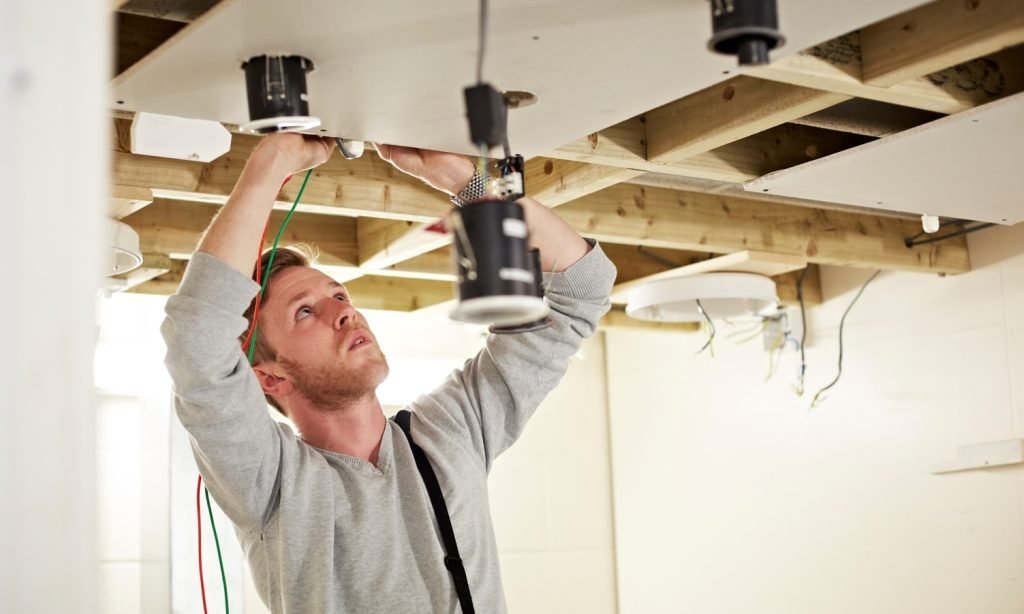
Swapping a light fitting sounds like a 20-minute job — and sometimes it is. But electrician pricing has minimums, and the “simple” job can hide complications. Here’s how much an electrician charges to fit a light in the UK.
Typical prices
- Like-for-like swap (existing wiring, new fitting): £60–£120 — most electricians’ minimum call-out covers this
- New light in existing circuit (wiring already there): £80–£150
- New light needing new wiring (no existing point): £150–£300+ depending on cable runs and access
- Downlights (set of 6–8): £250–£500 fitted — popular upgrade, priced per job not per light
- Outdoor security light: £100–£200 fitted
- London: add 30–50% to all figures
Why a “20-minute job” costs £80
You’re not paying for 20 minutes — you’re paying for:
- Travel and scheduling: the electrician’s diary, van, fuel, parking
- Qualifications and insurance: Part P registration, public liability, ongoing training
- Testing: a proper electrician tests the circuit after fitting — this is safety-critical, not optional
- Minimum charges: most electricians have a 1-hour minimum (£50–£90 outside London, £80–£130 in London)
It’s the same economics as any trade call-out. The fix: bundle jobs — have the electrician do 3–4 small tasks in one visit and the per-job cost plummets.
When it costs more than expected
- No earth wire: pre-1970s lighting circuits often lack earths — fitting a metal light without an earth is dangerous and non-compliant; rewiring the point adds £100–£200
- Heavy fittings: chandeliers and large pendants may need ceiling reinforcement (£50–£100 extra)
- Dimmer compatibility: LED + old dimmer = flickering; a compatible dimmer switch adds £30–£60 fitted
- Bathroom lights: must be IP-rated for zones — the fitting costs more and Part P notification may apply
- Plaster/lath ceilings: cutting into old ceilings is slower and riskier
Can you DIY it?
Legally, yes — replacing an existing light fitting (like-for-like) is non-notifiable work you can do yourself. But:
- Always isolate at the consumer unit (not just the wall switch) and verify dead with a voltage tester (£15)
- If the wiring is old, confusing, or there’s no earth — stop and call a pro
- New circuits, consumer unit work, and bathroom electrics are notifiable under Part P — use a registered electrician
- See our guide on whether DIY electrical work is safe
Electricity kills roughly 70 people a year in UK homes and causes thousands of fires. A £80 call-out is cheap insurance against becoming a statistic.
Finding a good electrician
- Registered: NICEIC, NAPIT or ELECSA — verify at electricalcompetentperson.co.uk (the official Part P register)
- Get the minor works certificate after the job — a proper electrician issues one; it’s your proof of compliant work
- Check reviews on Checkatrade
- Ask for the total price upfront including the fitting if they’re supplying it
Money-saving tips
- Buy the fitting yourself — electricians’ markups on fittings are common; just check compatibility first
- Bundle multiple jobs into one visit
- Book in advance — emergency call-outs cost double
- Like-for-like swaps are cheapest — changing positions or adding new points multiplies the cost
The bottom line
Budget £60–£120 for a straightforward light fitting swap (£100–£180 in London), and bundle small electrical jobs into one visit to beat the minimum charge. Use a Part P registered electrician, get the minor works certificate, and DIY only the simplest like-for-like swaps — with the power properly off and tested. Some savings aren’t worth the risk; this is one of them.
Lighting design: getting more than just a fitting
If you’re paying the call-out anyway, think about the lighting, not just the fitting. Layered lighting (ambient + task + accent) transforms rooms more than any single “feature” fitting. Cost-effective upgrades while the electrician is there: dimmer switches (£30–£60 fitted — check LED compatibility), additional sockets (£80–£150 each — always add more than you think you need), under-cabinet kitchen lighting (£100–£200), outdoor security light (£100–£200 fitted).
LED bulbs: if your new fitting takes replaceable bulbs, buy quality LEDs (£5–£10 each — Philips, Osram) not £1 bargain bulbs. Cheap LEDs flicker, buzz, fail early and render colours horribly (low CRI). 2700K “warm white” for living areas; 4000K “cool white” for kitchens/bathrooms/task areas. Dimmable only if you have a compatible dimmer — non-dimmable bulbs on dimmers flicker and fail. The electrician can advise — ask while they’re there.
Electrician FAQs
How much is an electrician’s call-out fee? £50–£90 outside London (usually the first hour), £80–£130 in London. Emergency/out-of-hours: £120–£200+. The call-out covers travel, diagnosis and the first hour — bundle jobs to make it worthwhile. Ask for the total price for your specific job, not just the hourly rate.
Do I need a certificate for a light fitting change? For a like-for-like swap: a Minor Works Certificate is best practice — a proper electrician issues one as standard. For new circuits or consumer unit work: an Electrical Installation Certificate plus building control notification (Part P) — your electrician handles this if they’re registered. Keep certificates — solicitors ask for them when you sell.
Can an electrician fit a light I bought myself? Yes — most are happy to, and you’ll save the parts markup. But: check it’s UKCA/CE marked and suitable (bathroom lights need the right IP rating), keep the instructions, and accept that the electrician won’t warranty the fitting itself — only their workmanship. Cheap imported fittings without proper certification are a fire risk — buy from reputable retailers.
What’s the difference between an electrician and a handyman for electrical work? Qualifications and law. Electricians are Part P registered (NICEIC, NAPIT, ELECSA), trained to BS 7671, insured for electrical work, and can self-certify notifiable work. Handymen legally cannot do notifiable work and can’t issue certificates. For anything beyond the simplest like-for-like swap, the price difference (£30–£50/hour vs £50–£90/hour) isn’t worth the risk.
My lights flicker — what causes it? Common causes: loose bulb (tighten first — free fix), incompatible dimmer + LED (the #1 cause — replace the dimmer with an LED-compatible one, £30–£60 fitted), loose wiring (electrician job — don’t ignore, it’s a fire risk), overloaded circuit (rare in modern homes), or mains fluctuations (if neighbours’ lights flicker too — call the DNO). Start with the bulb and dimmer; escalate if it persists.
Related reading
Know the safety rules first: DIY electrical work — what’s legal and plumber rates for the other trade.