
How to Make Barista-Style Coffee Without a Machine (5 Methods)
Here’s a secret the coffee industry doesn’t advertise: you don’t need a £400 espresso machine to make café-quality coffee at home. Some of the best cups I’ve ever had came from £20 worth of kit and a bit of technique. Here’s how to make barista-style coffee without a machine, with five methods ranked by effort and result.
What makes coffee “barista-style”?
It’s three things: strong, well-extracted coffee (not weak and watery), silky textured milk (microfoam, not bubbly froth), and balance (the right coffee-to-milk ratio, properly heated milk — 60-65°C, never scalded). Nail those three and nobody will guess there’s no machine involved.
Method 1: Moka pot + French press milk (best overall)
The moka pot (£20-£35) makes strong, concentrated coffee that stands up to milk like espresso does. For the milk: heat it to 60-65°C (steaming, not boiling), pour into a French press, and pump the plunger vigorously for 30 seconds. This creates genuinely silky microfoam — the French press is the best manual milk frother ever made, and most people already own one. Combine: 1 part moka coffee to 2 parts textured milk for a flat white style.
Method 2: Aeropress (£30-£40)
The Aeropress makes a clean, sweet, espresso-strength concentrate with almost no bitterness. Use the inverted method, a fine grind, water just off the boil, and press gently. Dilute slightly for an americano-style, or add textured milk for a latte. It’s forgiving, fast (2 minutes), and the coffee genuinely rivals café espresso in a milk drink. The only downside: it makes one cup at a time.
Method 3: French press, done properly
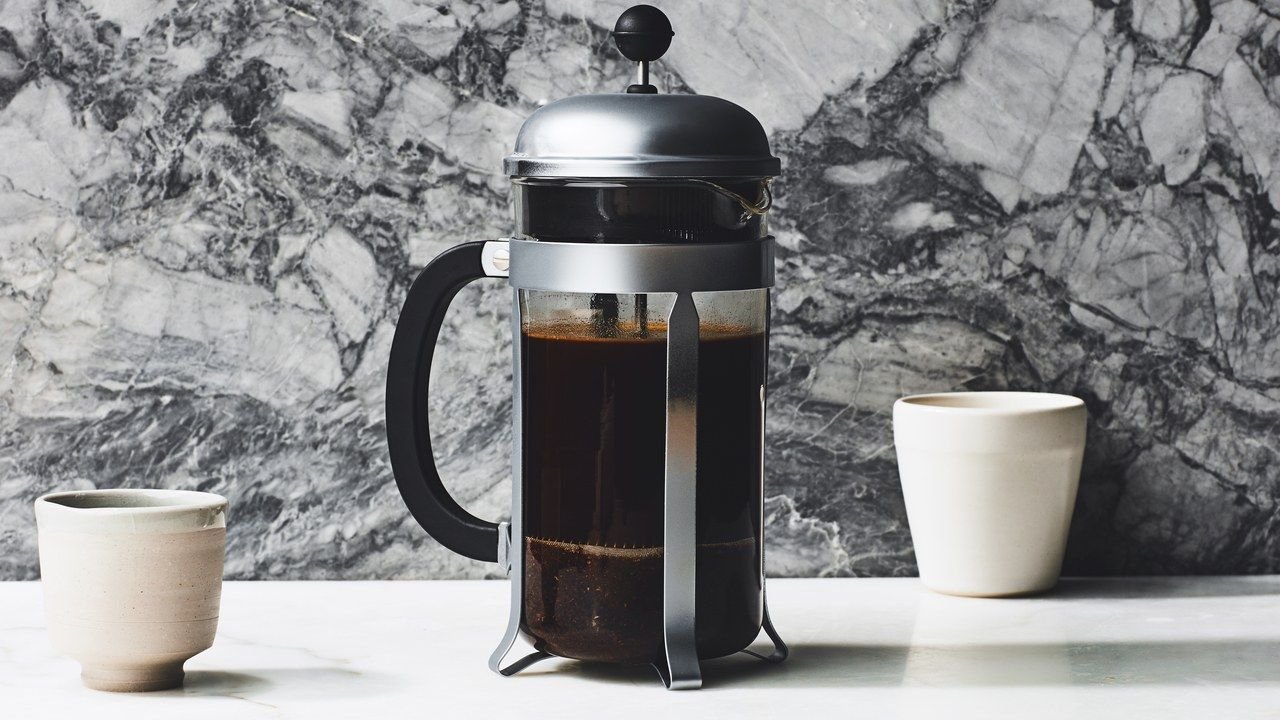
Most French press coffee is mediocre because of technique, not the brewer. The barista method: coarse grind, 60g per litre (stronger than you think), water just off boiling, stir after 1 minute, skim the crust, steep 4 minutes total, then plunge slowly. The result is full-bodied and rich — closer to a café long black than the muddy cup most people make. Then use the same press to texture your milk.
Method 4: Pour-over (V60 or similar, £25-£40 setup)
For black coffee lovers, nothing beats a pour-over for clarity and sweetness. Medium-fine grind, 60g/L, water at 92-96°C, slow spiral pours. It takes 3 minutes and a bit of practice, but the cup is cleaner and more flavourful than any machine-made black coffee. It won’t make a flat white — but for americanos and long blacks, it’s the connoisseur’s choice.
Method 5: Instant, upgraded (yes, really)
Modern quality instant (not the dusty jar from 2019) with heated — not boiled — milk and a £5 handheld frother produces a perfectly respectable latte in 90 seconds. Is it as good as the moka pot method? No. Is it 10x better than the instant most people make with boiling water? Absolutely. Boiling water scalds instant coffee and ruins it; 80°C water transforms it.
The milk: the real make-or-break
Whatever method you choose, the milk technique matters more than the coffee brewer:
- Temperature: 60-65°C. Hotter scalds the milk (sweetness dies, bitterness appears). Use a thermometer (£5) until you can judge by touch.
- Texture: you want glossy microfoam — tiny bubbles, paint-like texture. Big bubbly foam is the mark of an amateur.
- Milk choice: whole dairy textures best; oat milk (barista editions) is the best non-dairy for frothing.
- Pour: start high to mix, finish low and slow for the white cap. Latte art takes practice; a clean white dot is a fine start.
Beans matter more than kit
The single biggest upgrade isn’t equipment — it’s fresh beans, ground just before brewing. Supermarket pre-ground goes stale in days once opened; a £25 hand grinder and whole beans (used within a month of roast) will improve your coffee more than any brewer. Store beans airtight, away from light, at room temperature — never in the fridge.
If you’re weighing up whether to invest further, our guide to cooking tofu properly follows the same philosophy — technique beats equipment every time. And for the full cost picture, see whether afternoon tea is worth the money — another case where the home version competes surprisingly well.
For brewing ratios and technique videos, BBC Good Food’s coffee guides are clear and practical.
Barista-style coffee without a machine: the upgrades that matter most
If you can only change three things, change these — ranked by impact per pound. 1. Fresh beans, ground at home (£25 grinder + £8-£12 beans). This is 60% of the improvement. Pre-ground coffee stales within days of opening; whole beans stay fresh for weeks, and grinding just before brewing preserves the volatile aromatics that make coffee taste alive. No brewer upgrades this.
2. Water temperature (£0). Boiling water (100°C) scorches coffee, extracting bitterness. The sweet spot is 90-96°C for most methods — which means boiling the kettle and waiting 60-90 seconds, or using 80°C for instant. This costs nothing and fixes the most common home-coffee flaw instantly. If your coffee tastes bitter and harsh, it’s probably the water, not the beans.
3. The right ratio (£0). Most people under-dose: 60g of coffee per litre of water (about 2 tablespoons per 250ml cup) is the speciality standard, roughly double what casual brewers use. Weak coffee can’t be fixed with better beans — there’s just not enough of it. Weigh your coffee for a week until your eye calibrates; a £8 kitchen scale is the cheapest upgrade in coffee.
4. Milk technique (£5 thermometer). For milk drinks, temperature control beats equipment. Milk at 60-65°C tastes sweet and silky; at 75°C+ it scalds and turns bitter. A £5 milk thermometer removes the guesswork until you can judge by touch (the jug should be hot to hold but not painful). Combined with the French-press frothing method from the main guide, this produces genuinely café-quality milk.
5. Clean equipment (£0). Old coffee oils go rancid and taint every cup. Rinse the French press or moka pot after every use, deep-clean weekly (bicarbonate of soda and hot water works), and descale kettles monthly in hard-water areas. It’s unglamorous and it matters enormously — a dirty brewer ruins good beans faster than anything.
Do those five and your home coffee will embarrass most high-street chains — no machine required, total outlay under £50. For technique videos that demonstrate the pouring and texturing, BBC Good Food’s coffee guides are clear, practical and free.
The takeaway
Moka pot or Aeropress for the coffee (£20-£40), French press for texturing milk (free if you own one), fresh beans ground at home, milk at 60-65°C. That’s barista-style coffee without a machine — total outlay under £50, per-cup cost under 70p, and results that embarrass most high-street chains.