
How Do I Get Started With Padel in London? Beginner Guide
Padel has gone from Spanish curiosity to London’s fastest-growing sport in barely five years. Courts are springing up from Stratford to Battersea, booking slots vanish within minutes, and everyone from ex-tennis players to total beginners is picking up a racket. If you are padel-curious, here is everything you need to start playing in London in 2026 — where to play, what it costs, and how not to embarrass yourself.
What padel actually is
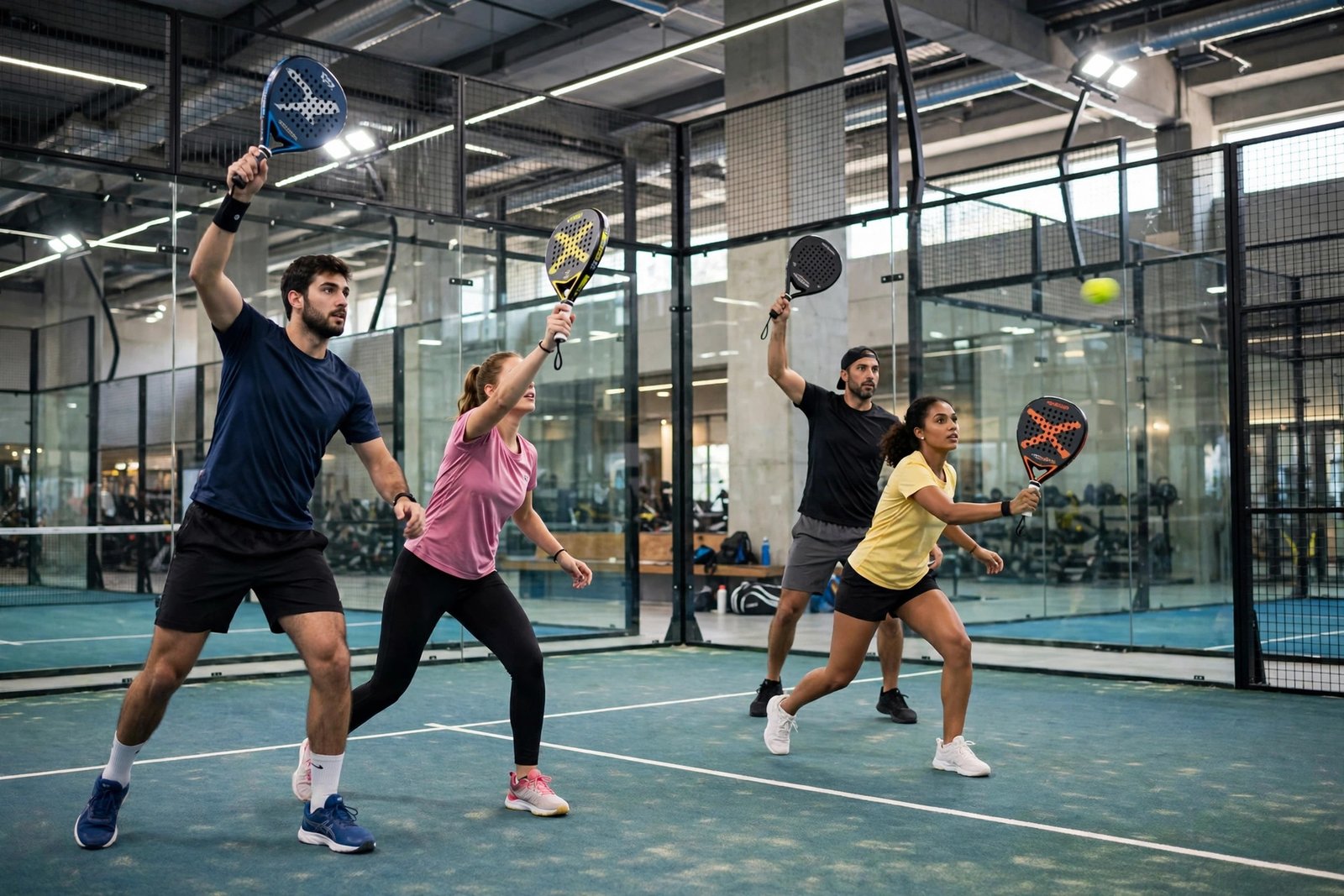
Padel is a racket sport played in doubles on an enclosed court about a third the size of a tennis court, with walls you can play off — think squash meets tennis. The rackets are short, stringless paddles; the balls are slightly depressurised tennis balls. The walls keep rallies alive far longer than tennis, which makes it instantly fun for beginners: you will be having proper rallies within your first hour.
That accessibility is the whole secret of padel’s explosion. Tennis takes months to become enjoyable; padel takes an afternoon. The Lawn Tennis Association, which governs padel in Britain, reports participation doubling year on year, with London the epicentre of court construction.
Where to play padel in London
London’s padel map has filled in remarkably fast. Dedicated clubs — Rocket Padel (multiple sites), Padel Social Club, Stratford Padel Club — offer the best experience: proper courts, coaching programmes and social leagues. Many Virgin Active, David Lloyd and Nuffield Health clubs have added courts for members. Pure pay-and-play options exist at public sports centres and independent operators, bookable through apps like Playtomic and Matchi.
Geography matters less than it used to, but east and south London currently have the densest coverage, with new sites opening in the west and north through 2026. Book ahead — prime evening and weekend slots at popular clubs go within minutes of release. Off-peak weekday daytime is dramatically easier to book and often half the price.
What it costs
Court hire in London runs £20–£60 an hour depending on venue and time — split four ways, that is £5–£15 per person per hour, genuinely affordable. Club memberships (£40–£100 a month) make sense if you play weekly, usually including discounted court rates and social sessions. Coaching: group beginner courses run £15–£25 a session; private lessons £40–£70 an hour.
Equipment to start: nothing. Every club rents rackets (£3–£5) and sells balls. When you are hooked (give it three sessions), a decent beginner racket costs £60–£120. Compared with London gym memberships, padel is competitive — and far more social. Budget £40–£80 a month for a weekly habit including the odd coaching session.
Your first session: what to expect
Wear normal gym kit and court shoes (tennis or padel shoes; running shoes slip on the sand-dressed turf). Bring water — padel is sneakily intense. Most clubs run beginner inductions or “padel intro” group sessions: book one before jumping into open play. You will learn the serve (underarm, bouncing the ball first), the basic rules (one bounce allowed, walls are in play after the bounce), and court positioning.
The etiquette: call the score clearly, respect neighbouring courts’ rallies when fetching balls, and rotate partners in social sessions. Padel culture is notably welcoming — the sport’s social DNA means regulars actively fold newcomers into games. It is one of the easiest sports in London for making friends as an adult, because the format forces conversation between points.
Learning the game: the fast track
Three things separate beginners from competent players fastest. First, the walls: learning to let the ball come off the back glass (instead of panicking) transforms your defence. Second, the lob: a good lob buys time and resets the point — practice it relentlessly. Third, positioning: padel is a doubles game of geometry, and being in the right place beats hitting hard every time.
A four-week beginner course (£60–£100) plus one social session a week gets most people to enjoyable rally-level within a month. YouTube tutorials help, but one group lesson corrects the serve and backhand mistakes that self-taught players ingrain. After two months, enter a beginner social tournament — graded events mean you will face appropriate opposition, and the competitive buzz is addictive.
Is padel good exercise?
Excellent. An hour of padel burns 400–600 calories, builds leg and core strength through constant movement, and sharpens reactions and coordination. It is lower-impact than running or football — the smaller court means less pounding — making it joint-friendly for players returning to sport. It comfortably counts toward the recommended weekly exercise, and because it is fun, you will actually do it — the variable no fitness plan survives without.
The NHS highlights racket sports for healthy ageing: the combination of cardio, agility and social connection is about as good as exercise gets. Padel’s demographics skew 25–55, but junior programmes are booming too.
Common beginner mistakes
Trying to smash everything (control beats power until you are advanced), standing too close to the back glass, serving like a tennis serve (it must be underarm), and buying a £250 racket before your third session. Also: not booking ahead. London padel demand still outstrips supply at peak times — the players who play most are the ones who book a recurring slot.
Padel for different players
Ex-tennis players adapt fastest but must unlearn tennis instincts — the walls, the underarm serve and the smaller court reward patience over power, and the best ex-tennis beginners are the ones who embrace padel as its own sport. Total racket-sport beginners often progress faster socially, since they have no bad habits to break and the beginner group sessions are built for them.
Padel is also one of the most age-inclusive sports in London: the smaller court and doubles format mean players in their 50s and 60s compete happily alongside twenty-somethings, and mixed-age social sessions are the norm rather than the exception. Juniors are the fastest-growing segment — most clubs now run kids’ academies, and family sessions on weekend mornings are a brilliant low-pressure introduction for children.
Conclusion
Getting started with padel in London in 2026 is easy: book a beginner session at a local club, rent a racket, learn the serve and the walls, then play socially once a week. At £5–£15 per person per session it is affordable, the learning curve is gloriously short, and the social scene does half the work of building a habit for you. The hardest part is getting a peak-time court — book early, play often.
Frequently Asked Questions
How much does padel cost in London?
Court hire is £20–£60 an hour split four ways (£5–£15 each). Beginner rackets cost £60–£120 to buy, or £3–£5 to rent. A weekly habit runs £40–£80 a month.
Is padel easy for beginners?
Yes — it is one of the easiest racket sports to pick up. Most people enjoy proper rallies in their first session, and a four-week beginner course brings most players to social-play standard.
What is the difference between padel and tennis?
Padel is played in doubles on a smaller enclosed court with walls in play, using short solid rackets and underarm serves. Rallies are longer, the learning curve is shorter, and it is more social than tennis.
Do I need my own racket to start padel?
No — all clubs rent rackets cheaply. Buy your own (£60–£120) once you are playing regularly, not before your third or fourth session.