
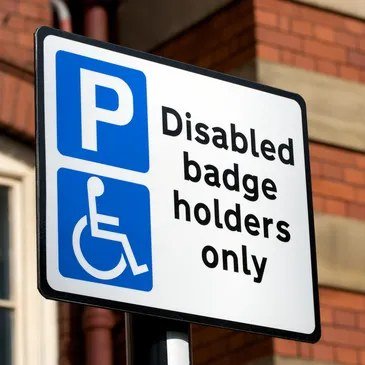
How to Get a Blue Badge for Parking in the UK
How to Get a Blue Badge for Parking in the UK
A Blue Badge can be life-changing if you have a disability or health condition that affects your mobility — closer parking, fewer impossible distances, and a bit of independence back. But the application process confuses a lot of people: who actually qualifies, what evidence you need, and what the badge does and doesn’t let you do. My neighbour went through it last year for her arthritis, and watching her navigate the system taught me plenty. Here’s the full guide. Here’s how to get a Blue Badge for parking in the UK — who qualifies, how to apply, and the mistakes that delay approval.
What a Blue Badge Gives You
- Park for free in disabled bays on streets and in many car parks
- Park on single or double yellow lines for up to 3 hours (where it’s safe and not causing an obstruction, and where local restrictions don’t prohibit it)
- Exemption from some parking charges and time limits
- In London: exemption from the congestion charge (with a discount registration) — worth £15 a day
Important: the badge belongs to you, not a vehicle. It can be used in any car you’re travelling in — as driver or passenger. Misuse (letting someone else use it when you’re not there) is a criminal offence with fines up to £1,000.
Who Qualifies? The Two Routes
Automatic qualification
You qualify automatically if you:
- Receive the higher rate of the mobility component of Disability Living Allowance (DLA)
- Receive Personal Independence Payment (PIP) with 8+ points in the “moving around” activity
- Are registered blind (severely sight impaired)
- Receive War Pensioners’ Mobility Supplement or certain Armed Forces compensation awards
Discretionary qualification (assessed)
You can still qualify without those benefits if you have a permanent and substantial disability that means you’re unable to walk, or walking causes very considerable difficulty — including conditions like severe arthritis, lung disease, or heart conditions. Since 2019, hidden disabilities also count: autism, dementia, anxiety disorders and other conditions that make journeys very difficult. Councils assess these applications individually, often with a mobility assessment.
Children under 3 may qualify if they need bulky medical equipment or must be near a vehicle in emergencies. Organisations caring for disabled people can also get badges.
How to Apply: Step by Step
- Apply online at gov.uk’s Blue Badge application page — it routes you to your local council. Paper forms are available from the council if you prefer.
- Gather your evidence: proof of identity and address, a recent photo, benefit award letters (if automatically eligible), and medical evidence — GP letters, consultant reports, prescriptions, or care plans. For discretionary applications, thorough medical evidence is everything.
- Describe your worst days. This is the key tip: describe how your condition affects you on a bad day, with specifics — distances you can walk, pain levels, time needed, what happens afterwards. Vague applications get refused; detailed ones succeed.
- Attend an assessment if asked. Some councils arrange a mobility assessment with an occupational therapist. Be honest and don’t push through pain to “perform”.
- Pay the fee. Up to £10 in England (some councils charge less); free in Scotland and Wales.
Decisions typically take 6–12 weeks. If refused, you can ask the council to reconsider — many successful badges come after an initial refusal with better evidence.
Where You Can and Can’t Park
- Disabled bays: yes, with the badge and clock displayed correctly.
- Yellow lines: up to 3 hours where no loading ban is in force — check local signs.
- Residents’ bays: usually yes, but check your borough’s rules.
- Private car parks (supermarkets, hospitals): their own rules apply — most honour the badge, but time limits may still apply.
- Central London: the City of London, Westminster, Kensington & Chelsea and Camden have their own stricter rules — always check signs.
Always display the badge face-up with the wheelchair symbol showing, and set the parking clock to your arrival time where required.
Renewal: How to Get Your Badge Renewed
Badges last up to 3 years. Apply for renewal 8–12 weeks before expiry — there’s no automatic renewal. If your condition worsens, you can reapply earlier. Report lost or stolen badges to the council immediately. And remember the badge is for your journeys: if you’re not in the car, it shouldn’t be displayed.
If Your Application Is Refused: The Reconsideration Playbook
Refusals are common — especially for discretionary (non-automatic) applications — and many are overturned. The reconsideration process:
- Ask for the reasons in writing. You’re entitled to know exactly why. Vague refusals (“does not meet criteria”) aren’t good enough — push for specifics.
- Address each reason with evidence. If they say you can walk far enough, provide a detailed walking diary (distances, time, pain levels, recovery time) over two weeks. If they question your condition’s severity, get a fresh GP or consultant letter addressing their specific points.
- Get help. Citizens Advice and disability organisations (Scope, local disability groups) have advisers who know exactly what councils look for. Their help is free and often decisive.
- Describe bad days, not average days. The most common reason applications fail is understatement — British stoicism works against you here. Be brutally honest about your worst days.
- Consider the ombudsman. If the council’s process was flawed (lost evidence, unreasonable delays, ignoring medical reports), the Local Government Ombudsman can intervene.
Many successful badges follow an initial refusal. Don’t take the first no as final — take it as feedback on what evidence was missing.
Blue Badge Holders’ Rights Beyond Parking
The badge’s benefits extend further than most holders realise:
- Congestion charge discount: Blue Badge holders get 100% discount on London’s congestion charge — but you must register for it (£10 registration); it’s not automatic. Worth £15 every time you drive centrally.
- ULEZ: separate from the congestion charge — check whether your vehicle qualifies for disabled tax class exemption.
- Toll roads and bridges: many offer disabled discounts (Dartford Crossing, Mersey Tunnels) — check each operator.
- Airport assistance: the badge isn’t needed for this, but if you qualify for a badge you almost certainly qualify for free airport special assistance — book 48 hours ahead.
- Motability Scheme: if you receive higher-rate mobility PIP/DLA, you may qualify to lease a car, scooter or powered wheelchair using your benefit — see Motability’s official site.
And a final practical note: badge theft is depressingly common — never leave it visible in a parked car when you’re not using it. Take it with you; replacements take weeks. For the wider costs of driving with a disability, our car running costs guide helps with budgeting, and assistance dog costs are worth knowing if you’re considering one.
The Practical Takeaway
Getting a Blue Badge means: check if you qualify automatically via PIP/DLA; if not, build a detailed evidence-based application describing your worst days; apply via gov.uk; and expect 6–12 weeks. Don’t be put off by a refusal — strengthen the evidence and ask for reconsideration. For many people it’s the difference between participating in life and watching from the window. If driving costs are a concern generally, our annual car running costs guide and keeping a cat in a London flat (for those considering a companion) may help with wider budgeting.
One thought on “How to Get a Blue Badge for Parking in the UK”