
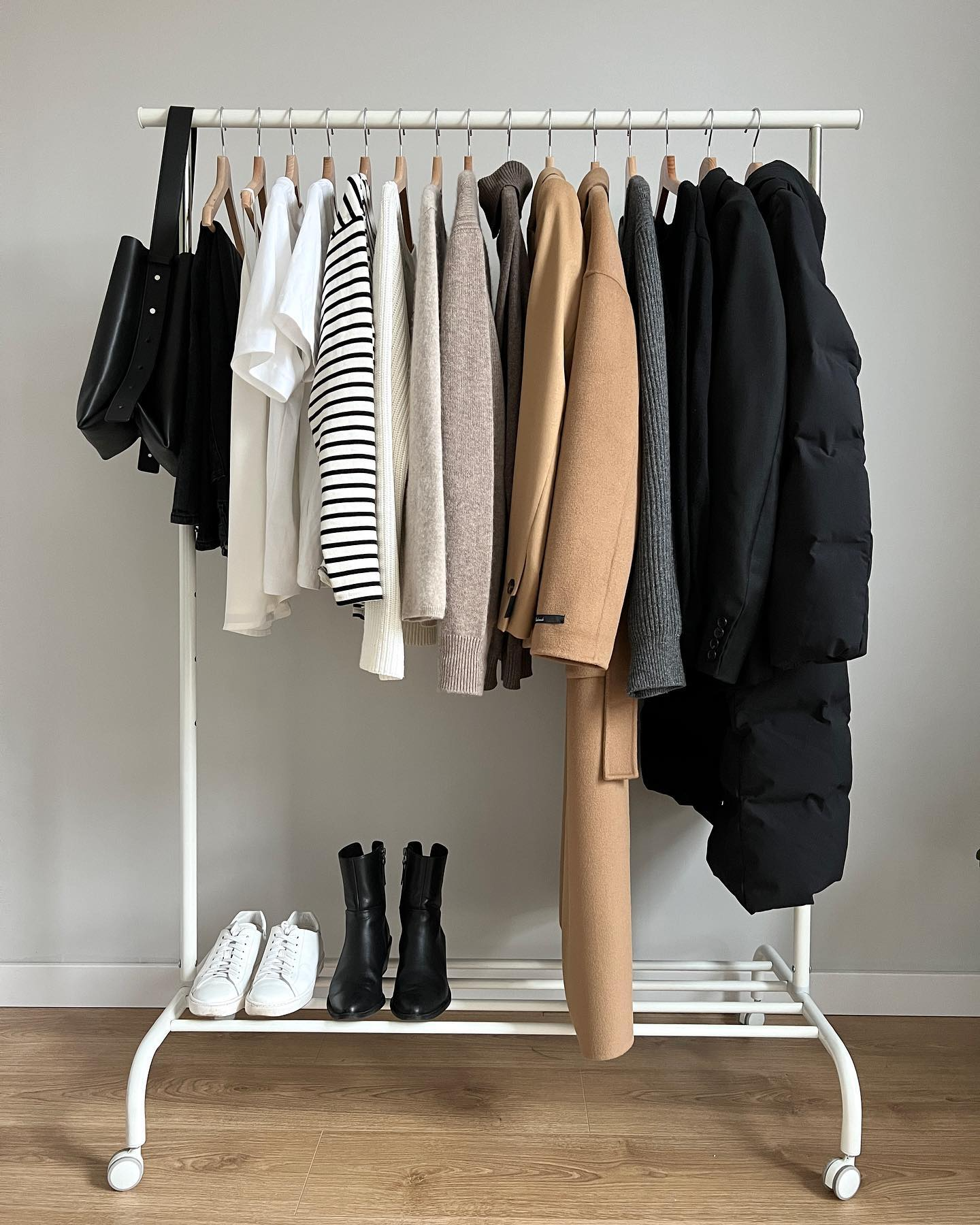
How Do I Build a Capsule Wardrobe on a Budget?
How Do I Build a Capsule Wardrobe on a Budget?
The capsule wardrobe promise — fewer clothes, more outfits, no more “nothing to wear” mornings — is genuinely life-changing. The catch in most guides is the budget: “just invest in these £200 staples!” Not helpful when you’re trying to spend less, not more. I built my first capsule for under £400, mostly from Uniqlo, M&S, and Vinted, and it worked better than the expensive version I attempted later. If “how do I build a capsule wardrobe on a budget” is the question you’ve been asking, here’s the straight answer — practical, honest, and based on what actually works.
This is the budget-first guide: the formula, the buying order that prevents expensive mistakes, and how to assemble 30 pieces that make 100+ outfits for under £500.
The formula: what goes in a capsule
The classic capsule is 25–37 pieces (excluding underwear, gym kit, and occasion wear) per season, all co-ordinating. The budget version follows the same structure: start with a neutral base (black, navy, grey, white, beige — pick three), add one or two accent colours you love, and ensure every top works with every bottom. That’s the whole trick: interchangeability multiplies outfits exponentially.
A practical starter list: 2 pairs of jeans/trousers (one dark, one mid), 1 skirt or extra trousers, 5–7 tops (mix of tees, blouses, knits), 2 layers (blazer, cardigan or denim jacket), 1 coat, 2 pairs of shoes (one smart, one casual), 1 dress that works dressed up or down. That’s roughly 15 pieces making 50+ combinations. Add seasonal pieces (shorts, sandals / chunky knits, boots) as needed. The exact numbers matter less than the principle: everything matches everything.
Colour discipline is what makes it work. Lay your candidates on the bed — if a piece only works with one other item, it’s not capsule material. Neutrals do the heavy lifting; patterns are fine if they sit within your palette. And be honest about your life: a capsule full of blazers fails if you work from home in loungewear. Build for the life you have, with a nod to the life you want.
The buying order (this prevents expensive mistakes)
Don’t start by shopping. Start by auditing: empty your wardrobe, try everything on, and sort into love-and-wear, maybe, and no. The “love” pile is your capsule seed — you already own the beginnings. Identify the gaps: what do you reach for that’s missing? What do you own but never wear because nothing matches? The gaps list is your shopping list; everything else is noise.
Buy in this order: first, the workhorse bottoms (jeans/trousers that fit perfectly — worth getting right), then layering pieces (blazer, cardigan), then tops to multiply combinations, then shoes, then the coat. This order means every purchase immediately combines with what you own. Buying a beautiful blouse with nothing to wear it with is how wardrobes fill with unworn clothes.
Set a per-item budget cap based on cost-per-wear: everyday items (jeans, blazer) justify £40–£70; tops £15–£30; shoes £50–£80. Total realistic budget: £300–£500 for a full capsule if you’re strategic, less if you already own basics. Track spending in your phone notes — the running total keeps you honest and it’s satisfying to watch a complete wardrobe emerge for the price of two designer pieces.
- Step 1: audit what you own — keep only what you love and wear
- Step 2: list the gaps, not the wants
- Step 3: buy bottoms first, then layers, then tops, then shoes
- Step 4: stick to your palette — if it doesn’t match, it doesn’t come home
- Step 5: one in, one out afterwards to maintain it
Where to buy each piece on a budget
Uniqlo and M&S cover the foundations (knitwear, trousers, simple tops) with the best quality-per-pound on the high street. Primark and H&M fill trend gaps cheaply — acceptable for pieces you’ll wear for one season. Vinted and eBay are where the magic happens for quality upgrades: premium brands at fast-fashion prices, especially for blazers, coats, and shoes that show little wear.
Supermarkets (Tu, George, Florence & Fred) do surprisingly decent basics — plain tees, simple knits — for under £12. Charity shops reward regular browsing; go with your gaps list and try everything. And TK Maxx is worth a rummage for the “hero” pieces — the slightly nicer blazer or leather bag that elevates the whole capsule.
For specific categories, we’ve covered the details elsewhere: winter coat costs, trainers for all-day walking, and how many shoes a minimalist wardrobe needs. Buy the boring pieces first; the fun ones can wait.
Making it last: maintenance and the one-in-one-out rule
A capsule only stays a capsule with maintenance. The one-in-one-out rule: every new purchase means something leaves (donate, sell, recycle). This prevents the slow creep back to a stuffed wardrobe and makes you consider each purchase properly — “is this better than what I’d discard?” is a ruthless and effective filter.
Care extends life enormously: wash less (jeans rarely need it; knits air fine), wash cold, dry naturally, and learn basic repairs — a sewing kit (£5) and YouTube handle loose buttons and small hems. Rotate shoes (never wear the same pair two days running — they need 24 hours to dry out), and store knits folded, never hung. Seasonal rotation (packing away off-season clothes) keeps the wardrobe feeling fresh and makes the capsule feel new twice a year.
Review quarterly: what’s unworn? Why? (Wrong fit, wrong colour, wrong life?) Sell or donate the answers and adjust the gaps list. A capsule isn’t static — it’s a system that evolves with you. The goal was never owning 30 items forever; it’s never again standing in front of a full wardrobe feeling you have nothing to wear.
Capsules for different lifestyles
The classic capsule assumes an office job — adapt it to your reality. Work from home: the capsule shifts to elevated loungewear — good knitwear, smart joggers or soft trousers, presentable tops for video calls (the “video mullet”: smart on top, comfortable below, is legitimate strategy). You need fewer pieces overall but better quality in the visible ones.
Creative office: swap the blazer for an interesting jacket (denim, leather, oversized blazer), add one or two statement pieces, keep the neutral base. The formula holds; the flavour changes. Stay-at-home parent: durability and washability rule — dark colours, machine-washable everything, layers for playground weather. The capsule principle (everything matches, nothing to decide) is even more valuable when you’re time-poor.
Shift workers and uniform wearers: your capsule is mostly off-duty clothes, so build around your actual free time — if that’s evenings and weekends, that’s a going-out and comfort capsule, not a workwear one. The mistake is building the aspirational capsule (all blazers, no life requiring blazers) instead of the real one. Audit your week honestly: where do you actually go? Dress that life, and you’ll wear everything you own.
How Do I Build a Capsule Wardrobe on a Budget: The Short Answer
Audit your wardrobe, list the gaps, buy bottoms first in a strict colour palette — £300–£500 builds a complete capsule if you shop strategically and enforce one-in-one-out. Related reading: the capsule wardrobe concept.