
The Full Elton John Money Profile: Net Worth, Age, Husband and Family
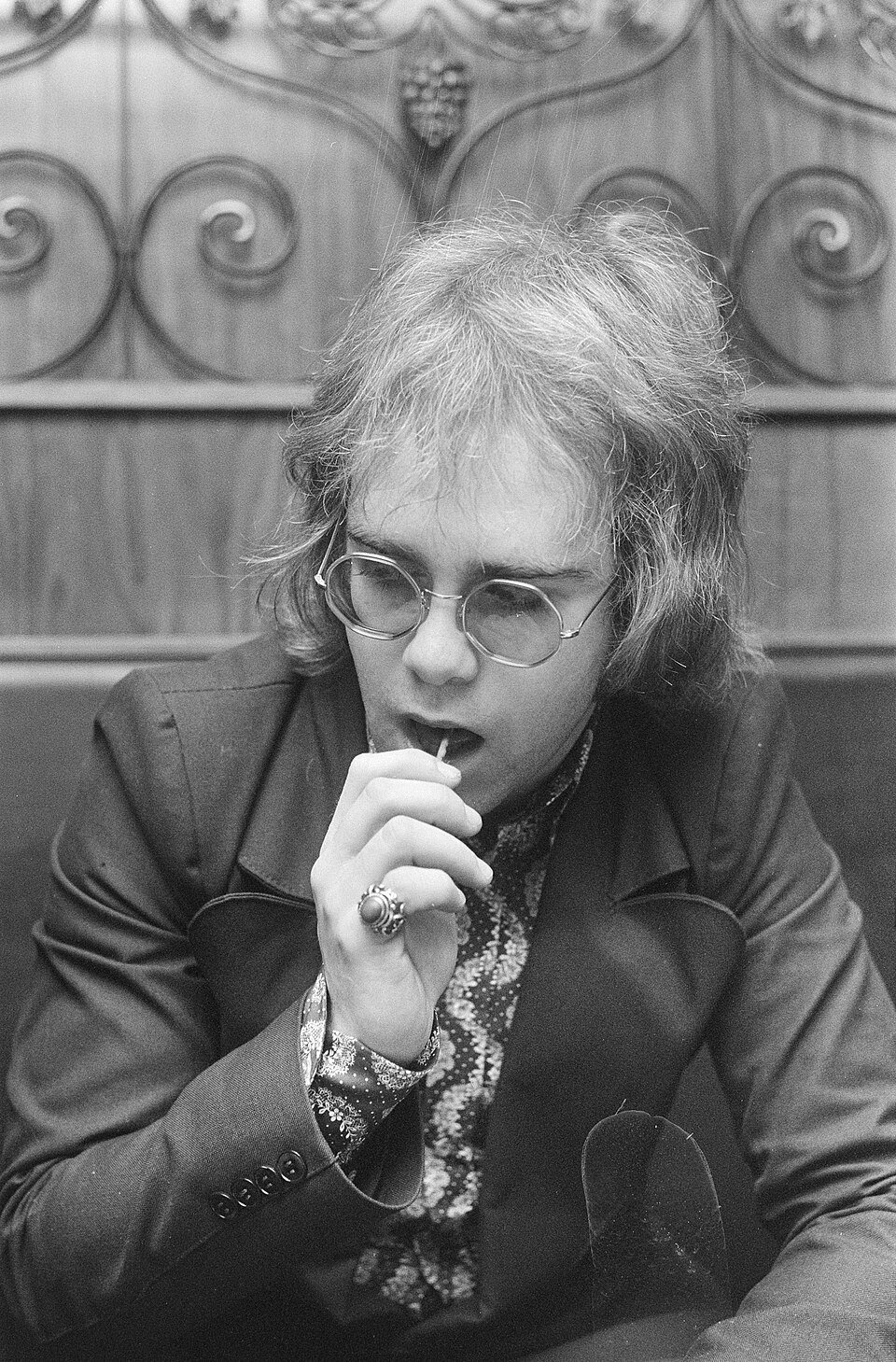
The Full Elton John Money Profile: Net Worth, Age, Husband and Family
Elton in Short: Pinner, Empty Sky and Staying Power
Elton John, born Reginald Kenneth Dwight, has been writing and performing songs for nearly sixty years, and for most of that time he has been among the most successful recording artists in the world. The partnership with the lyricist Bernie Taupin produced a catalogue of songs that has never left the public ear. The live career ran even longer than the recording one, ending only in 2023 with the conclusion of a farewell tour that became the highest-grossing concert tour then recorded.
On the money, two published counters using two different methods reach strikingly similar answers by different routes. Celebrity Net Worth puts his fortune at $650 million. The Sunday Times Rich List 2026 puts it at £480 million, placing him 277th, which converts to roughly $645 million — and records an increase from £475 million in 2025. Forbes publishes no current net-worth figure for him, only past earnings, and that absence is stated here rather than filled in. The two figures that do exist are set out side by side in this profile.
He is 79, retired from touring after more than half a century on the road, and settled in a domestic life he has described, consistently, as the point of all of it.
The Roles That Made Elton: Empty Sky Through The Tour Ends at Stockholm
1969 — Empty Sky
His debut album, Empty Sky, was released in 1969 to little commercial notice. It is now heard as a beginning rather than a statement: the voice and the piano playing were in place, the songs not yet at the standard the partnership would reach within a year.
1970 — Your Song
The self-titled second album in 1970 contained Your Song, the ballad that made his name. A celebrated run of performances in Los Angeles that summer established him in America with remarkable speed, and Tumbleweed Connection followed the same year. In the space of months he had gone from staff songwriter to international performer.
1972 — Honky Château
Honky Château, in 1972, was his first number one album in the United States and produced Rocket Man. It began a run of chart-topping albums that continued without interruption through the middle of the decade, a sequence matched by very few artists in the history of the album chart.
1973 — Goodbye Yellow Brick Road
Goodbye Yellow Brick Road, a double album released in 1973, is generally regarded as the partnership’s masterpiece. It contains Candle in the Wind, Bennie and the Jets, Saturday Night’s Alright for Fighting and the title track. Its sales and its standing have only grown with time, and its title supplied, fifty years later, the name of his farewell tour.
1975 — Captain Fantastic and the Brown Dirt Cowboy
Captain Fantastic and the Brown Dirt Cowboy, in 1975, an autobiographical album about the songwriting years, became the first album to enter the chart in the United States at number one. By this point he was the dominant commercial artist in popular music, with a public image — the glasses, the costumes, the stage spectacle — that made him recognisable anywhere on earth.
1976 — Don’t Go Breaking My Heart
His duet with Kiki Dee, Don’t Go Breaking My Heart, reached number one in 1976, his first UK number one single. Remarkably, for an artist of his album sales, a solo UK number one single did not arrive until 1990, a gap that says more about the singles market at home in that period than about his popularity.
1983 — I’m Still Standing
After a quieter period at the turn of the decade, Too Low for Zero in 1983 restored him, with I’m Still Standing and I Guess That’s Why They Call It the Blues. The first of those has become something close to a personal signature: a song about survival that audiences have taken as the summary of his career.
1985 — Live Aid and the Peer Group
He performed at Live Aid in 1985, in a line-up that amounted to a roll call of the generation of performers who had defined popular music in Britain over the previous twenty years. His standing among those peers — fellow knights of the business among them, and long-standing friends and rivals such as Rod Stewart, whose own career and figures are set out in Rod Stewart’s net worth profile — was that of an equal, and the friendly public rivalry between the two men has run, in jokes and in print, for decades.
1994 — The Lion King
In 1994 he wrote the songs, with the lyricist Tim Rice, for the Disney film The Lion King. Can You Feel the Love Tonight won the Academy Award for best original song, and the film’s music carried his writing to an audience of children and families far beyond his own listeners. The stage musical that followed became one of the most successful theatrical productions in history, and his work for the stage continued with Billy Elliot the Musical in 2005.
1997 — Candle in the Wind 1997
Following the death of Diana, Princess of Wales, he performed a rewritten version of Candle in the Wind at her funeral and released it as a single. It became the best-selling single since chart records began, with proceeds directed to charitable causes.
2018 — Farewell Yellow Brick Road Begins
In 2018 he announced that he would retire from touring after one final tour, so that he could spend more time with his family. The Farewell Yellow Brick Road tour opened that year. It was interrupted by the pandemic and by his own health, and it resumed and extended, becoming a five-year undertaking rather than the shorter farewell originally planned.
2023 — The Tour Ends at Stockholm
The tour closed in Stockholm in July 2023, after 330 shows. Its gross was about $939.1 million. That figure must be labelled precisely: it is a tour gross, the total taken at the box office across 330 performances, before the costs of staging, staff, travel and production are met. It is not personal income and it is not net worth. What it does establish is scale — no touring performer had taken that much at the box office over a single tour at the time it closed. His Glastonbury headline performance in June 2023 was received as a farewell in the full sense.
David Furnish by Elton’s Side, Through Empty Sky and After
Elton John’s husband is David Furnish. The sequence of their legal status is exact and is often compressed in reporting, so it is set out in full: they entered a civil partnership on 21 December 2005, on the first day such partnerships were available in England, and they married on 21 December 2014, nine years later to the day, after marriage became available to them. Civil partnership in 2005 and marriage in 2014 are two distinct events, and neither date should be substituted for the other.
His earlier marriage was to Renate Blauel, whom he married in 1984. That marriage ended in 1988. It belongs to the record of a period of his life that he has since discussed openly and at length, and it is recorded here as documented fact.
He and Furnish have two children. Zachary was born on 25 December 2010 and Elijah was born on 11 January 2013. Both children were born via surrogacy in California, to the same surrogate. Those facts are stated plainly, as they have been stated by the family itself. The children are being raised largely out of public view, and beyond their names and birth dates, which the family has published, this profile records nothing of their private lives.
His parents are Stanley Dwight, who died in 1991, and Sheila, née Harris, who died in 2017. His mother’s death came late in his touring career, in a year when he was still performing around the world, and he continued to speak of her in public as a central figure in his life. The family structure today — a husband, two sons, and a settled base in England — is the one he has repeatedly said he wanted, and it is the reason the touring ended when it did: not exhaustion with music, but a decision about where to spend the remaining years.
Young Elton in Pinner: Family, School and First Work
Reginald Kenneth Dwight was born on 25 March 1947 in Pinner, Middlesex. He was a child of obvious musical gifts, able to pick out tunes on the piano by ear at a very young age, and his ability was recognised and trained formally while he was still a boy. Music was not a hobby that became a career; from childhood it was the centre of his life and the thing at which he was plainly exceptional.
His parents were Stanley Dwight, who died in 1991, and Sheila Dwight, née Harris, who died in 2017. The household in Pinner was a modest one, and his father’s absences on service and the atmosphere of the home have been part of the published account of his childhood for decades. What is not in doubt is the outcome: a boy from a Middlesex suburb who, by his early twenties, had renamed himself and was writing songs that the whole world would sing.
The name came with the professional start. Working as a jobbing songwriter in London in the late 1960s, he was paired by a publisher with Bernie Taupin, a young lyricist from Lincolnshire, and the two began writing together, at first for other artists. The method they settled on — Taupin writing words first, John setting them to music, often at speed and rarely in the same room — has lasted for the whole of their careers. The breakthrough, when it came in 1970, came through his own performance of his own songs, and it came first in America rather than at home.
The Holland Park Purchase and the Rest of the Record
Two methods, two near-identical answers. Celebrity Net Worth estimates $650 million, built up from earnings, catalogue value and assets. The Sunday Times Rich List 2026 gives £480 million and a ranking of 277th, up from £475 million in 2025; converted, that is roughly $645 million. When two counters working independently and by different methods land within a few million of each other, the figure carries more confidence than a single estimate usually does. The small year-on-year rise in the Rich List figure is also informative: this is a fortune that is still growing modestly in retirement from touring, on catalogue and investment returns, rather than one being spent down.
Forbes, it should be recorded, publishes no current net-worth figure for him. It has published earnings figures in past years, which measure income in a given year and are a different thing from wealth. The absence of a Forbes total is not a disagreement; it is a gap, and it is left as a gap here.
The composition is the product of an exceptionally long career at the top of two businesses. Recording and songwriting income runs from 1970 and includes one of the most valuable catalogues in popular music, written with Taupin and performed by himself. Stage and film music added a second income stream from the 1990s. Live income was enormous and sustained: he toured for over fifty years, and his final tour alone took about $939.1 million at the box office — a gross figure, as labelled above, from which the considerable costs of a production of that size had to be paid. Set against the income is a documented history of high spending in the earlier decades, and a later period of careful management and substantial charitable giving. The net position, on both published counts, is about $650 million.
A Holland Park Address for Elton
His principal home is Woodside, at Old Windsor, bought in 1974 and set in about 37 acres; it has been his base for half a century. He also has a home in Holland Park, London; a property at Mont Boron in Nice; a home on the Giudecca in Venice; and property in Los Angeles, including a Beverly Hills purchase in 2012 at a reported $7.2 million and a larger property acquired in 2015. The 2012 figure is a reported purchase price for one property, not a valuation of the portfolio.
The Ferrari Cars in Elton’s Garage
His cars are largely a historical subject. In June 2001 he sold twenty of them at Christie’s in London, a sale that was itself a news event and that marked a deliberate reduction of the collection. The cars documented from his ownership include a 1956 Bentley S1 Continental, a 1973 Rolls-Royce Phantom VI, a 1993 Jaguar XJ220, a Ferrari 365 GTB/4 Daytona, an Aston Martin V8 Vantage and a Maserati Quattroporte. No current inventory of what he owns has been published, and this profile does not present the historical list as a present-day collection: the honest statement is that he owned notable cars, sold a substantial number of them in 2001, and that the present position is not on record.
John Facts: Pinner Beginnings, Empty Sky Peak
| John Facts: Pinner Beginnings, Empty Sky Peak | Details |
|---|---|
| Born | 25 March 1947, Pinner, Middlesex |
| Age | 79 |
| Net Worth | $650 million (Celebrity Net Worth); £480 million (Sunday Times Rich List 2026) — two methods, similar answers |
| Height | 5 ft 7½ in (172 cm) |
| Weight | No reliable published figure exists |
| Husband | David Furnish (civil partnership 21 December 2005; married 21 December 2014) |
| Children | Two: Zachary (b. 25 December 2010) and Elijah (b. 11 January 2013) |
| Parents | Stanley Dwight (d. 1991); Sheila, née Harris (d. 2017) |
| @eltonjohn |
The Standing Elton Holds After The Tour Ends at Stockholm
Elton John’s retirement from touring closed the longest chapter of his career and, by his own account, opened the one he wanted. The music has not stopped — the catalogue continues to earn and the stage productions continue to run — but the road has. Ending on a tour of 330 shows and a Glastonbury farewell is about as complete a conclusion as the business allows.
On the money, the record is unusually tidy. Celebrity Net Worth says $650 million; the Sunday Times Rich List 2026 says £480 million, roughly the same sum reached by a different method, and rising slightly year on year. A boy from Pinner who could play the piano by ear at four years old turned that gift, with one lyricist and six decades of work, into one of the great fortunes of popular music — and, on the published evidence, he is keeping it.