
What Is the Net Worth of Ashton Kutcher? Age, Wife and Family Explained
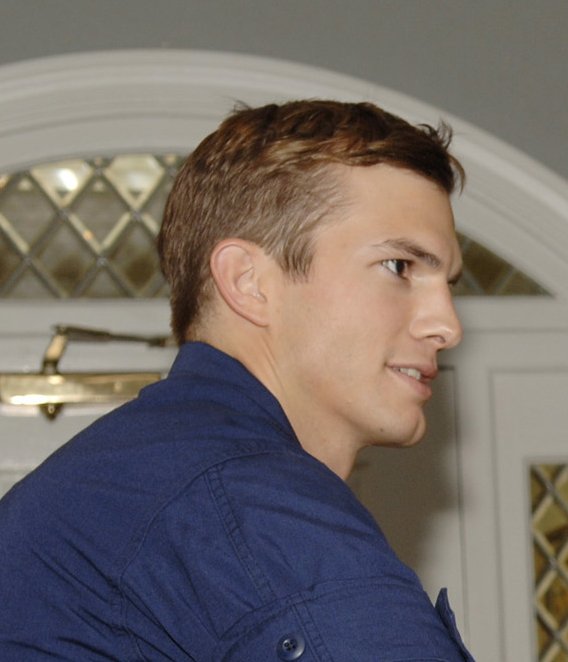
What Is the Net Worth of Ashton Kutcher? Age, Wife and Family Explained
The star from Cedar Rapids, at a glance
Ashton Kutcher, born on 7 February 1978 in Cedar Rapids, Iowa, and now 48 years old, built two careers in sequence and is unusual in having the second one valued, on paper, in this profile the first. The first career is the familiar one: a sitcom star who became one of the best-paid men on television, then a film comedy lead of the 2000s. The second is that of a technology investor whose venture firm, Sound Ventures, holds positions in the two best-known artificial intelligence companies of the present decade — positions whose estimated value has redrawn every published estimate of his wealth.
The figure is stated here at the top, with its disagreement printed beside it. Celebrity Net Worth puts Ashton Kutcher’s net worth at $500 million, a figure confirmed against the tracker’s page on 22 November 2026, with the tracker’s own model updated on 16 November 2026. That is a sharp revision: the same tracker cited $200 million for years, and many round-ups published in 2026 still put him between $200 million and $300 million. Forbes publishes no net-worth total for him at all; its record is earnings only. The fortune section sets out how the $500 million is assembled and why a large part of it is prospective rather than realised.
His present-day position is that of a married father of two who stepped into a senior advisory role at his firm in May 2026 while developing a new deep-technology venture, and whose public work now divides between that business, occasional acting and the profile he keeps on Instagram as @aplusk.
Before fame found Ashton
Ashton Kutcher was born on 7 February 1978 in Cedar Rapids, Iowa, and grew up in the state. His parents are Larry M. Kutcher, who worked in a factory, and Diane Kutcher, née Finnegan, who worked for Procter & Gamble. The household was a working one, and the record of his childhood is not a comfortable one: a close member of his immediate family lived with a serious health condition through those years, and the experience is one Kutcher himself has spoken about as formative — the background, on his own account, to the drive that later made him first a performer and then an investor who works at an intensity his partners have remarked on.
Nothing in the early record pointed at a stage or a studio. He left Iowa with no industry connections, and the break, when it came, came very fast — a new sitcom looking for an unknown face. That combination is the essential shape of the early biography, and it explains a feature of the later career: Kutcher has consistently behaved like someone who regards the break as luck to be compounded, not a status to be enjoyed.
His height is carried in the facts table: 6 ft 2 in, the consensus listing. The height and the comic timing arrived together, and television took both.
What That ’70s Show — The Sitcom Break earned, and what stayed
Celebrity Net Worth’s $500 million, confirmed against the tracker’s page on 22 November 2026 with its model updated on 16 November 2026, is the figure carried here — and it needs more unpacking than most in this series, because the disagreement around it is wide and the tracker’s own reasoning is unusually exposed. For years the same tracker cited $200 million. Many round-ups published in 2026 still run between $200 million and $300 million. Forbes, the other source this series uses, publishes no net-worth total for Kutcher at all. The reader is therefore looking at one tracker’s revised estimate, triple the size of its own earlier figure, and the revision is driven almost entirely by a single item.
The tracker’s allocation, on its own account, runs roughly as follows: about $100 million attributed to the acting career, about $100 million to other venture holdings, and about $300 million assigned to his prospective share of Sound Ventures’ positions in OpenAI and Anthropic. The first two elements are conventional estimates of the kind trackers make for any wealthy performer-investor. The third is different in kind, and this profile flags it in the strongest terms the layout allows: it is prospective. It values, today, a share of fund positions that has not been realised, in companies that have not been sold or listed, on terms that have not been published.
The underlying stakes underline the point. Sound Ventures’ reported holdings of roughly 0.15 per cent of OpenAI and roughly 0.5 per cent of Anthropic, as reported by Bloomberg and Reuters in November 2026, belong to the funds and to the funds’ investors collectively. They are not Kutcher’s personal property. A fund manager’s economics in such positions normally arrive through a carried-interest share — a percentage of the profit, payable if and when the investments are realised at a gain — and Kutcher’s carried-interest share is undisclosed. No published document states what fraction of those fund gains would reach him personally, or when. The $300 million element of the estimate is therefore best read as the tracker’s judgement of what his prospective share might be worth if the positions hold their value and are realised favourably — a judgement, not a measurement.
Against that, the documented earnings are solid and large. A peak television fee of around $700,000 to $800,000 per episode, labelled as earnings; Forbes earnings of around $24 million in the year to June 2013, labelled as earnings; two decades of film fees before that. Earnings of that order, retained and then put to work in early-stage investments that succeeded, comfortably support a fortune in the $200 million region that the older estimates described. The distance between $200 million and $500 million is the distance between realised wealth and paper wealth.
The Beverly Hills property
His best-documented property is a sustainable farmhouse in Beverly Hills, designed with the architect Howard Backen, which has been widely covered for its environmental design as much as for its scale. He also holds a beach property at Carpinteria, on the California coast. Both are recorded here as documented holdings; no verified inventory of his full property position and no reliable total value for it has been published, and none is invented here.
The shape of the fortune, then, is two fortunes of different solidity wearing one number. The first — acting earnings, producing interests and realised venture gains — is the kind of wealth this series usually counts. The second — a prospective carried share in unrealised artificial intelligence positions — may in time prove larger than the first, or smaller, and neither Bloomberg’s nor Reuters’ reporting, nor the tracker’s model, can settle which. The $500 million is printed because it is the named source’s current figure; the explanation in this profile is printed because the figure cannot responsibly stand alone.
The Mila Kunis years at home
Ashton Kutcher’s wife is Mila Kunis. They married on 4 July 2015, and the marriage is current on the verified record: the couple remain married in 2026. The two had first worked together as young performers on the same long-running sitcom, a professional connection that long predated the marriage, and the family section and the career section of this profile therefore cross at exactly that point.
He has two children with Kunis: a daughter, Wyatt Isabelle, born on 1 October 2014, and a son, Dimitri Portwood, born on 30 November 2016. Both births predate and postdate the wedding by a matter of months either way, and the record carried here is confined to their names and birth dates, as published.
His first marriage belongs in this section as history. He married Demi Moore in September 2005; the couple separated in 2011 and the divorce was finalised in 2013. That marriage, between a performer in his twenties and one of the most famous women in the industry, drew intense coverage at the time, and its ending was correspondingly public. It is recorded here in those plain terms and no further.
His parents, Larry M. Kutcher and Diane, née Finnegan, are covered in this profile and carried in the facts table in the standard form. The family picture that emerges from the verified record is a settled one: a marriage of eleven years, two children, and a working life that has moved steadily away from the soundstage and towards the investment meeting.
The That ’70s Show — The Sitcom Break chapter
That ’70s Show — The Sitcom Break
The break was That ’70s Show, the long-running sitcom in which Kutcher played the handsome fool of a group of teenagers. It made him famous in his early twenties and gave him the first of his two defining professional relationships: his fellow cast member Mila Kunis. The personal sequel to that casting is recorded in the family section in this profile; the professional record is set out in Mila Kunis’s net worth profile, and the two profiles belong together, because the sitcom is where both the marriage and two durable careers began.
2000 — The Film Comedies
Film work followed the television fame quickly. In 2000 he took a leading role in a comedy opposite Seann William Scott, the first of a run of broad film comedies through the decade that made him a familiar face to cinema audiences well beyond the sitcom’s following. The film roles of that period were not critically decorated, and this profile does not pretend otherwise; what they did was convert a television name into a bankable film lead, at fees that rose with each picture, and establish the public persona — cheerful, slightly hapless, physically game — that his later television peak would monetise at full value.
The Producer and Presenter Years
Alongside the acting, Kutcher built a second strand early: producing and presenting television formats of his own, work that put him on the ownership side of programmes rather than only the payroll side. The distinction matters to the fortune section: a performer who also owns formats accumulates assets, not only fees. The habit of asking for a share rather than a salary, visible in his television work in the 2000s, is the direct ancestor of the venture career that followed.
2011 — The Peak Television Fee
His return to a network sitcom in 2011, stepping into one of the most-watched comedies on television, made him for a period the best-paid actor in the medium. His peak fee is documented at around $700,000 to $800,000 per episode. That figure is earnings — a rate of pay at the top of his acting career, labelled as earnings here and nowhere treated as wealth — but its scale explains the first solid layer of the fortune: Forbes recorded earnings of around $24 million in the year to June 2013 alone, again earnings, in a single year near that peak.
The Venture Turn
The second career began in parallel and then overtook the first. Kutcher co-founded the venture firm Sound Ventures and became one of the most visible early backers of consumer technology companies, investing at stages when the companies were small and their eventual values unknowable. The firm’s positions, as reported by Bloomberg and Reuters in November 2026, include stakes of roughly 0.15 per cent of OpenAI and roughly 0.5 per cent of Anthropic — stakes that belong to the funds and their investors, a distinction the fortune section insists on, because it is where the opening part of this profile estimate of his wealth becomes contestable.
2026 — The Advisory Role
In May 2026 he moved into a senior advisory role at Sound Ventures while developing a new deep-technology firm, a step reported by Celebrity Net Worth in its November 2026 coverage of the business. Acting has not been formally abandoned, but the centre of gravity of the working life is no longer in doubt: the investor is now the primary occupation, and the performer the occasional one. That is the position the opening part of this profile described, and the facts table in this profile records it in tabular form.
The Cedar Rapids beginning: the facts
| The Cedar Rapids beginning: the facts | Details |
|---|---|
| Born | 7 February 1978, Cedar Rapids, Iowa |
| Age | 48 |
| Net Worth | $500 million — Celebrity Net Worth (confirmed 22 November 2026; model updated 16 November 2026); the same tracker long cited $200 million |
| Height | 6 ft 2 in |
| Weight | No reliable published figure exists |
| Wife | Mila Kunis, married 4 July 2015 |
| Children | Two: Wyatt Isabelle (b. 1 October 2014) and Dimitri Portwood (b. 30 November 2016) |
| Parents | Larry M. Kutcher; Diane, née Finnegan |
| @aplusk |
Where the story leaves off
Ashton Kutcher’s present-day position, on the verified record, is that of a 48-year-old investor and occasional performer, married to Mila Kunis since 4 July 2015, a father of two, who in May 2026 took a senior advisory role at the venture firm he co-founded while developing a new deep-technology business. His fortune is carried here at Celebrity Net Worth’s $500 million, with the same tracker’s long-standing $200 million, the $200 million to $300 million range in 2026 round-ups, and the absence of any Forbes total all printed beside it.
The assessment from this desk is that he is the clearest case in this batch of the modern celebrity fortune changing its nature mid-career. The sitcom made the name; the name opened the doors of the venture world; and the venture world has now produced an estimate of wealth that dwarfs anything the acting could have paid — while resting, in its largest part, on value that exists on paper and may never be tested by a sale. London readers who follow the money should watch the funds, not the films: that is where this fortune will be decided.