
What Is the Net Worth of Kenneth Branagh? Age, Wife and Family Explained
What Is the Net Worth of Kenneth Branagh? Age, Wife and Family Explained
The British actor, from Belfast to fame
Kenneth Branagh is an actor and director whose name has been attached to British theatre and cinema for nearly four decades. He became famous in the late 1980s as a young classical actor who founded his own company, then carried Shakespeare to a wide cinema audience with a run of adaptations that he directed and starred in himself. The work that followed ranged across television drama, studio productions and personal projects drawn from his own Belfast upbringing, and it has never settled into a single pattern for long.
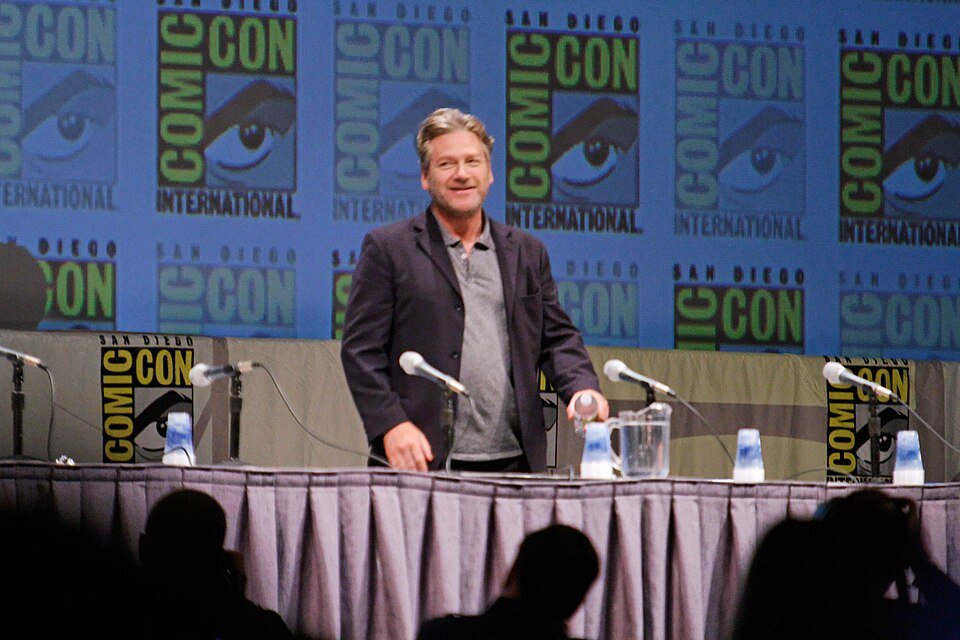
His present position is that of a senior figure still working at full pace. In 2026 he returned to the Royal Shakespeare Company to play Prospero in The Tempest and Lopakhin in The Cherry Orchard, and he was photographed at the Toronto International Film Festival in the same year in connection with his continuing cinema work. Celebrity Net Worth puts his fortune at $60 million, attributed here at the outset as it will be throughout this profile. No Forbes figure and no Sunday Times figure for him exists, and that absence is part of the record rather than a gap to be filled by guesswork.
The Belfast start, in one list
| The Belfast start, in one list | Details |
|---|---|
| Born | 10 December 1960, Belfast |
| Age | 65 |
| Net Worth | $60 million — Celebrity Net Worth |
| Height | 5 ft 10 in |
| Weight | No reliable published figure exists |
| Wife | Lindsay Brunnock (married 2003) |
| Children | None |
| Parents | William Branagh and Frances Branagh |
| Nationality | British (Northern Irish) |
| No official account and no official social-media page |
Acting for other directors and the rise that followed
1982 to 1988 — A company of his own
After leaving the Royal Academy of Dramatic Art, Branagh joined the Royal Shakespeare Company, where his performances included Henry V. The work confirmed his standing as a leading classical actor of his generation, but he grew frustrated with aspects of large-company theatre and chose a different route. In 1987 he co-founded the Renaissance Theatre Company, set up to present Shakespeare and other classics in a more direct style. The company toured, staged productions that reached audiences beyond the usual theatre public, and gave him practical experience of producing and directing alongside acting. Television work ran in parallel, including Fortunes of War and A Month in the Country, building the screen reputation that prepared his move into directing for cinema.
1989 to 1996 — Shakespeare on screen
The decisive breakthrough came in 1989 with Henry V, which he directed and in which he played the title role. Its muddy, unsentimental battle scenes and its clear delivery of the text established him internationally, and it began the run of Shakespeare adaptations that defined the following decade. Much Ado About Nothing followed in 1993, shot in Tuscany with an ensemble cast led by Branagh and Emma Thompson, whose own career is traced in Emma Thompson’s net worth profile. Hamlet came in 1996, a full-text version on a grand scale that remains among the most ambitious Shakespeare productions made for cinema. The same period included Mary Shelley’s Frankenstein in 1994, which he directed and starred in, alongside acting work for other directors. The pace was intense and the critical response varied, but the body of work was substantial, and those productions still form the core of any account of his screen career.
1997 to 2006 — Acting for other directors
In the late 1990s and early 2000s Branagh acted more often for other directors and widened his range considerably. For many younger viewers his most recognisable role of the period came in Harry Potter and the Chamber of Secrets in 2002, where he played Gilderoy Lockhart, the vain and fraudulent Defence Against the Dark Arts teacher, in a performance that was deliberately comic and self-important. Television brought two notable historical roles, as Reinhard Heydrich in Conspiracy and as Franklin D. Roosevelt in Warm Springs, each showing his ability in parts far removed from the classical repertoire. The period was less dominated by his own directing than the decade before it, but it consolidated his reputation as a versatile actor able to move between leading and supporting parts without losing authority on screen.
2007 to 2016 — Wallander and Thor
From 2008 he played Kurt Wallander in the British television series Wallander, a sombre, measured performance that ran for several series and brought him a new television audience. The role suited the register he had developed with age: quiet, watchful and largely internal, played in Swedish locations with long stretches of silence. It also demonstrated the durability of his position in British television, where a classical stage reputation does not automatically convert into a long-running popular series. Alongside it he kept up a steady line of supporting screen roles, the kind of casting that depends on an audience recognising a performer at once and trusting the weight he brings to a scene. In 2011 he directed Thor, a large-scale Marvel production that showed the Shakespearean register could be put to work inside a studio franchise, and he continued to balance directing commissions with acting roles across the decade. The combination of a long-running television character and a major studio credit kept him visible to quite different audiences at the same time, a pattern that has repeated throughout his career.
2017 to 2026 — Poirot, Belfast and the stage return
His trilogy of Agatha Christie adaptations, in which he directed and played Hercule Poirot, gave him a recurring screen character of his own making. Belfast, which he wrote and directed, drew directly on his own upbringing and stands as the most personal work of his career. He has also taken a leading role in the Paramount+ drama Laird, and in 2026 he returned to the Royal Shakespeare Company as Prospero in The Tempest and as Lopakhin in The Cherry Orchard. Photographed at the Toronto International Film Festival in 2026, he remains an actor and director in active work on stage and screen alike, nearly forty years after the company-founding decision that set the pattern.
Home with Lindsay Brunnock and the children
Branagh’s wife is Lindsay Brunnock, whom he married in 2003 in a low-key ceremony in New York. The two met during the making of Shackleton, the television drama in which he played the explorer Ernest Shackleton, and the marriage has been kept deliberately private in the years since. Brunnock’s own background is in the art department side of production, and the couple’s public appearances together have generally been tied to his premieres and theatre openings rather than to any separate public profile of her own.
His first marriage was to the actor Emma Thompson. They married in 1989, at the moment when both careers were rising quickly, and the marriage ended in divorce in 1995. Between 1994 and 1999 he was in a relationship with the actor Helena Bonham Carter, a matter of public record from that period. Those earlier chapters are recorded here as fact and without embellishment; the settled position for more than two decades has been his marriage to Brunnock.
Branagh has no children. The point is sometimes treated as a gap in profiles of him, but he has answered it directly himself. In 2016 he said of the subject: “It just never happened.” The answer is quoted here because it is his own on-record position, and it closes the question more plainly than any speculation could. His parents are covered in this profile: his father William, a plumber and joiner, and his mother Frances. The working household in Belfast, and the move to Reading that followed, remain the family facts that frame everything else in this profile.
The hometown years
Kenneth Charles Branagh was born on 10 December 1960 in Belfast. He was born to William Branagh, who worked as a plumber and joiner, and Frances Branagh, née Harper. The family home was in a working-class district of the city, and his earliest years were spent in Belfast at the start of a difficult period in its history. That background stayed with him, and it later supplied the material for the most personal work of his career.
In 1969, when he was eight, the family moved from Belfast to Reading in Berkshire. He attended Whiteknights Primary School and then Meadway School in Reading. He has described the adjustment as considerable for a boy with a Belfast accent, and he worked at softening that accent at school while keeping a strong sense of where he had come from. Belfast by birth and Reading by upbringing is the combination he has returned to in interviews throughout his adult life, and it explains a good deal about the practical, unsentimental way he talks about acting as a trade.
His interest in performance developed through school productions and youth theatre in Reading, where teachers recognised an ability with language and text. Instead of a university route, he trained at the Royal Academy of Dramatic Art in London, graduating in 1982 with the Bancroft Gold Medal. The training grounded him in verse speaking and stage technique, and both remained central to everything he later staged or directed. By the time he left, he was equipped for the classical repertoire that would make his name, and he had a clear view of the kind of direct, energetic production he wanted to be part of.
The money after Acting for other directors
Celebrity Net Worth puts Kenneth Branagh’s fortune at $60 million, and that attributed figure is the one used throughout this profile. It is a single-source estimate, and it should be read as such. No Forbes figure for him exists, and no Sunday Times figure for him exists, so there is no second published total against which the Celebrity Net Worth number can be checked. Where other profiles in this series can print a disagreement in full, this one can only record that the disagreement does not exist because the other sources have not published a figure at all.
It is also worth recording what the figure is not built on. There is no published account of a business sale, a catalogue transaction or a single very large settlement attached to his name, of the kind that explains the opening part of this profile totals elsewhere in this series. His fortune, on the available record, is the accumulated product of fees earned over a long working life rather than of one transaction, and the estimate should be understood in those terms: steady, senior-level earnings in three branches of the same trade, theatre, television and cinema, sustained over nearly forty years.
The components behind an estimate of this kind are not hard to identify, even if their individual values are not published. Four decades of acting fees across theatre, television and cinema sit behind it, together with directing fees that include a Marvel production and a trilogy of Christie adaptations, and the earnings attached to work he originated himself, from the Renaissance Theatre Company onwards through to Belfast. None of those elements carries a reliable public price, and none is converted here into a sum of its own.
One figure does carry a published source, and it is kept in its proper place. His salary for the Paramount+ drama Laird has been reported at $1.4 million per episode, a figure published by Variety and carried by Celebrity Net Worth. That is a salary: a rate of pay for a specific engagement. It is evidence of his current earning level at the top of television, and it is not, on its own, a net-worth figure. Earnings of that size, repeated across a long career and set against the costs and taxes that any working life carries, are consistent with the Celebrity Net Worth estimate without proving it, and this profile treats the two numbers as different kinds of fact.
The life, summed up at the end — the Belfast story
The settled record is of a Belfast-born, Reading-raised actor and director who built his own company at twenty-six, carried Shakespeare to a mass cinema audience, and then spent three further decades moving between stage, television and studio work without settling into repetition. The 2026 return to the Royal Shakespeare Company, as Prospero and as Lopakhin, is a fitting current entry: the classical repertoire where he started, taken on again at sixty-five.
On the money, the position is simple and is stated plainly. Celebrity Net Worth attributes $60 million to him; Forbes and the Sunday Times publish no figure; and the one hard number in circulation, the reported $1.4 million per episode for Laird, is a salary and nothing more. That is the whole of the reliable record, and this profile leaves it exactly there.