
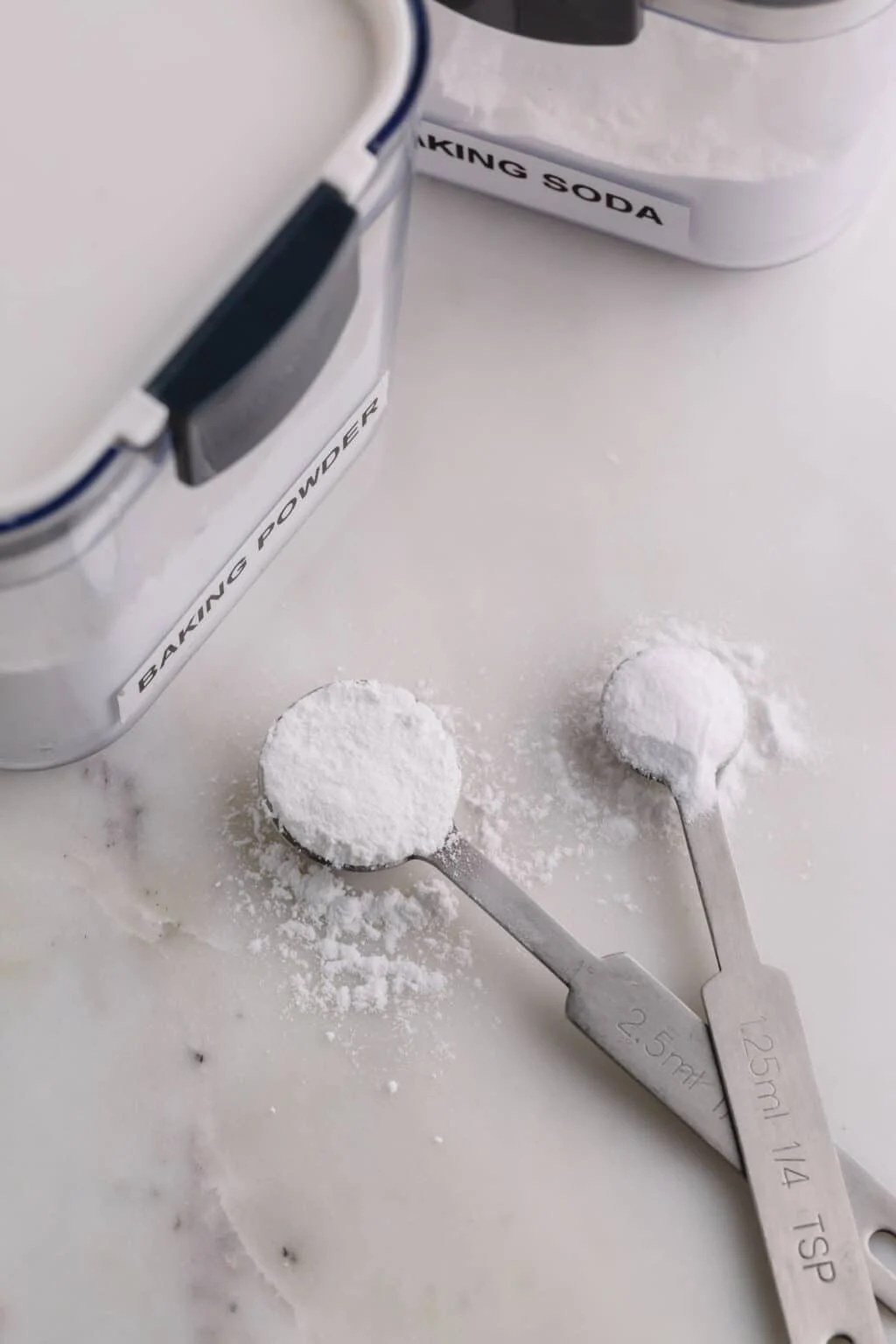
Baking Soda vs Baking Powder: What’s the Difference and When to Use Each
They sit next to each other in the baking aisle, they both make cakes rise, and their names are confusingly similar — no wonder so many home bakers mix them up. But baking soda and baking powder are chemically different, and using the wrong one (or the wrong amount) is the difference between a beautiful sponge and a flat, soapy-tasting disaster. Here’s the difference between baking soda and baking powder, explained properly.
The short answer
Baking soda (bicarbonate of soda in the UK) is pure sodium bicarbonate — a base that needs an acid to activate it. Baking powder is baking soda plus a powdered acid plus a starch filler, so it activates with just liquid and heat. That’s the whole difference in one paragraph — but the details matter when you’re standing in your kitchen mid-recipe.
How each one actually works
Baking soda (bicarbonate of soda)
Baking soda is a single ingredient: sodium bicarbonate, an alkaline powder. The moment it meets moisture and an acid — lemon juice, vinegar, buttermilk, yoghurt, honey, cocoa powder, brown sugar — it reacts and releases carbon dioxide bubbles. Those bubbles expand in the oven’s heat and lift your batter.
The catch: the reaction starts immediately when liquid hits it. So a batter leavened only with baking soda needs to get into the oven fast, or the bubbles escape and your cake falls flat. This is also why recipes with baking soda often taste slightly soapy or metallic if you use too much — unreacted alkaline residue. The acid in the recipe is there to neutralise it, which is why the ratio matters.
Baking powder
Baking powder is baking soda with the acid built in, plus a little cornstarch to keep it stable in the tub. Most baking powder sold in the UK is “double-acting,” which means it reacts twice: once when it gets wet, and again when it hits the heat of the oven. That second reaction is forgiving — it gives you time to faff about with piping bags without the rise dying on you.
Because the acid is pre-measured inside, baking powder works in recipes without any acidic ingredients — plain milk, plain flour, sugar. It’s the more foolproof option, which is why most modern cake recipes call for it.
Difference between baking soda and baking powder: side by side
- Composition: Baking soda = pure sodium bicarbonate. Baking powder = sodium bicarbonate + acid + starch.
- Activation: Baking soda needs an external acid. Baking powder just needs liquid (and heat for the second kick).
- Strength: Baking soda is roughly 3-4 times stronger than baking powder, teaspoon for teaspoon.
- Timing: Baking soda reacts immediately — bake straight away. Double-acting baking powder gives you a grace period.
- Taste risk: Too much baking soda = soapy, metallic taste. Too much baking powder = slightly bitter, but more forgiving.
Can you substitute one for the other?
Sometimes — but not blindly. Here’s the honest guide:
Replacing baking soda with baking powder: Use roughly 3 teaspoons of baking powder for every 1 teaspoon of baking soda. It’ll work, though the flavour may be very slightly different and the texture a touch less tender. This is the safer direction.
Replacing baking powder with baking soda: Trickier. You need to add an acid the recipe may not have — for every teaspoon of baking powder, use ¼ teaspoon of baking soda plus ½ teaspoon of cream of tartar (which is the acid). Without the added acid, you’ll get a soapy taste and a poor rise. Honestly? Just buy the baking powder. A tub costs about £1.50 and lasts ages.
The BBC Good Food guide to baking powder vs bicarbonate of soda has a handy reference if you want a second opinion mid-bake.
Why do some recipes use both?
You’ll see this in recipes for things like buttermilk pancakes, chocolate cake, or gingerbread — and it’s deliberate, not a mistake. The baking soda neutralises the recipe’s acid (say, the buttermilk or cocoa) and gives an initial lift, while the baking powder provides extra, reliable rising power. The two together give a better rise and a more balanced flavour than either alone. If a recipe lists both, don’t “simplify” it by using just one — the balance is the point.
How to tell if yours is still active
Both lose their punch over time, especially once opened. Baking powder typically lasts 6-12 months; baking soda a bit longer but it absorbs odours (which is also why people put an open box in the fridge — though that’s a separate use). Test them:
- Baking powder test: Drop ½ teaspoon into hot water. It should fizz vigorously. Weak fizz = replace it.
- Baking soda test: Drop ½ teaspoon into vinegar or lemon juice. Same deal — vigorous fizzing means it’s alive.
Store both in airtight containers in a cool, dry cupboard — not above the cooker where steam gets in. And date the tub when you open it; you’ll thank yourself later. Dead raising agents are the number one culprit when bakes refuse to rise — and once you’ve mastered your leavening, you can turn your attention to the bigger questions, like whether afternoon tea is actually worth the money in London.
Of course, chemistry is only half the battle in the kitchen. Plenty of bakes rise beautifully and still disappoint for other reasons — which is why it’s worth learning how to make restaurant-style curry at home too, so your savoury cooking is as reliable as your baking.
Which should you buy?
If you bake regularly, keep both — they’re cheap and they do different jobs. If you only bake occasionally and want one tub, buy baking powder. It’s the more versatile, forgiving option for standard cakes, scones and muffins. Just remember it won’t rescue a recipe that specifically needs baking soda’s reaction with an acid (like a classic buttermilk soda bread) — for those, there’s no substitute.
The takeaway
Baking soda is the pure, powerful base that needs an acid partner; baking powder is the all-in-one that just needs liquid. Use three times as much powder to replace soda, add cream of tartar to go the other way, and always check your tubs are still fizzy before you start. Get this right and your bakes will rise reliably every single time.