
How Much Does a Gardener Charge Per Hour in the UK? (2026 Rates)
How Much Does a Gardener Charge Per Hour in the UK? (2026 Rates)
Whether it’s a one-off jungle clearance or regular maintenance, gardener pricing is opaque — quotes vary wildly and “it depends” is the standard answer. Here’s how much a gardener charges per hour in the UK and how to get fair value.
Typical hourly rates
- General gardener (maintenance): £20–£35/hour — mowing, weeding, pruning, tidying
- Experienced / RHS-qualified: £30–£50/hour — planting schemes, skilled pruning, garden advice
- London & South East: £30–£55/hour — the capital premium applies to gardens too
- Landscaper (hard landscaping): £200–£350/day — patios, fencing, turfing (different trade, different rates)
- Tree surgeon: £300–£600/day per team — specialist work, specialist prices
Most gardeners have a minimum charge (usually 1–2 hours, £40–£70) — calling someone out to mow a tiny lawn for 20 minutes still costs the minimum.
Common jobs: fixed-price guide
- Lawn mowing (average garden): £25–£45 per visit
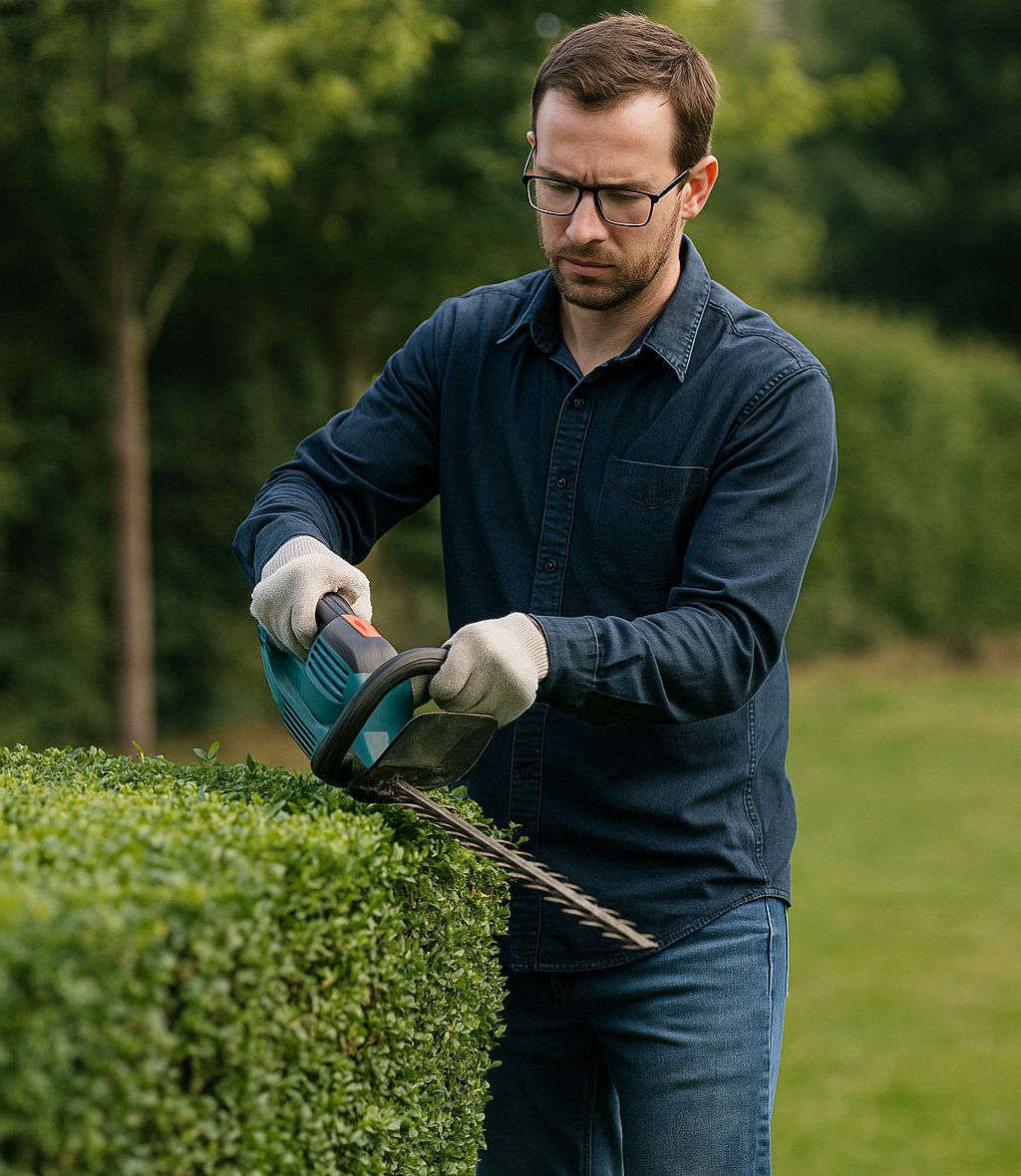
- Hedge trimming (per side, average hedge): £40–£80
- Full garden tidy (half day): £80–£150
- Jungle clearance (full day): £200–£350
- Regular maintenance (fortnightly, average garden): £50–£100/month
- Turfing (per sqm, supplied and laid): £12–£20/sqm
What affects the price?
- Location: London rates can be double rural Wales
- Garden condition: a neglected garden takes 3x longer than a maintained one — first visits cost more
- Waste removal: green waste disposal adds £30–£80 per load (or hire a skip: £150–£250). Clarify who’s removing waste before work starts.
- Equipment: gardeners bring their own tools; if they need to hire specialist equipment (stump grinder, chipper), that’s extra
- Qualifications: RHS-trained gardeners charge more and are worth it for planting design and skilled pruning
Finding a good gardener
- Ask neighbours — the best gardeners work by word of mouth and have waiting lists (a good sign).
- Check Checkatrade or local Facebook groups — look for photos of actual work.
- Walk them round the garden before agreeing anything — a good gardener asks questions about what you want.
- Get the scope in writing: what’s included, how often, waste removal, and what happens in winter (many go monthly or pause).
- Trial period: start with a one-off or a month before committing to a regular slot.
Red flags
- Knocking on doors offering “cheap” tree work — the classic cowboy opener
- No insurance (ask — public liability is essential if they’re using power tools on your property)
- Cash-only, no written agreement
- Quoting without seeing the garden
- Promising to “take the waste away” with no mention of where (fly-tipping risk — you can be liable)
Money-saving tips
- Regular maintenance beats rescue missions — a fortnightly £40 visit beats a £400 annual jungle clearance.
- Do the easy stuff yourself (mowing, weeding) and hire for skilled work (pruning, planting).
- Bundle with neighbours — some gardeners discount for doing two adjacent gardens in one visit.
- Winter is cheaper — book major work (clearance, turfing, planting) November–February when gardeners are quieter.
- Compost green waste yourself if you have space — saves disposal fees.
The bottom line
Budget £25–£40/hour for a good general gardener (£35–£55 in London), expect a minimum charge, and always clarify waste removal upfront. The cheapest gardener is rarely the best value — a skilled one does in two hours what an unskilled one does in four, and your plants survive the experience. Start with a trial, get the arrangement in writing, and maintain regularly rather than rescuing annually.
Regular maintenance plans: what good looks like
The best value in gardening is a regular slot — fortnightly or monthly — with the same gardener. What a good maintenance plan includes: lawn mowing (fortnightly March–October), weeding (borders, paths, patio), hedge trimming (1–2x yearly, timed right — not during bird nesting season, March–August), pruning (roses, shrubs, perennials — seasonal), leaf clearance (autumn), general tidying. Typical cost: £60–£120/month for an average garden on a fortnightly visit.
What to agree upfront: visit frequency (and what happens in winter — many drop to monthly), exactly what’s included vs extra (hedge cutting often priced separately), waste removal (included or extra?), and notice period (a month is standard). Red flag: gardeners who want paying for 12 months upfront — monthly in arrears is the norm. A good regular gardener becomes invaluable: they spot problems early (disease, pests, drainage), their work compounds over seasons, and your garden improves year on year rather than lurching between jungle and clearance.
Gardener FAQs
Should I tip my gardener? Not expected, but appreciated — a Christmas bonus (£20–£50) for regular gardeners is the lovely norm. Tea and biscuits on visit days cost nothing and buy enormous goodwill. Regular, reliable payment (on time, every time) matters more than tips.
Do gardeners work in winter? Reduced hours — many go to monthly visits or pause December–January. Winter is actually ideal for hard pruning, clearance, planting bare-root and planning — book winter work for better availability and often better rates. Don’t expect mowing in January.
What’s the difference between a gardener and a landscaper? Gardeners maintain and plant (£20–£50/hour) — the ongoing care. Landscapers build (£200–£350/day) — patios, walls, fencing, turfing, drainage. Different skills, different tools, different prices. For design, add a garden designer (£500–£2,000 for a design) — worth it for significant projects; a designer + landscaper + gardener is the full professional team.
Can I get a gardener through a care scheme? Yes — many councils run garden maintenance schemes for elderly/disabled residents (subsidised or free basic maintenance). Charities like Age UK offer handyperson/gardening services. Ask your council’s adult social care team — these schemes are under-publicised and genuinely helpful.
Do I need to provide tools? No — professional gardeners bring their own (mower, strimmer, hedge trimmer, hand tools). If they ask to use your mower, they’re a handyman, not a gardener — price accordingly. What you should provide: access to water, electricity (for charging), and somewhere to put green waste.
When to hire vs when to DIY (the honest breakdown)
Not every garden job needs a professional. DIY confidently: mowing, weeding, deadheading, basic hedge trimming (with sharp tools), leaf clearance, mulching, planting bedding. Hire for: tree work (anything above head height or near buildings/power lines — tree surgeons exist for good reason), large hedge reductions (tall hedges need platforms and expertise), pest/disease diagnosis (a good gardener spots box blight vs nutrient deficiency instantly), planting design (a designer’s eye saves years of expensive mistakes), and anything with machinery you’re not trained on (chippers, stump grinders, chainsaws).
The hybrid approach (best value for most people): DIY the routine (mow, weed — 2 hours a fortnight), hire quarterly for the skilled seasonal work (spring prune, summer hedge cut, autumn tidy, winter structural prune — £80–£150 per visit). You stay connected to your garden, the skilled work gets done properly, and the annual cost (£400–£700) beats both full DIY burnout and full-service maintenance (£1,200–£2,400/year). Learn the basics: a RHS pruning course (£50–£100, one day) pays for itself the first time you don’t butcher the roses.
Related reading
DIY the easy stuff: the best lawn feed for UK grass and building a raised bed for under £50.