
How Often Should I Get My Eyes Tested in the UK?
How Often Should I Get My Eyes Tested in the UK?
Most of us only think about eye tests when our vision noticeably worsens — squinting at road signs, holding menus at arm’s length. But eye tests check far more than whether you need glasses: they can spot glaucoma, macular degeneration, cataracts, and even signs of diabetes and high blood pressure, often before you notice any symptoms. I learned this when a routine test caught early signs of high eye pressure I’d had no idea about. If “how often should I get my eyes tested in the uk” is the question you’ve been asking, here’s the straight answer — practical, honest, and based on what actually works.
So how often should you actually go? The answer depends on your age and risk factors, and a surprising number of people are entitled to free NHS tests without realising it. Here’s the full picture.
The official guidance by age
The NHS and the College of Optometrists recommend: under 16s — every year (children’s vision changes fast, and undetected problems affect learning); ages 16 to 60 — every two years; over 60 — every year, since the risk of glaucoma, cataracts, and macular degeneration climbs steeply. These are minimums for people with no symptoms or risk factors.
You’ll need more frequent tests if your optometrist says so — and follow their advice over any general guidance. People with diabetes should have annual diabetic eye screening (a separate NHS programme with retinal photography) plus regular optometrist visits. If you have a family history of glaucoma, annual tests from age 40 are wise. Contact lens wearers need yearly check-ups regardless of age, since lenses affect corneal health.
Between tests, pay attention to changes: squinting, headaches after screen time, difficulty driving at night, or one eye noticeably worse than the other all warrant an earlier appointment. Don’t wait for your “due date” if something changes — that’s what the appointments are for.
Who gets free NHS eye tests?
More people qualify than claim them. You’re entitled to a free NHS sight test if you’re: under 16, or under 19 in full-time education; aged 60 or over; diagnosed with diabetes or glaucoma; considered at risk of glaucoma (family history, as advised by an ophthalmologist); registered blind or partially sighted; eligible for certain benefits (Income Support, income-based JSA/ESA, Pension Credit Guarantee Credit, Universal Credit meeting criteria); or entitled to an NHS tax credit exemption certificate.
You may also get help with glasses costs via NHS optical vouchers — worth asking about if you’re on a low income. Scotland is the standout: NHS eye tests are free for all Scottish residents, a policy England hasn’t matched. If you’re in England and don’t qualify, private tests typically cost £20 to £35 at high-street opticians (Specsavers, Boots, Vision Express), and many run regular “free test” promotions — though these usually assume you’ll buy glasses there.
What actually happens in an eye test
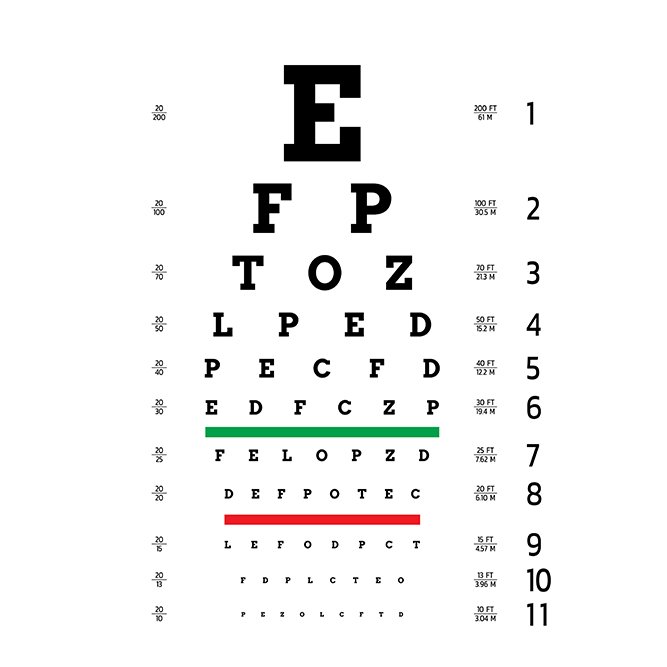
If you’ve been putting it off through vague dread, here’s the reality: it’s painless and takes 20 to 30 minutes. The optometrist checks your visual acuity (the letter chart), refraction (the “better with 1 or 2?” lens test that determines your prescription), eye muscle balance, and peripheral vision. Then comes the health check: examining the retina and optic nerve with a bright light (slightly dazzling, not painful), measuring eye pressure with a puff of air or a gentle probe (the glaucoma check), and assessing the front of the eye.
Many opticians now offer retinal photography or OCT scans (a detailed 3D scan of the retina) for £10 to £25 extra. OCT in particular can detect glaucoma and macular changes years earlier than standard examination — I’d consider it good value every few years, especially over 40. None of it hurts; the worst part is choosing frames afterwards.
Your prescription is yours: the optician must give you a copy, and you can take it anywhere — online glasses retailers will make specs from it far cheaper than the high street. Which brings us to value: for affordable prescription sunglasses and whether you need reading glasses, we’ve covered those separately.
Signs you need a test sooner than scheduled
Book promptly — don’t wait — if you experience: sudden vision loss or blurring in one or both eyes; new double vision; flashes of light, new floaters, or a “curtain” over part of your vision (possible retinal detachment — this is urgent, go to A&E or an eye casualty); severe eye pain or redness; or a recent eye injury. These are same-day or emergency situations, not routine bookings.
Less urgent but worth an earlier appointment: increasing difficulty with night driving, frequent headaches, words “swimming” on the page, or needing brighter light to read than you used to. Gradual changes are easy to normalise — “I’m just tired” — but they’re exactly what tests are for. And if you work at screens all day, the 20-20-20 rule (every 20 minutes, look at something 20 feet away for 20 seconds) genuinely reduces eye strain between tests.
Children’s eye tests: what parents should know
Children’s eye tests are free on the NHS up to age 16 (19 in full-time education), yet undetected vision problems are surprisingly common — a child who can’t see the board properly doesn’t know their vision is abnormal; they assume everyone sees that way. Warning signs: sitting very close to screens, squinting, rubbing eyes frequently, headaches after school, avoiding reading, or a noticeable turn in one eye.
The tests are adapted for age — no reading required for young children; optometrists use pictures, shapes, and retinoscopy (shining a light to observe reflections). Lazy eye (amblyopia) is the big thing they screen for: if one eye is weaker, patching or treatment before age 7–8 can correct it, but after that window the vision loss is largely permanent. This is why the early tests matter so much — it’s a genuinely time-critical condition.
School vision screening exists but is patchy across the UK and not a substitute for proper optometrist tests. If there’s any family history of squint, lazy eye, or strong prescriptions, mention it — your child may need tests more often than annually. And children’s glasses are free on the NHS with optical vouchers covering a decent range of frames; don’t let cost stop you. A child struggling at school because they can’t see properly is a tragedy that’s entirely preventable.
How Often Should I Get My Eyes Tested in the UK: The Short Answer
Every two years under 60, annually over 60 and for children — check if you qualify for a free NHS test, and book promptly if you notice vision changes rather than waiting for your due date. Related reading: how eye examinations work.