
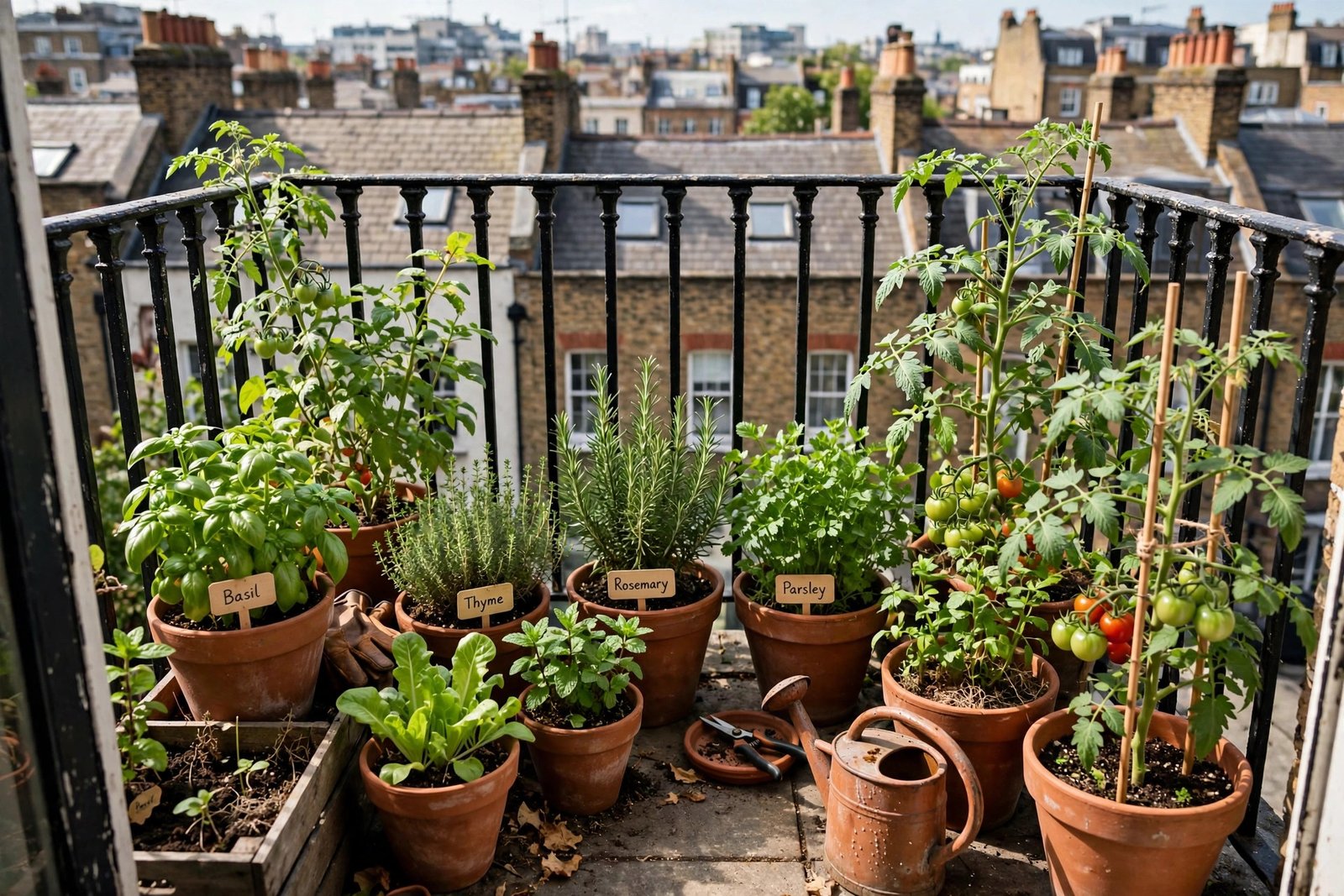
How to Grow Veg on a London Balcony: Beginner Guide
A London balcony — even a tiny Juliet balcony — can produce an astonishing amount of food. Salad leaves, tomatoes, chillies, herbs, beans and even potatoes all thrive in containers, and a well-planned 2m x 1m balcony can supply fresh produce for months. Balcony growing is also the perfect entry to gardening: small, controllable, close to the kitchen, and deeply satisfying.
This guide covers everything a London balcony grower needs: assessing your space, choosing containers and compost, the crops that actually perform in the capital’s climate, and the watering and feeding routine that keeps it all alive.
Assess your balcony first
Three factors determine what you can grow: sunlight, wind and weight. Track the sun for a day — most vegetables need at least 6 hours of direct sun, though salad leaves and herbs tolerate 3–4. South and west-facing balconies are gold; north-facing ones suit shade-tolerant crops like lettuce, spinach and mint.
Wind is the overlooked enemy: high-rise balconies can be brutal, shredding leaves and drying pots fast. Windbreaks — trellis with climbing beans, strategically placed larger pots, or mesh screening — transform exposed balconies. Weight matters structurally: wet compost is heavy, so check your lease or ask the building manager about load limits, use lightweight containers, and spread weight rather than clustering. Never compromise a balcony’s drainage or safety rails.
Containers, compost and the setup
Bigger pots are better — they hold moisture longer and give roots room. Minimum sensible sizes: 30cm pots for tomatoes and peppers, 20cm for herbs and salads, deep troughs for carrots. Fabric grow bags are cheap, light and excellent for potatoes. Whatever you use, drainage holes are non-negotiable; waterlogged roots rot fast.
Use peat-free multipurpose compost — widely available and better for the environment. Mix in slow-release fertiliser at planting for hungry crops like tomatoes. A layer of mulch (bark chips or gravel) on top reduces watering needs dramatically. For the bed-building principles scaled down, building a raised garden bed cheaply covers soil layering ideas that adapt well to deep containers.
Vertical growing multiplies a small balcony’s output: wall-mounted planters for herbs and strawberries, a simple cane wigwam for climbing French beans, hanging baskets for trailing tomatoes. Think in three dimensions and a 2m² balcony can hold 20+ productive plants.
The crops that actually work in London
Dead easy winners
Cut-and-come-again salad leaves (sow every 2–3 weeks from March to September for endless supply), radishes (ready in 4 weeks — the instant gratification crop), spring onions, and herbs: basil, parsley, coriander, thyme, rosemary and mint (always contain mint in its own pot — it invades everything).
Reliable producers
Cherry tomatoes (choose compact bush varieties like ‘Tumbling Tom’ for hanging baskets), chillies and sweet peppers (London’s warmth suits them), French and runner beans (vertical and prolific), courgettes (one plant feeds a household — seriously, just one), and potatoes in grow bags (plant in March, harvest handfuls from June).
Worth trying
Carrots in deep troughs (choose short ‘Chantenay’ types), beetroot, kale and chard (productive through winter), strawberries (perennial — plant once, harvest for years), and dwarf fruit trees in large pots for the ambitious. Avoid: sweetcorn (needs blocks for pollination), large pumpkins, and anything needing more space than sense.
Watering: the make-or-break skill
Containers dry out far faster than ground soil — in a July heatwave, small pots may need watering twice daily. Water in the morning so foliage dries by evening (reducing disease), water the compost not the leaves, and water deeply until it runs from the drainage holes. Shallow daily sprinkles encourage weak surface roots.
Self-watering pots, drip trays and simple DIY wick systems buy forgiveness for busy weeks and holidays. Mulching, as mentioned, is the cheapest watering hack there is. Learn each pot’s rhythm: lift it — light means thirsty. Within a fortnight you will read your balcony like a book. Group pots together to create a humid microclimate and reduce wind drying.
Feeding and the London season
Compost nutrients run out after 4–6 weeks, so feed regularly: high-nitrogen feed for leafy growth, high-potash (tomato) feed once flowers appear on fruiting crops. Liquid feeds weekly in peak season keep production rolling. Yellowing lower leaves usually mean hunger, not disease — feed first, worry later.
London’s growing season runs roughly March to October, with winter salads and garlic extending it. Start seeds indoors on a bright windowsill in March, move out after the last frost (usually late April in the capital), and succession-sow salads through summer for continuous harvest. A small cold frame or fleece extends both ends of the season cheaply.
Harvest, store and enjoy
Pick little and often — regular harvesting signals plants to produce more. Herbs cut in the morning hold their oils best; learn how to store fresh herbs so they last longer to avoid waste. Gluts? Freeze, ferment or share with neighbours — balcony growers’ swaps are a lovely London tradition.
And do the maths occasionally: a productive balcony can save £200–£400 a year on produce, which pairs nicely with wonky veg boxes for the things you cannot grow. The RHS offers superb container-growing advice tailored to UK conditions, and Garden Organic champions peat-free, organic growing methods ideal for small spaces.
Pests and problems on the balcony
Balconies get fewer pests than ground gardens, but not none. Aphids love soft new growth — blast them off with water or encourage ladybirds by planting marigolds nearby. Slugs can climb surprisingly high; copper tape around pots deters them, and evening patrols with a torch deal with the bold ones. Pigeons are the classic London balcony pest: netting over brassicas and strawberries is the only reliable defence, and it is cheap.
Most “diseases” on balconies are actually watering or feeding issues: yellow leaves usually mean hunger, wilting in wet compost means overwatering, and leggy seedlings mean insufficient light. Fix the basics before reaching for sprays — and on an edible balcony, avoid pesticides entirely. A healthy, well-fed plant resists most problems on its own.
Conclusion
Growing veg on a London balcony is one of the highest-joy, lowest-barrier projects in city life: assess sun and wind, use big pots with good compost, grow vertically, water deeply, feed regularly, and harvest constantly. Start with salads and herbs this spring and you will be eating your own produce within weeks. The balcony will never look — or taste — the same again.
Frequently Asked Questions
What vegetables grow best on a London balcony?
Salad leaves, radishes, herbs, cherry tomatoes, chillies, beans, courgettes and potatoes are the most reliable. Choose compact varieties bred for containers.
How much sun does a balcony vegetable garden need?
Most veg wants 6+ hours of direct sun. Salad leaves, spinach, herbs and mint manage with 3–4 hours, making them ideal for less sunny balconies.
How often should I water balcony pots?
Daily in summer, sometimes twice in heatwaves; less in cool weather. Water deeply in the morning until it drains from the bottom, and mulch to retain moisture.
Can I grow vegetables on a north-facing balcony?
Yes — stick to shade-tolerant crops: lettuce, spinach, chard, mint, parsley and coriander all produce well with limited direct sun.
Is balcony growing actually cheaper than buying veg?
After the small setup cost, yes for high-value crops like herbs, salads and tomatoes — a productive balcony can save £200–£400 a year. Grow what you eat most.