
How to Use Less Water Without Noticing: Invisible Savings
The average Londoner uses about 150 litres of water a day — and roughly a third of it does nothing useful at all. It runs down the plughole while you wait for the shower to warm up, vanishes into a leaky loo, or soaks a lawn that would recover on its own. London is, absurdly for such a rainy city, one of the driest capitals in Europe per person: low rainfall, 9 million people, and Victorian pipes leaking billions of litres. Thames Water has warned repeatedly about supply pressure, with hosepipe bans and reservoir anxiety now a regular feature of dry spells. The good news: cutting your water use by 20–30% requires no lifestyle sacrifice at all — just a handful of invisible tweaks. Here’s how to use less water without noticing.
The bathroom: where most water goes
Over half of home water use happens in the bathroom, which makes it the highest-leverage room. The single biggest invisible saver: shorten your shower. The average Brit spends 7.5 minutes in the shower; cutting to 4 minutes saves around 12,775 litres a year and over £100 on combined water and energy bills, according to Thames Water. You won’t notice the missing 3.5 minutes — but your meter will.
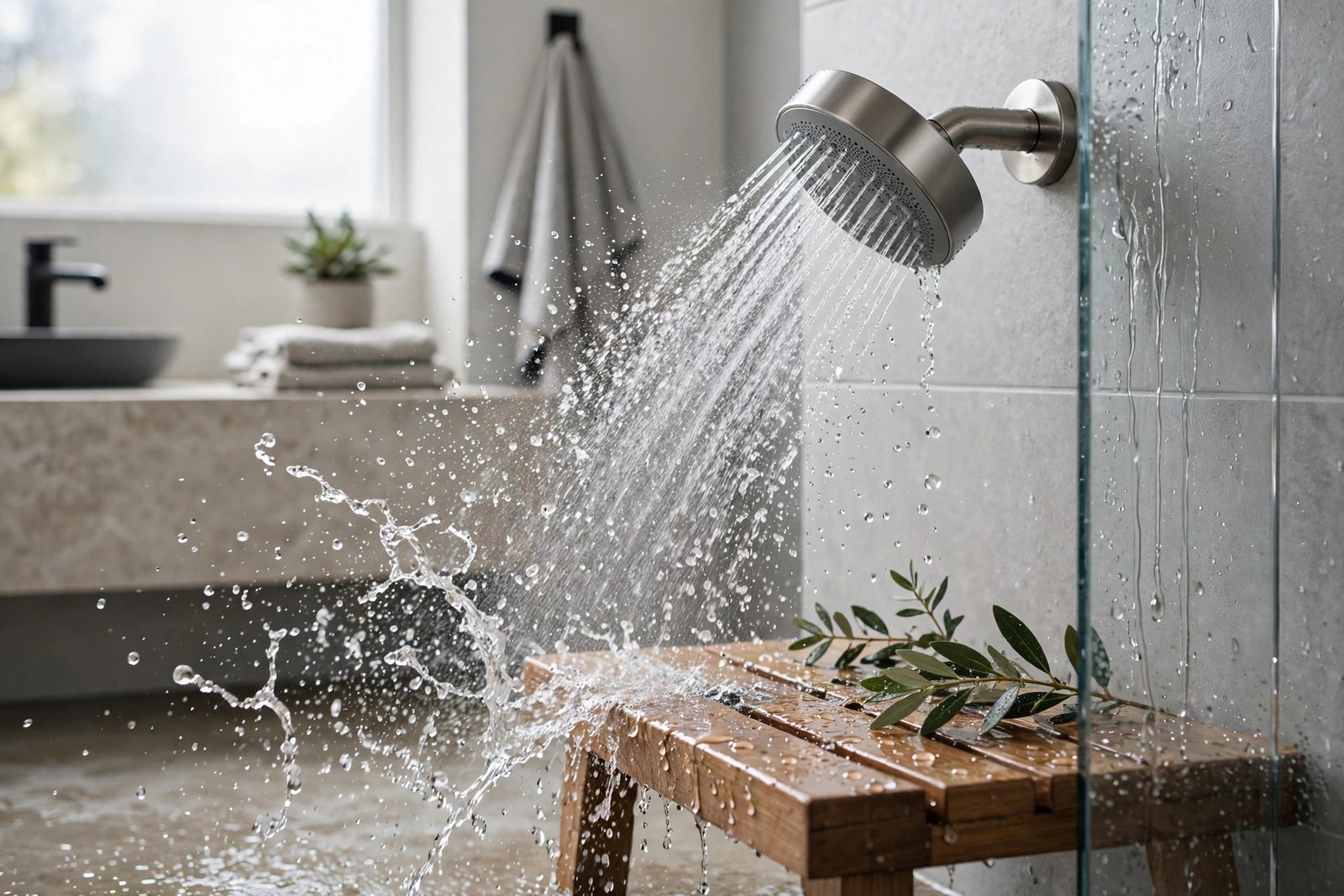
Fit a water-efficient showerhead. Aerated heads mix air into the flow, cutting use by 30–50% with no perceptible pressure loss. It’s a £15–30 fitting, five minutes with a wrench, and most people can’t tell the difference — some prefer the feel. Turn off the tap while brushing your teeth — a running tap wastes 6 litres a minute, and 42% of people still leave it running. Fix the leaky loo: a trickling cistern wastes 200–400 litres a day — a whole family’s daily use, silently, adding hundreds to a metered bill. Put food colouring in the cistern; if it seeps into the bowl without flushing, you’ve got a leak. Thames Water’s water saving hub has the full checklist plus a calculator showing your household’s usage and savings.
The kitchen and laundry: the quiet wasters
Full loads only. Half-empty washing machines and dishwashers are among the most wasteful habits in the home — wait for a full load and use the eco setting, which uses less water and less energy despite the longer cycle. Doing two fewer washes a week saves around £46 a year on water and energy.
Basin, not running tap. Washing vegetables or dishes under a running tap wastes litres; a basin or bowl does the job, and the leftover water can go on houseplants. Keep a jug in the fridge instead of running the tap until it goes cold — the classic invisible swap. Steam and one-pot cooking use less water than boiling, and the nutrient-rich leftover water (cooled, unsalted) is excellent for plants. None of these changes how you eat, clean, or live — they just stop the invisible waste. For the broader household budget, the same efficiency mindset applies: see how to reduce energy bills this winter, since hot water is where water and energy bills overlap most expensively.
The garden (or balcony): outdoor water wisdom
Outdoor use can double a household’s consumption in summer — and it’s the easiest to cut. Swap the hose for a watering can: a hosepipe uses 170 litres every ten minutes (two bathtubs); a can delivers water precisely where plants need it. Thames Water estimates the swap saves up to 45,000 litres over a summer. Water early morning or late evening to cut evaporation. Let the lawn go golden — grass recovers; it’s not dying, it’s dormant. Mulch beds with bark or compost to lock in moisture. Collect rainwater — even a small balcony water butt or a bucket under a downpipe gives plants the untreated water they prefer.
And choose plants that don’t need coddling: Mediterranean herbs, sedums, and ornamental grasses thrive on neglect. A garden designed for low water looks intentional, not deprived — gravel gardens and dry beds are a whole aesthetic. The Thames Water water-saving tips page, published after the driest spring in over a century, has the garden-specific guidance tuned to London’s actual conditions.
The invisible upgrades worth doing once
A few one-time fixes keep saving forever. Tap aerators (£5, screw onto taps, halve flow without you noticing). Dual-flush or save-a-flush devices for older toilets (a brick in the cistern is the folk version; a proper displacement device is better). A water meter — free from Thames Water, and metered households typically use 10–15% less simply because usage becomes visible; singles and couples often save £100–250 a year. Check for hidden leaks — read your meter last thing at night and first thing in the morning; any movement means water’s going somewhere it shouldn’t.
Drinking enough stays important whatever you save elsewhere — see how much water to drink a day in the UK climate. Efficiency is about waste, never about hydration.
Get the household on board (without nagging)
Water-saving fails when it’s one person’s project and everyone else’s inconvenience. The trick is making it a household game rather than a lecture. Run Thames Water’s water-saving calculator together and set a target — most families find the competitive element (“can we beat last month?”) more motivating than any lecture about reservoirs. Put the wins where they’re visible: a note on the fridge showing the bill dropping, or the water butt filling up.
With flatmates or kids, focus on the invisible swaps first — aerators, the fridge jug, full loads — because nobody has to change behaviour for those. The behavioural ones (shorter showers, taps off) follow more easily once the household sees the savings are real. And frame it as competence, not sacrifice: the household that uses 20% less water isn’t deprived, it’s just better run. Nobody notices the missing litres. Everybody notices the lower bill.
Frequently asked questions
How much water does the average Londoner actually use?
Around 150 litres per person per day — well above the 110-litre target water companies are working toward. About a third is essentially wasted through leaks, over-long showers, and inefficient habits.
Will saving water actually lower my bill?
Only if you’re on a meter — unmetered bills are fixed regardless of use. But metered households save twice: less water and less energy heating it. Thames Water installs meters free, with a trial period to switch back.
What’s the single biggest water saver?
Fixing a leaky loo (up to 400 litres a day) beats everything. After that: shorter showers and a water-efficient showerhead. Those three cover the majority of household waste.
Is London really short of water? It rains all the time.
Yes, really. London gets less rainfall per person than many Mediterranean cities, the population keeps growing, and around a fifth of supply leaks from old pipes. Per-capita water availability is among the lowest of any European capital — the rain just isn’t enough for 9 million people.
Does using less water help the environment beyond my bill?
Significantly. Less abstraction from rivers and aquifers (protecting chalk streams and wetlands), less energy for treatment and pumping (cutting carbon), and less pressure on reservoirs during droughts. In a dry spring, 9 million people each saving 10 litres is 90 million litres a day.
The bottom line
Using less water without noticing isn’t about sacrifice — it’s about plugging invisible leaks: the 3.5 extra shower minutes, the running tap, the trickling cistern, the half-empty machine, the hosepipe on the lawn. Fix the loo, shorten the shower, fit the aerators, can instead of hose. You’ll save money, protect London’s rivers, and never once feel deprived. The water was being wasted, not used — and now it isn’t.