
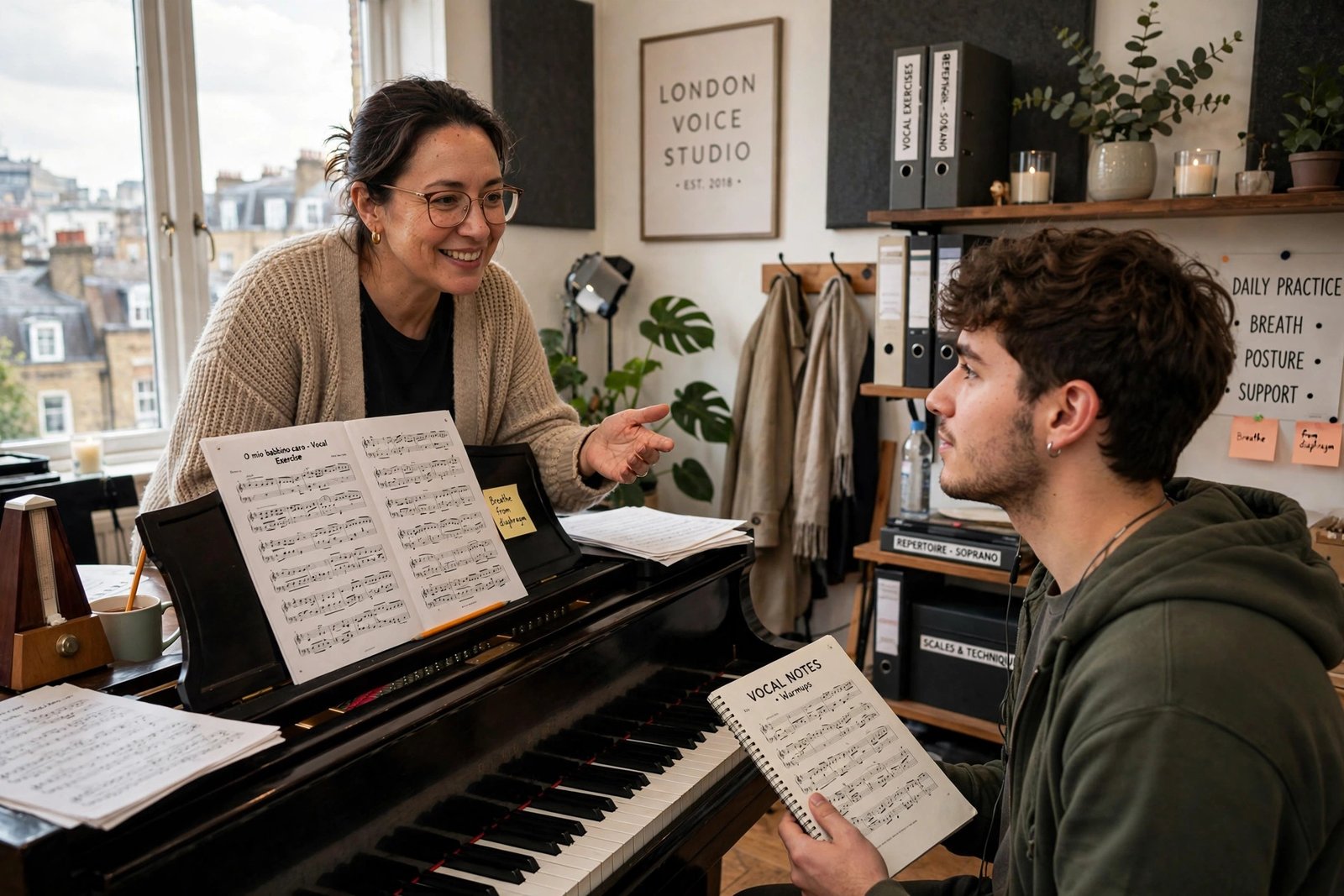
How to Find a Singing Teacher in London
London has more singing teachers per square mile than almost anywhere on earth — which makes finding the right one paradoxically difficult. Prices range from £25 to £120 an hour, qualifications vary wildly, teaching styles clash with learning styles, and a bad fit can stall your progress for months or even damage your voice. Choosing well matters enormously.
This guide walks through the whole process: what to look for, where to search, the questions that reveal a great teacher, what lessons should cost in 2026, and the warning signs that mean keep looking.
First, get clear on your goals
“I want singing lessons” is too vague to match you with the right teacher. A classical soprano coach, a musical-theatre belt specialist, a jazz improvisation mentor and a pop vocal producer are different professionals with different toolkits. Define your aim: grade exams, West End auditions, confident karaoke, choir leading, songwriting, or simply singing for joy. Your goal determines everything — genre expertise, lesson structure, even location.
Also be honest about your level and commitment. A complete beginner needs patience and fundamentals; an experienced singer needs diagnostic ears and advanced technique. Someone practising daily progresses differently from someone with twenty minutes twice a week, and a good teacher calibrates to reality, not fantasy.
What good looks like: qualifications and experience
Singing teaching is unregulated in the UK — anyone can call themselves a vocal coach. So check credentials yourself. Strong signals: a music degree or conservatoire training, recognised teaching diplomas, membership of professional bodies like the Musicians’ Union or the British Voice Association, and a track record of students at your level achieving your kind of goals.
Performance experience matters, but it is not the same as teaching skill — a dazzling performer can be a poor explainer. Look for evidence of teaching specifically: student testimonials, years teaching, and specialisation in your genre. A teacher who works with beginners regularly will have the patience and diagnostic toolkit you need; one who only coaches professionals may frustrate a novice.
Where to search in London
Start with targeted directories: the Musicians’ Union’s member listings, music-teacher platforms with verified reviews, and conservatoire junior-department or adult-learning programmes (the Royal Academy and Guildhall both run community schemes). Personal recommendations carry huge weight — ask at community choirs, open-mic nights and local music shops. London’s gig scene is a natural hunting ground; finding gigs and concerts near you often leads to conversations with singers who can recommend their own teachers.
Social media is surprisingly effective: many London vocal coaches post teaching clips on Instagram and TikTok, letting you assess their style before contacting them. University music departments and adult education colleges (City Lit, Morley College) offer affordable group and individual tuition with vetted teachers — excellent value for beginners. Making Music also lists amateur choirs and ensembles where members routinely recommend trusted teachers.
The trial lesson: your decision tool
Never commit to a term without a trial lesson — any reputable teacher offers one. Treat it as a two-way audition. Notice: does the teacher listen to your goals before prescribing? Do they explain technique in ways you understand, or hide behind jargon? Do you leave feeling encouraged and clear about what to practise, or confused and inadequate?
A great first lesson typically includes a proper warm-up, diagnostic listening (the teacher identifying your current habits), one or two concrete technical concepts, and repertoire suggestions suited to your voice. You should feel worked but not wrecked — hoarseness after a lesson is a red flag, not a badge of effort. Trust your gut alongside the evidence: the teacher-student relationship is personal, and rapport predicts persistence.
What lessons cost in London in 2026
Expect £40–£80 an hour for established independent teachers, £25–£45 for recent graduates and community schemes, and £80–£120+ for elite coaches with West End or recording credits. Most teachers offer 30, 45 or 60-minute slots — beginners often do better with focused 30-minute lessons weekly than exhausting hour-long ones.
Ask about block-booking discounts, cancellation policies (24–48 hours is standard), and whether online lessons cost less — many teachers now offer hybrid options. Be wary of large upfront term payments to teachers you have just met; pay-as-you-go or small blocks until trust is established. And remember that cost per lesson is not cost per progress: a brilliant £60 teacher who fixes your technique in ten lessons is cheaper than a mediocre £30 one you see for a year.
Red flags: when to walk away
Leave if a teacher: pushes you to sing repertoire that hurts, dismisses your goals in favour of their agenda, cannot explain what they are asking your body to do, makes you feel stupid for struggling, or suggests you need expensive supplements, “vocal detoxes” or other pseudoscience. Also be cautious of teachers who spend lessons chatting rather than working, who never give structured practice assignments, or who badmouth other teachers — professionalism matters.
Your voice, your money, your time. A teacher works for you, and switching is normal — most singers study with several teachers across their development. Outgrowing a teacher is a sign of progress, not disloyalty.
Getting the most from your lessons
Lessons are the diagnosis; practice is the treatment. Record every lesson (ask permission) and review the key points before practising. Keep a practice journal noting what worked. Do the assigned exercises even when they feel silly — lip trills and sirens build the coordination that makes songs possible. And perform regularly: open mics, choir concerts, even family gatherings. Lessons without performance are like swimming lessons without water.
Supplement with listening: study singers in your genre analytically, attend live shows — check what’s on at the O2 Arena this month for inspiration, though intimate venues teach more — and notice how professionals manage breath, phrasing and stagecraft. Finding teachers is a service-search skill much like finding a reliable cleaner in London: define the brief, check reviews, trial before committing.
Conclusion
The right singing teacher in London is out there — define your goals, verify credentials, use trial lessons ruthlessly, pay fair rates for genuine expertise, and leave at the first red flag. A great teacher does not just improve your voice; they change your relationship with it. Take the search seriously, because the payoff — singing with freedom and confidence — lasts a lifetime.
Frequently Asked Questions
How much do singing lessons cost in London?
Typically £40–£80 an hour for established teachers, £25–£45 for recent graduates or community schemes, £80–£120+ for elite coaches. Thirty-minute lessons suit most beginners.
How do I know if a singing teacher is qualified?
Look for music degrees or conservatoire training, teaching diplomas, professional body membership, and a track record with students at your level in your genre. Remember the industry is unregulated — verify, don’t assume.
Are online singing lessons as good as in-person?
For technique and repertoire work, good online lessons are highly effective and often cheaper. In-person has the edge for diagnosing subtle physical tension and for ensemble skills. Many teachers offer both.
How often should I have singing lessons?
Weekly or fortnightly is standard. Weekly suits committed beginners; fortnightly works if you practise diligently between sessions. Consistency over months matters more than frequency.
What should happen in a first singing lesson?
A proper warm-up, the teacher listening diagnostically to your current singing, one or two clear technical concepts to work on, and suitable repertoire suggestions. You should leave encouraged with a practice plan — never hoarse or confused.