
Why Is My Dog Always Chewing Its Paws?
Your dog’s paws are red, the fur between the toes is stained brown, and the licking is constant — during the day, at night, that wet rhythmic sound that drives owners to distraction. Paw chewing is one of the most common reasons dogs visit the vet, and it’s also one of the most misdiagnosed by owners: “he’s just grooming” or “it’s a habit.” Persistent paw chewing is almost never “just” anything. It’s a symptom with a short list of usual causes, and identifying which one changes everything about the fix.
The most common cause: allergies
In the majority of persistent cases, paw chewing is allergic itch — the paws are exactly where dogs feel environmental allergies most. Atopic dermatitis (allergy to pollens, dust mites, moulds) typically shows as paw licking, often seasonal at first (worse in spring/summer) then year-round as it progresses. Food allergies are less common than people think but real — and they cause year-round itching regardless of season.
How to tell: licking focused on paws (especially front paws), worse after walks (pollen on the feet), redness between the toes, brown staining of light fur (saliva staining — a hallmark of chronic licking), and often accompanying ear infections or face rubbing. If it’s seasonal and walk-related, think environmental; if it’s constant year-round including winter, think food or dust mites.
What helps: paw washing after every walk (a simple bowl of water by the door — removes pollens before the licking starts), wiping paws with a damp cloth, keeping the home low-dust (regular vacuuming helps — see our guide to robot vacuums for pet hair for keeping allergen loads down), and vet-prescribed treatments: antihistamines (limited efficacy in dogs, but cheap to try), Apoquel or Cytopoint (the modern, effective options for atopic dogs), and allergy testing with immunotherapy for severe cases. The PDSA’s allergy guidance is an excellent starting point before your vet visit.
Other medical causes
Interdigital cysts/furunculosis: painful lumps between the toes, common in short-coated breeds (Bulldogs, Staffies, Labradors). The dog licks because it hurts. Needs veterinary treatment — sometimes antibiotics, sometimes surgical management for recurrent cases.
Foreign bodies: grass seeds (especially in summer — they migrate and cause dramatic swelling between toes), thorns, splinters. Sudden onset of intense licking of one paw = check for a foreign body first. Grass seed season (June–August) fills vet waiting rooms with exactly this.
Yeast/bacterial infections: often secondary to allergies — the licking creates the moist environment infections love, creating a vicious cycle. Musty smell, greasy skin between toes. Needs vet diagnosis and usually medicated washes plus treatment of the underlying allergy.
Pain: arthritis, nail problems (overgrown, broken, infected nails), or pad injuries. Older dogs with arthritic toes lick the painful joints. If the chewing is focused on one paw or one toe, think pain or foreign body before allergy.
Parasites: harvest mites (autumn — tiny orange dots visible between the toes), demodex mites, and occasionally ticks lodged between digits. Seasonal patterns help diagnosis enormously: autumn onset points to harvest mites, while summer swelling often means grass seeds.
The behavioural side: when it’s not (only) medical
Some paw chewing is anxiety, boredom or compulsive behaviour — but always rule out medical causes first, because anxious licking and allergic licking look identical and the treatments are opposites. Behavioural licking tends to be: rhythmic and trance-like, occurring when the dog is resting or bored, sometimes focused on one spot until it’s raw (acral lick granuloma — a self-perpetuating sore that needs both medical treatment and behavioural intervention).
If medical causes are excluded: increase exercise and mental stimulation (a tired brain licks less), address the underlying anxiety (separation, boredom, stress), use bitter deterrents on the spot short-term, and consider an Elizabethan collar or boot to break the cycle while the sore heals — because lick sores can’t heal while being licked. Compulsive cases need a qualified behaviourist (APBC/ABTC registered), not just more walks. The Dogs Trust behaviour resources cover compulsive behaviours well.
What to do right now: the action plan
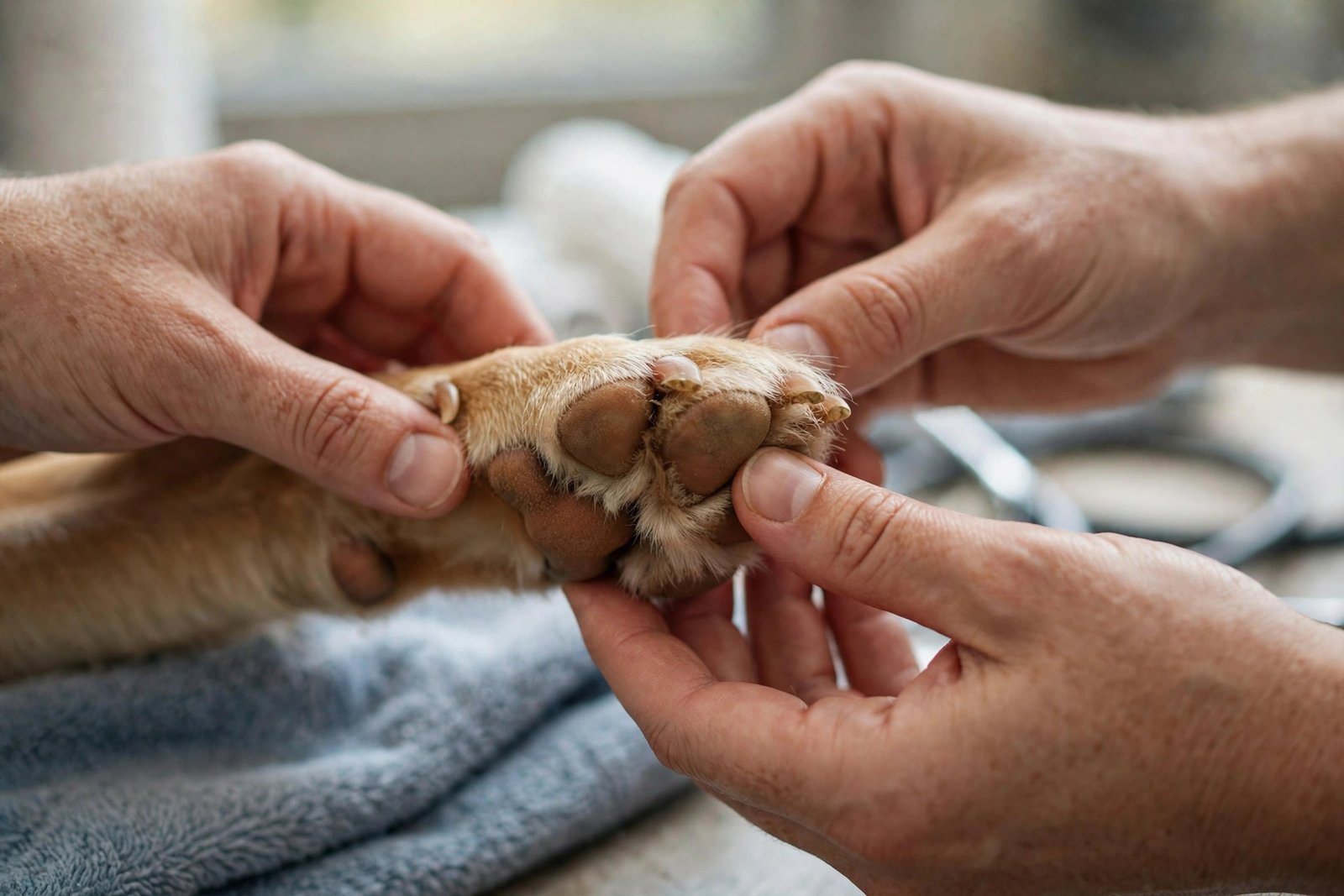
This week: start paw-washing after walks, check between every toe for redness, swelling, foreign bodies and cysts, photograph the paws (for tracking and for the vet), and note the pattern — which paws, when, seasonal?
Book the vet if: there’s swelling, limping, bleeding, a sore that won’t heal, sudden onset, or licking that’s been going on for weeks. Take your dated photos and detailed pattern notes to the appointment — they genuinely help the vet reach a diagnosis faster.
Don’t: assume it’s “just a habit” (it rarely is), apply human creams without vet advice (many are toxic to dogs or just get licked off), or ignore it — chronic licking almost always progresses and never spontaneously resolves on its own.
The cost angle
Allergy management is a long-term expense: Apoquel/Cytopoint can run £50–£150+ monthly, allergy testing £300–£600, immunotherapy ongoing. This is exactly what pet insurance is for — but check your policy covers chronic conditions long-term (some cap per-condition payouts). Our breakdown of annual dog costs includes the allergy scenario, because it’s common enough to budget for. The RSPCA’s health advice pages help you understand what the vet is proposing and why.
The bottom line
A dog constantly chewing its paws is telling you something important — usually allergies (paw washing after every walk is your first line of defence), sometimes foreign bodies, infections, cysts or pain, and occasionally anxiety-driven compulsion that needs behavioural support. Rule out medical causes with a vet visit, track the pattern, treat the cause not the symptom, and break the lick cycle while underlying issues are addressed. The paws are the messenger; don’t shoot them.
Frequently Asked Questions
Why does my dog lick his paws so much?
Most commonly allergies — environmental (pollens, dust mites) causing itchy paws, especially after walks. Other causes: foreign bodies (grass seeds), interdigital cysts, yeast/bacterial infections, pain/arthritis, or anxiety-driven compulsive licking. Persistent licking always warrants investigation, starting with a vet visit.
How do I stop my dog chewing his paws?
Treat the cause: wash paws after walks (removes allergens), vet assessment for allergies/infections/cysts/foreign bodies, appropriate medication (Apoquel/Cytopoint for allergies), and break the cycle with collars/boots while sores heal. Stopping the licking without treating the cause doesn’t work — the itch or pain remains.
Is paw licking a sign of allergies in dogs?
Very often yes — it’s the classic presentation of atopic dermatitis. Clues: worse after walks, seasonal pattern initially, redness and brown saliva-staining between toes, plus ear infections or face rubbing. Year-round constant licking suggests food allergy or dust mites. Vet diagnosis confirms it.
Can anxiety cause dogs to chew their paws?
Yes, but it’s a diagnosis of exclusion — medical causes (allergy, pain, infection, foreign bodies) must be ruled out first, as they look identical. True compulsive licking is rhythmic, trance-like, often focused on one spot, and needs behavioural intervention plus medical management of any resulting sores.
When should I take my dog to the vet for paw chewing?
For any swelling, limping, bleeding, non-healing sores, sudden severe onset, or licking persisting beyond a couple of weeks despite paw-washing. Take photos of the pattern — they help enormously with diagnosis. Don’t wait months; chronic licking creates secondary infections that complicate treatment.