
VAT Explained: When Do You Need to Register? (UK)
VAT Explained: When Do You Need to Register? (UK)
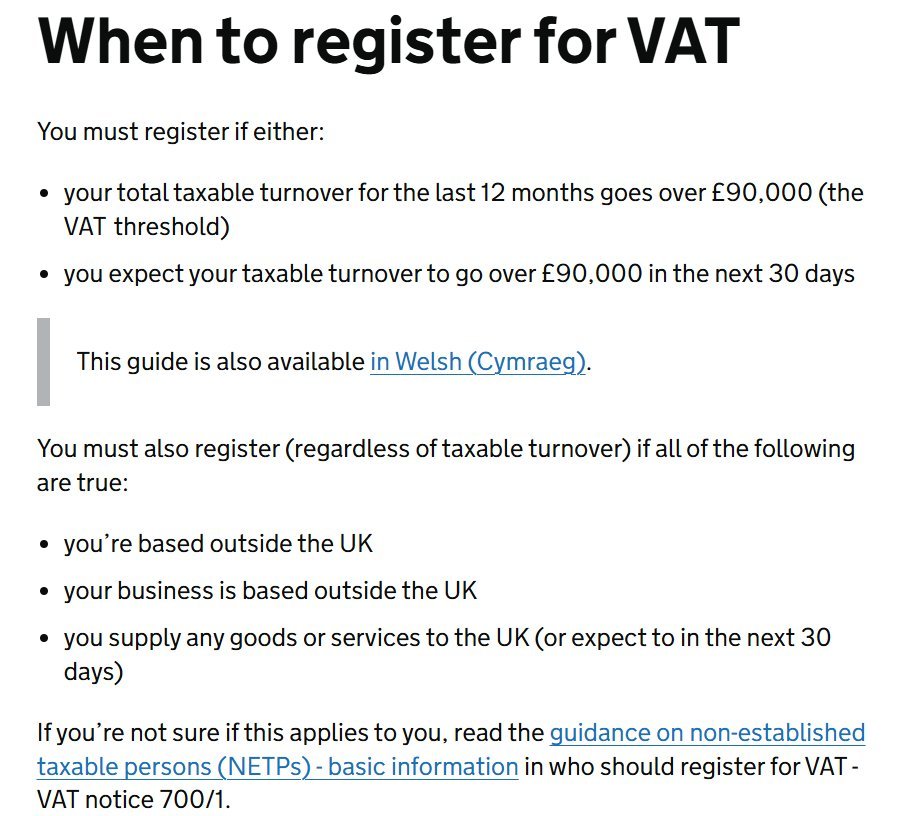
What is VAT and when do I need to register for it? VAT (Value Added Tax) is a 20% tax on most goods and services, collected by businesses on HMRC’s behalf. You must register when your VAT-taxable turnover passes £90,000 in any 12-month period — but many businesses register voluntarily well before that.
Before we get into the detail, a quick reality check: the “best” answer depends on your circumstances more than any ranking ever will. A student in shared housing needs something very different from a family of five or a freelancer working from a spare room. Keep your own situation in mind as you read, and you’ll land on the right choice. If that’s on your mind too, have a look at our guide to how do I find my first clients as a new freelancer — it pairs naturally with everything below.
What is vat and when do I need to register for it? The essentials
VAT at 20% applies to most goods and services in the UK (reduced 5% for things like domestic energy, zero-rated for food, children’s clothes and books). As a VAT-registered business, you charge VAT on your sales, reclaim VAT on your business purchases, and pay HMRC the difference quarterly. You’re essentially an unpaid tax collector — but one who can reclaim input VAT, which is the upside.
The £90,000 threshold counts VAT-taxable turnover on a rolling 12-month basis — not profit, not per tax year. Cross it and you must register within 30 days; HMRC can backdate registration and fine you for delay. Watch it monthly once you’re near £70,000 — accidental crossing is common for growing businesses.
Right — with the basics covered, let’s get into the detail that actually affects your wallet. Worth a read alongside this: our guide to how much does it cost to trademark a business name in the uk.
Should you register voluntarily?
Here’s the short version, so you can scan it fast:
- Yes if: your customers are VAT-registered businesses — they reclaim the VAT, so it costs them nothing, while you reclaim VAT on your costs.
- Yes if: you have major VAT-bearing startup costs (equipment, stock) — registration lets you reclaim it.
- Yes if: it makes you look established to corporate clients who expect VAT invoices.
- No if: your customers are the public — 20% on your prices with no benefit to them makes you uncompetitive.
- No if: you’re well under the threshold with no reclaimable costs — it’s pure admin burden.
One thing I’ve noticed over the years: the people who are happiest with their choice are the ones who matched it to how they actually live, not to some idealised version of their habits. Be honest with yourself here and you’ll choose better.
The schemes that simplify it
The Flat Rate Scheme lets small businesses (under £150,000 turnover) pay a fixed percentage of turnover (typically 12-14.5% depending on sector) instead of tracking input and output VAT — simpler, and sometimes profitable if your sector rate is below what you’d otherwise pay. First-year registrants get a 1% discount, making it attractive for new businesses.
Cash accounting (pay VAT when customers pay you, not when invoiced) helps cash flow for businesses under £1.35m turnover. And Making Tax Digital means VAT returns must be filed via compatible software — no more manual GOV.UK entries. Whatever scheme you choose, get software sorted before registration, not after.
Common VAT mistakes
Do it in this sequence and you won’t miss anything important:
- Missing the £90,000 threshold — monitor turnover monthly on a rolling 12-month basis.
- Charging VAT before registration is complete — you can’t charge it until your certificate arrives.
- Forgetting the 30-day registration deadline after crossing the threshold.
- Not keeping digital records — MTD requires compatible software, not spreadsheets alone.
- Ignoring partial exemption and special rules if you sell mixed VAT-rate goods.
- Assuming EU/international sales work like domestic ones — post-Brexit rules differ; check before shipping.
Quick answers
How much should I realistically budget for VAT registration?
More than the headline price, less than the premium option. A sensible budget for VAT registration sits in the middle of the market — enough to avoid the cut corners of the cheapest tier, without paying for features you’ll never touch. Add 15-20% contingency for the extras nobody mentions upfront, and you’ll land about right. The people who blow the budget are the ones who budgeted for the advert price instead of the real one.
What should I do first if I’m completely new to VAT registration?
Start with the free, reversible steps: research, compare, and get your facts straight before spending a penny or signing anything. Make a shortlist of two or three options, check recent reviews — and read the one-star ones, not just the average — and talk to someone who’s done it before you. Ten minutes of asking around beats ten hours of guessing, and it costs nothing.
Can I handle VAT registration myself, or do I need professional help?
It depends on complexity and stakes. Straightforward VAT registration tasks are well within DIY territory with a decent guide — most people manage fine and save a packet. But when money, legal compliance or safety are involved, professional help pays for itself quickly. My rule of thumb: DIY when the worst case is a wasted afternoon; call in a pro when the worst case is wasted money or a legal headache.
Pro tip: when you’re comparing VAT registration options, ignore the headline claims and read the worst-case reviews instead. How a company handles problems tells you far more than any advert — and it’s the problems you’ll remember, not the smooth months.
So, what’s the verdict?
Register when turnover passes £90,000 in any 12 months (or voluntarily if your clients are VAT-registered). The Flat Rate Scheme simplifies life for small businesses, MTD-compatible software is mandatory, and missing the threshold deadline brings fines — monitor it monthly.
Nobody else is going to sort this for you, and honestly it doesn’t take long once you know what you’re looking at. Pick the option that fits, set a reminder to review it in a year, and get on with your life. One last tip from me: set a calendar reminder to revisit this in twelve months. Loyalty rarely gets rewarded in the UK market, and the best deal is almost always the one you renegotiate. For the official word, see GOV.UK: VAT registration. HMRC: VAT rates is also worth a look for independent comparisons. And if you’re still weighing things up, our guide to how much should I charge as a freelance graphic designer in the uk covers the next question most people ask.